The world of technology infrastructure has evolved to a point where the same job title can hide completely different operational realities. 'Capacity TPM' (Technical Program Manager) is one of those roles that, at first glance, seems standardized, but in practice demands radically different skills and contexts. The fundamental difference lies in a question few ask during an interview: does the company own its own servers or rent them? This strategic decision defines not only the professional's day-to-day work, but also the team structure, the tools they use, and the impact they can generate.
To understand this in depth, it is necessary to analyze the two predominant models: the hardware-owned model, where capacity is a physical supply chain problem; and the cloud-native model, where capacity becomes a cost line managed through APIs. Both are valid and scalable, but they produce almost opposite organizations. And this is where the value proposition of companies like Q2BSTUDIO comes into play, offering custom software and cloud services to help companies navigate this duality without losing efficiency.
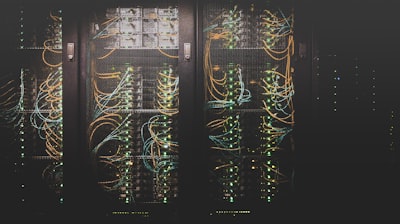
In the hardware-owned model, giants like Meta or Google invest billions in building data centers, negotiating power contracts, and managing chip refresh cycles. Here, a Capacity TPM does not just request more resources; they must coordinate with logistics, construction, hardware engineering, finance, and operations teams. Their work involves understanding semiconductor lead times, the electrical capacity of a specific region, and optimizing rack placement. It is not an office task but a digital manufacturing effort. In contrast, at cloud-native companies like Netflix or Pinterest, capacity is requested via an API call to AWS or Azure. The TPM focuses on cost visibility, reserved instance strategy, and detecting monthly spending anomalies. Their team is much smaller and their profile is closer to FinOps than to a supply chain engineer.
This dichotomy is not merely theoretical. Anyone who has worked in both environments knows that the required skills are so different that a brilliant professional in one model can fail spectacularly in the other. For example, a TPM accustomed to managing the construction of a new data center will not understand why a quota request in the cloud can be resolved in minutes, while a cloud expert will be lost when presented with a capacity plan lacking lead-time buffers. The industry, however, continues to publish generic job postings that do not reflect this reality, creating mismatches in hiring and frustration among candidates.
From a technical perspective, the divergence is accentuated by the rise of artificial intelligence. Training large language models requires GPU clusters that, in the owned model, involve purchase agreements with manufacturers like NVIDIA and long wait times. In the cloud model, the same resources are available on demand, but at a cost that can skyrocket if not properly managed. This is where solutions like AI and automation become relevant: tools that predict demand peaks, optimize resource allocation, and prevent bottlenecks. Q2BSTUDIO, for example, helps companies of all sizes implement AI agents that continuously monitor capacity, alerting on deviations before they affect end users.
Another key aspect is cybersecurity. Both in the owned model and the cloud, poorly managed capacity can open security gaps. An underutilized cluster is an attack vector, while a misconfigured auto-scaling group can expose sensitive data. Therefore, organizations need to integrate cybersecurity practices from the capacity design stage. Again, having a technology partner like Q2BSTUDIO, which offers cloud services on AWS and Azure, pentesting, and Business Intelligence solutions with Power BI, allows companies to tackle these challenges comprehensively without duplicating efforts.
The current trend shows that many companies are opting for a hybrid approach. They keep certain critical workloads on owned infrastructure to control costs and latency, while moving others to the cloud to leverage elasticity. This adds an extra layer of complexity for the Capacity TPM, who must understand both worlds and know when to apply each. The ability to orchestrate these environments is a highly valued and hard-to-find skill. Therefore, companies that invest in training their teams and unified management tools gain a clear competitive advantage.
For professionals seeking this role, the recommendation is clear: before accepting an offer, research how the company manages its infrastructure. Ask whether they have their own data centers, how long it takes to provision new resources, and who their cloud partners are. The title does not tell everything. The same job name can hide an industrial logistics role or a financial analytics position. Knowing that difference is the first step toward making an informed decision.
In conclusion, the Capacity TPM title is a perfect example of how digital transformation is redefining professional profiles. Technology advances so fast that job descriptions become obsolete. Companies that want to attract and retain talent must be transparent about the capacity model they use. And candidates, in turn, must understand that they are not applying for a generic position, but for one of two very distinct job realities. Fortunately, with the support of technology partners like Q2BSTUDIO, both organizations and professionals can adapt to this new era, leveraging custom software, artificial intelligence, cybersecurity, and cloud solutions to build resilient and efficient infrastructures.