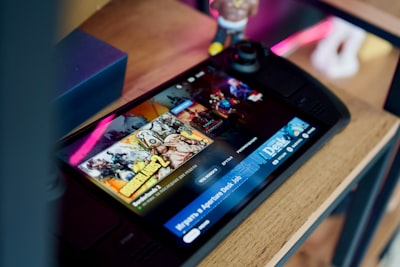
The Steam Machine has arrived, bringing with it a mix of excitement and disappointment. Valve has created a device that, at its core, promises to bring the Steam library into the living room, but in practice faces high prices and technical limitations. This review explores the virtues and flaws of the console, from its compact and silent design to its uneven performance in demanding games, as well as its questionable price-to-performance ratio. It also reflects on the SteamOS ecosystem, which could be Valve's true battleground in the future of gaming.
The Steam Machine's hardware, based on a mid-range AMD processor and a discrete GPU, achieves a surprising balance in less demanding titles. Games like Hades II and Horizon: Zero Dawn run at 4K with stable frame rates, thanks to technologies like AMD FSR. However, when facing more modern titles like Space Marine 2 or Dead as Disco, the system struggles, forcing a resolution drop to 1080p to maintain playability. This behavior is expected given its price, but it is disappointing when compared to competing consoles like the PlayStation 5, which offers similar performance for half the cost.
From a technical and business perspective, Valve has bet on its own operating system, SteamOS, a Linux distribution optimized for gaming. Its integration with the Steam store is seamless, but it suffers from shortcomings in multimedia functions, such as the lack of native support for streaming services (Netflix, Disney+) or issues with surround sound. These details, along with persistent bugs in remote streaming, tarnish the experience. For a company like Q2BSTUDIO, specialized in custom software development, these flaws are a reminder that platform maturity depends not only on hardware but also on the robustness of the software and attention to user experience details.
In the realm of artificial intelligence, Valve could have better leveraged upscaling and predictive optimization techniques to dynamically adjust graphics settings. In fact, integrating AI agents into the system could have reduced the need for manual adjustments, offering a more polished experience. Likewise, cybersecurity in a cloud-connected device is crucial; Valve should ensure regular updates and a secure ecosystem, something that companies like Q2BSTUDIO implement in their cybersecurity solutions.
The cloud also plays an important role. The Steam Machine could benefit from cloud services like AWS or Azure to offer game streaming from remote servers, reducing local load. Valve has already experimented with Steam Cloud, but a deeper integration with cloud platforms (such as those offered by Q2BSTUDIO in cloud AWS/Azure) would enable a more homogeneous experience. Additionally, usage data analysis through Business Intelligence tools (like Power BI) could help Valve identify performance patterns and improve future iterations.
Returning to price, the main Achilles' heel of the Steam Machine is its cost. At over $1,000, one expects performance that competes with current consoles, but the reality is that it falls short. The rise in component prices, exacerbated by demand for AI hardware, has made the product even more expensive. In a tough economic context, consumers seek the best value, and here the Steam Machine does not deliver. For a user who wants to game without complications, a PlayStation 5 or a Nintendo Switch 2 are more logical choices. Even building a desktop PC with Windows can be more cost-effective and versatile.
However, the true potential of the Steam Machine lies not so much in the hardware as in the software. SteamOS, with its focus on gaming, could become the standard for living room PCs. Valve has already announced that it will allow installing SteamOS on custom-built PCs, and manufacturers like Lenovo have released devices with this system. The arrival of Steam Frame for ARM hardware will further expand the ecosystem. This strategic move resembles how Q2BSTUDIO develops cross-platform applications, adapting to various technological environments without losing coherence.
In conclusion, the Steam Machine is a product that charms with its concept and execution in certain aspects, but disappoints in value. For enthusiasts and developers, it is an interesting device that shows the path toward a future where Linux and gaming join hands. For the general public, it is better to wait for a more competitive second generation or explore alternatives. Valve has shown with the Steam Deck that it knows how to do things right; hopefully it applies those lessons to the Steam Machine. Meanwhile, at Q2BSTUDIO we closely follow these innovations, integrating technologies like AI and cloud into our projects to offer robust and custom solutions.