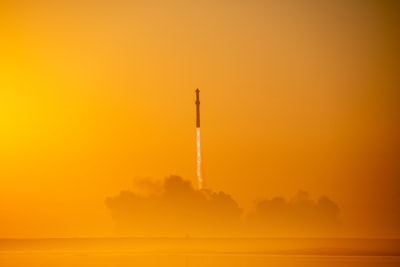
The highly anticipated 13th Starship flight test ended abruptly on the launchpad as four Raptor engines failed to ignite, triggering an automatic abort seconds before liftoff. The event, which occurred on July 16 at 22:45 UTC, left Elon Musk's space giant grounded while technical teams prepared to replace two defective thrusters. Musk confirmed that 'some engines did not start, triggering an automatic launch abort' and added that 'to be confident of a good flight, two Raptors will be removed and replaced. Most probable launch timing is early next week.' Although the anomaly detection system proved its effectiveness by halting the launch, the incident raises questions about the reliability of a vehicle that needs to fly repeatedly in short intervals to meet the goals of the Artemis program. Test 13 is the second Starship flight in its V3 configuration, a design that has yet to reach orbit. For SpaceX, it is urgent to demonstrate engine reignition in space, a milestone that would allow transitioning from suborbital to orbital operations, just as NASA schedules Artemis III for next year.
The repercussions extend beyond the technical domain. On Wall Street, SpaceX shares fell below the initial public offering price to just over $131, reflecting a loss of investor confidence after an earlier surge that had made Musk a paper trillionaire. NASA is closely watching every move: the agency has just confirmed it will use SpaceX's Starlink network to transmit Artemis III imagery from the Orion capsule. It would be a shame if those images did not show the expected rendezvous with Starship in space due to launch problems. Despite Musk's announcements about 'early next week,' SpaceX has yet to officially set a new date.
In the aerospace sector, software and control system reliability is as crucial as rocket engineering. Every launch depends on multiple software layers managing everything from telemetry to automatic abort decisions. In this context, having tools for custom software development is essential for companies seeking to minimize risks and ensure critical processes. Firms like Q2BSTUDIO, specialized in technology and software development, understand that platform customization allows adaptation to the unique demands of every mission, whether in space or on Earth. The ability to create robust and scalable systems is precisely what will make the difference between a controlled abort and a catastrophic failure.
Beyond conventional programming, artificial intelligence emerges as an indispensable ally for early anomaly detection. AI models trained on historical data can identify failure patterns before they occur, improving flight safety systems. Q2BSTUDIO integrates AI and intelligent agent solutions that enable real-time analysis of large data volumes, a capability SpaceX could leverage to anticipate issues like those seen in the Raptor engines. These AI agents, combined with cloud power, offer a flexible and resilient architecture for environments where every millisecond counts.
The cloud, whether AWS or Azure, provides the necessary infrastructure to process and store the terabytes of information generated by a launch. The scalability of these services allows simulating flight conditions, performing predictive analyses, and managing telemetry efficiently. Q2BSTUDIO offers cloud computing services that guarantee high availability and security, key aspects for companies like SpaceX to focus on innovation without worrying about server management. Integrating cloud platforms with Business Intelligence tools like Power BI also facilitates the visualization of critical metrics in custom dashboards, helping teams make informed decisions in real time.
However, cybersecurity cannot be neglected. Space missions handle sensitive data and control systems that, if compromised, could have devastating consequences. Therefore, implementing advanced cybersecurity protocols is mandatory for any large-scale project. Q2BSTUDIO provides pentesting services and security audits that identify vulnerabilities before they are exploited, protecting both cloud infrastructure and custom applications. The combination of custom software, artificial intelligence, cloud, and cybersecurity creates a solid ecosystem to face the most complex technical challenges.
The abort of Starship Test 13 serves as a reminder that space exploration remains a high-risk endeavor, where every component must perform flawlessly. While SpaceX works on replacing the Raptor engines and prepares for another attempt, the technology industry watches and learns. Collaboration between aerospace companies and development firms like Q2BSTUDIO demonstrates that innovation does not happen in a vacuum: it is built on solid software foundations, predictive artificial intelligence, scalable cloud infrastructure, and rigorous cybersecurity measures. In the end, the success of missions like Artemis will depend as much on rocket reliability as on the robustness of the systems controlling them. And there, the role of custom technology solutions, such as those offered by Q2BSTUDIO, becomes more relevant than ever.