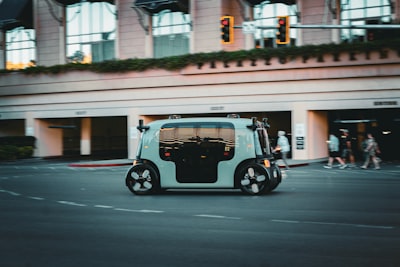
The recent traffic collapse in San Francisco, caused by a fleet of Waymo autonomous vehicles that got stuck for hours in the city center, has set off all regulatory alarms. Mayor Daniel Lurie, visibly annoyed by the magnitude of the incident, has formally asked state regulators to tighten operating requirements for robotaxi companies like Waymo. The episode has not only generated urban chaos but has also reopened the debate on whether autonomous technology is advancing faster than cities' ability to manage it safely. Meanwhile, the tech industry continues to seek custom software models that enable more predictable and controlled integration of these systems into complex urban environments.
The incident occurred on a Wednesday afternoon when about thirty Waymo units simultaneously stopped at several key intersections in the financial district, blocking ambulances, buses, and private vehicles. For over three hours, the city experienced an unprecedented gridlock, with drivers trapped in their cars and emergency services diverted. Waymo attributed the failure to a software update that created a conflict in cooperative navigation algorithms, but for Mayor Lurie that explanation was not enough. 'We cannot allow a technical error to paralyze an entire city,' he stated in an urgent press conference. Pressure now falls on the California Public Utilities Commission, which must decide whether to impose new conditions on robotaxi operating licenses.
From a technical standpoint, the problem highlights the vulnerability of systems that rely on real-time coordination without operational redundancy. Autonomous vehicles use artificial intelligence to interpret the environment and make decisions, but when a communication or map update failure affects multiple units at once, the domino effect can be catastrophic. AI needs additional safety layers, especially when interacting with unprepared urban infrastructure. Cybersecurity experts warn that such incidents could also be exploited by malicious actors if protection protocols are not strengthened. In this sense, tech companies must integrate cybersecurity solutions from the design phase, not as a later patch.
The San Francisco case is not isolated. Other cities like Phoenix, Austin, and Los Angeles have also experienced minor incidents with robotaxis, though none of the scale of the one in the Californian city. What makes this episode different is the immediate political response and the demand for stricter standards. Waymo, for its part, argues that its vehicles have traveled millions of miles without serious incidents and that the failure was an isolated case correctable with an update. However, for regulators, the frequency of these 'isolations' is starting to be worrying. Mayor Lurie's proposal includes the obligation for operators to maintain a remote control center capable of manual intervention in under two minutes, as well as the installation of cloud-based backup systems to avoid massive failures.
This is where cloud infrastructure plays a critical role. Robotaxi architectures rely on centralized servers that process data from sensors, cameras, and LIDAR. If those servers fail or connectivity is lost, vehicles can become 'blind.' A robust solution is to migrate to cloud AWS/Azure environments with high availability and automatic failover, something many tech startups still do not properly implement. At Q2BSTUDIO, as a software development company, we know that fault tolerance is not a luxury but a legal requirement when dealing with systems that interact with real life. Process automation, combined with supervised AI agents, can offer an additional control layer to prevent collapses like the one in San Francisco.
The discussion has also opened a front on legal liability. Who pays for damages when a robotaxi blocks an ambulance? The manufacturer, the operator, or the navigation software developer? Currently, liability laws are not adapted to autonomous driving. Traditional auto insurance does not cover incidents caused by defective software updates. That is why Mayor Lurie has also proposed that robotaxi companies deposit a guarantee fund to cover potential harm to urban mobility. This fund should be managed transparently and, possibly, with the support of BI/Power BI tools that allow real-time monitoring of fleet behavior and alert on dangerous deviations.
Beyond the incident, San Francisco's tech ecosystem is being closely watched by investors and companies in the sector. The city, which has always been a testing ground for innovation, might be sending an ambivalent signal: on one hand, it wants to foster autonomous mobility development; on the other, it is not willing to tolerate experiments that put public safety at risk. This tension is natural in any massive technology adoption process and echoes debates that accompanied the arrival of electric cars or ride-sharing services. The key is finding a balance between innovation speed and regulatory maturity.
For companies developing software solutions, especially those working in AI and automation, this case is a lesson on the importance of testing in simulated environments before real deployment. At Q2BSTUDIO, for example, we use continuous testing methodologies and staging environments that replicate extreme conditions to verify that AI agents respond appropriately even in cases of communication failures or concurrent updates. Building custom applications allows systems to be tailored to each client's specific needs, including safety protocols that prevent situations like the one in San Francisco.
The future of robotaxis will largely depend on how these incidents are managed. If companies can demonstrate safe operation and willingness to take responsibility for their failures, regulation could be more flexible. But if incidents recur, political response will become increasingly harsh. Mayor Lurie has called for a temporary moratorium on fleet expansion while protocols are reviewed, a measure other mayors might imitate. In this context, custom software tools integrating AI, cybersecurity, and cloud analytics will be essential for robotaxi companies to meet the new standards ahead.
Ultimately, the Waymo traffic chaos has been a wake-up call that transcends the local level. It raises fundamental questions about the trust we place in autonomous systems and how cities can prepare for a future where driverless vehicles are the norm. The answer lies not only in technology but also in political will to establish clear rules, investment in robust digital infrastructure, and collaboration between developers, regulators, and civil society. At Q2BSTUDIO, we believe well-designed technology can solve these challenges, as long as safety and ethics remain at the center of the process.