In today's digital era, customer satisfaction has become the main competitive differentiator for companies across all sectors. Offering a good product is no longer enough; the overall experience, from the first interaction to post-sales support, determines loyalty and business growth. This is where enterprise software plays a transformative role, enabling organizations to build stronger relationships, anticipate needs, and resolve problems with greater agility. However, this is not about any generic tool: the most effective solutions are those that adapt to the company's real processes, integrating artificial intelligence, data analytics, robust security, and the flexibility of the cloud.
Modern enterprise software goes far beyond automating administrative tasks. When implemented correctly, it becomes the core of a customer-centric strategy. For example, by centralizing customer profiles in a single system, sales, support, and marketing teams access a complete history of interactions, preferences, and past purchases. This allows them to personalize each communication, offer relevant recommendations, and resolve issues without the user having to repeat information. Companies that adopt CRM platforms integrated with process automation tools achieve significant reductions in response times, directly impacting the perception of service quality.
Another critical factor is the ability to anticipate. Systems based on artificial intelligence (AI) analyze behavioral patterns and detect early signs of dissatisfaction or churn. For example, AI agents can identify that a customer has visited the cancellation page several times without making a call. Then the system automatically triggers a personalized offer or schedules a retention call. This kind of proactivity not only improves retention but also enhances the customer experience, as the company shows it cares. Implementing these intelligent agents requires custom software that fits the specific workflows of each organization, something that companies like Q2BSTUDIO excel at with their focus on tailored solutions.
The cloud is another essential enabler. Cloud platforms such as AWS or Azure allow on-demand resource scaling, ensuring that customer service systems are always available, even during peak demand. They also facilitate the integration of multiple data sources (ERP, CRM, social media, IoT) in real time, providing a 360° view of the customer. With cloud services, companies can implement continuous updates without disrupting operations and ensure business continuity in the face of incidents. Q2BSTUDIO advises on migrating and optimizing cloud architectures, adapting the infrastructure to each client's needs.
Cybersecurity is a fundamental pillar when dealing with customer data. A single security breach incident can destroy years of built trust. Therefore, enterprise software must include protection layers such as encryption, multi-factor authentication, continuous monitoring, and penetration testing (pentesting). Access management and compliance with regulations like GDPR are aspects that cannot be left to chance. Cybersecurity solutions integrated into the software ensure that sensitive customer data is protected, translating into peace of mind for the user and reputation for the company.
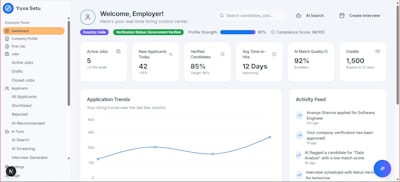
Business intelligence (BI) is another key piece. Tools like Power BI allow satisfaction indicators (NPS, CSAT, resolution time) to be visualized clearly and actionably. Executives can identify trends, process bottlenecks, or products with higher complaint rates. By crossing sales, support, and operations data, correlations are discovered that help improve the customer experience proactively. A well-designed dashboard not only informs but guides strategic decision-making. Q2BSTUDIO integrates these BI capabilities into enterprise systems, connecting disparate sources and generating customized reports that reveal the true state of the customer relationship.
Personalization at scale is another benefit that enterprise software makes possible. Through machine learning algorithms, customers can be segmented into micro-audiences and offers, content, or reminders tailored to each profile can be sent. For example, a financial services company can use predictive models to offer savings products to customers who have shown interest in investments, at just the right time. This not only increases conversions but also improves the perception that the company understands their needs. Behind these systems are a solid data architecture and automation processes that reduce friction.
However, implementing all this is not trivial. Many companies fall into the trap of buying standard solutions that do not fit their culture or workflows, generating internal resistance and poor results. The key lies in a custom development approach or in the deep configuration of modular platforms. This is where the experience of a technology partner like Q2BSTUDIO makes a difference. Their team analyzes existing processes, identifies pain points, and designs a roadmap that integrates the best technologies: from multiplatform applications to AI automation, through cloud, cybersecurity, and BI. It is not about imposing technology, but about enabling people to deliver exceptional service.
Finally, continuous measurement and iteration are essential. Enterprise software must allow real-time feedback collection (post-interaction surveys, sentiment analysis on social media, call recordings processed with NLP) and turn it into concrete actions. Automated feedback loops close the circle: if a customer reports a problem, the system not only assigns it to the right agent but also updates predictive models and adjusts follow-up campaigns. This continuous learning capability is what differentiates companies that truly put the customer at the center of their operations.
In summary, enterprise software is much more than a set of tools: it is the engine that drives memorable experiences, trust, and loyalty. By integrating artificial intelligence, data analytics, automation, cloud, and cybersecurity, companies can anticipate customer needs, resolve problems quickly, and personalize every interaction. And to achieve this, having an ally like Q2BSTUDIO, specialized in custom application development and the integration of cutting-edge technologies, ensures that digital transformation is aligned with satisfaction and growth objectives. Well-applied technology not only improves internal processes: it transforms the way customers perceive and value a brand.