Imitation learning (IL) has become a powerful technique for training autonomous systems that replicate expert behavior. However, its application in real-world environments faces a critical challenge: distribution shifts. When the model is deployed under conditions different from those observed during training, deviations can occur that compromise both performance and safety. This article analyzes a novel approach to make imitation learning robust and safe against these shifts, combining distributionally robust optimization techniques with adaptive control, and explores how companies like Q2BSTUDIO can implement these solutions in real projects.
Distribution shifts in IL are divided into two main categories: those induced by the agent's own policy and those arising from environmental uncertainty. The former occur when the learned policy generates trajectories that deviate from the demonstration flow, accumulating errors. The latter arise from unpredictable variations in the environment, such as changing weather conditions or physical disturbances. A unified framework addressing both types is essential to ensure reliable behavior.
The latest proposal combines imitation learning with Taylor series expansion to mitigate policy-induced shifts, and distributionally robust adaptive control to handle environmental uncertainty. This architecture allows formulating an IL problem that optimizes performance under distributional uncertainty while systematically incorporating safety constraints. The result is a system that not only imitates the expert but also adapts to unforeseen situations without violating critical limits.
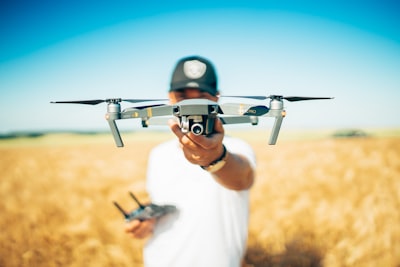
Safety is a differentiating factor in applications such as autonomous vehicles, drones, industrial robotics, or virtual assistants. For instance, a delivery drone must avoid restricted areas while navigating in an environment with unpredictable wind gusts. A traditional IL model would fail under such deviations, but a robust and safe approach can ensure the agent stays within allowed areas even under perturbations. Achieving this in practice requires a solid technological infrastructure.
This is where the expertise of Q2BSTUDIO as a software and technology company becomes essential. Implementing these systems demands advanced artificial intelligence solutions that integrate imitation learning models with distributional robustness techniques. Additionally, the ability to scale these models in production environments depends on robust cloud platforms. Q2BSTUDIO offers cloud computing services on AWS and Azure that enable training, deploying, and monitoring autonomous agents with high availability and low latency.
Furthermore, managing training data and expert demonstrations requires a powerful Business Intelligence ecosystem. With Azure and AWS cloud services, companies can centralize information and apply real-time analytics to detect potential distribution shifts before they affect performance. Moreover, integrating BI tools like Power BI allows visualizing key safety and efficiency metrics of the agents, facilitating informed decision-making.
Another crucial aspect is cybersecurity. IL-based systems operate in connected environments and can be vulnerable to adversarial attacks that manipulate observations or demonstrations. Q2BSTUDIO offers specialized cybersecurity and pentesting services to protect these systems against threats, ensuring robustness is not compromised by malicious actions. Likewise, implementing intelligent agents —or AI agents— capable of dynamically adapting to distribution shifts requires a modular and flexible design, something that custom software applications from Q2BSTUDIO can provide through microservice architectures and APIs.
Process automation is another area where robust imitation learning can make a difference. Instead of manually programming every rule, an IL system trained with expert demonstrations and reinforced with robustness techniques can autonomously perform complex tasks even when conditions change. Q2BSTUDIO offers process automation software services that integrate these models, allowing companies to reduce costs and improve operational efficiency without sacrificing safety.
From a technical perspective, the proposed framework uses a loss function that penalizes deviations from expert behavior but incorporates a regularization term based on distributional divergence. This allows the agent to not only learn the optimal policy but also maintain a safety margin against variations. Adaptive control adjusts the model parameters in real time, using techniques such as robust box optimization or variational inference. Implementing these algorithms requires deep knowledge of applied mathematics and advanced programming, capabilities that Q2BSTUDIO brings together in its multidisciplinary team.
A emblematic use case is unmanned aerial vehicles (UAVs) performing inspection tasks on critical infrastructure. These drones must operate in variable environments, with changes in wind, unexpected obstacles, and exclusion zones. A robust and safe IL model can learn from expert pilots while adapting to changing conditions, avoiding collisions and maintaining the mission. Companies deploying these technologies need technological partners that understand both the algorithmic side and the supporting infrastructure.
In conclusion, robust and safe imitation learning against distribution shifts represents a significant advancement towards reliable autonomous systems. The combination of distributional optimization techniques, adaptive control, and safety constraints provides a clear roadmap for critical applications. To materialize these solutions, it is essential to have a technology partner like Q2BSTUDIO, which brings expertise in custom software development, artificial intelligence, cloud computing, cybersecurity, BI, and automation. By integrating these services into a coherent ecosystem, organizations can build autonomous agents that not only imitate experts but also overcome real-world challenges safely and efficiently.