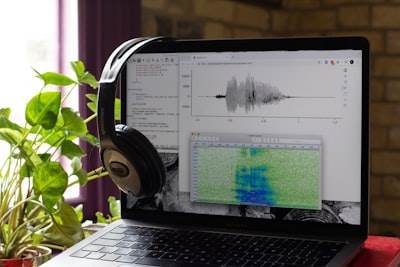
In the field of bioacoustics, automatic classification of animal calls is a task of high ecological value but also great technical complexity. Expert labeling of audio segments is costly and scarce, making active learning an ideal strategy to reduce the annotation burden. However, the setting is particularly challenging: target calls are extremely sparse and the call-type distribution follows a long tail, where a few rare classes carry most of the information. A limited annotation budget must be spent on those informative and hard-to-find segments. In this context, the BADGE-Greedy-DPP method offers a deterministic and efficient solution that maximizes the geometric volume of gradient embeddings in the selected batch, ensuring near-optimal coverage of informative diversity.
The core idea builds on BADGE's gradient embeddings, which represent each segment via the direction of the loss gradient with respect to model parameters. These embeddings encode uncertainty and potential learning contribution. The greedy algorithm sequentially selects the segment whose embedding increases the volume spanned by the batch embeddings the most. Since this objective (log-volume) is submodular, the greedy rule guarantees a batch value of at least (1-1/e) times the optimum, a theoretical guarantee not provided by previous heuristic BADGE variants (k-means++ and MCMC DPP). Moreover, a critical temporal granularity mismatch is addressed: the acquisition function scores whole segments, yet informative frames within them are few. Uniform averaging washes them out. BADGE's construction naturally solves this by applying the metric at the frame level: prediction residuals weight the aggregated pseudo-gradient, so high-confidence no-call frames contribute little, while a single uncertain rare-call frame can set the segment's direction.
In experiments on a hyena dataset with sparse and imbalanced calls, BADGE-Greedy-DPP outperformed all compared query strategies, including MFFT (the best non-BADGE baseline) and the two original BADGE variants. This result shows that combining volume maximization with gradient embeddings yields superior overall and rare-class performance. Beyond bioacoustics, the technique has direct applications in industries where labeled data is costly and anomalies are scarce, such as fraud detection in transactions, critical infrastructure monitoring, or manufacturing fault diagnosis.
At Q2BSTUDIO, a company specialized in software development and technology, we apply similar active learning and geometric optimization principles in our AI solutions. For example, in real-time event classification projects for energy sector clients, we use intelligent agent architectures that automatically prioritize the most informative samples for human review, drastically reducing labeling costs. Our team of custom software developers integrates these algorithms into monitoring platforms that process large volumes of acoustic or sensor data.
Practical implementation of these methods requires robust cloud infrastructure. Therefore, at Q2BSTUDIO we offer cloud AWS/Azure services to deploy models in production, enabling scaling of millions of segments without degradation. Additionally, our BI/Power BI and automation solutions allow clients to visualize call patterns and trigger real-time actions. Cybersecurity is also a core pillar: we protect sensitive wildlife data and field-device communications through pentesting and audits.
In summary, greedy volume maximization in gradient embeddings represents a significant advance for active learning in extremely imbalanced and noisy data contexts. Its ability to select informative batches with theoretical guarantees and natural adaptation to temporal granularity opens the door to industrial applications where annotation efficiency is critical. At Q2BSTUDIO we combine these cutting-edge techniques with solid experience in software development, artificial intelligence, and cloud computing to deliver robust and scalable solutions to our clients.