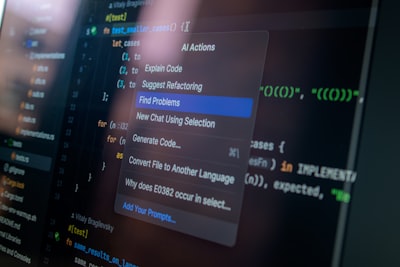
In recent weeks, a controversy has erupted that should concern any developer, CTO, or security professional using artificial intelligence tools for coding. An AI-powered coding assistant — specifically a CLI that promised to streamline work with agents — has been discovered uploading the entire Git repository to cloud storage controlled by the vendor, without the user's knowledge and, more critically, bypassing the privacy settings that were supposed to prevent it. This is not a minor bug; it is an infrastructure vulnerability revealing how some AI tools don't 'read' your code to help you, but rather 'send it home' as if it were loot.
This finding is not new conceptually: since the first VS Code extensions requested workspace-wide permissions, we knew broad file access was a risk. What changes now is the mechanism. It is not about the language model reading context fragments and potentially leaking them through completions. It is a silent, independent upload channel that moves entire repositories — including commit logs, secrets, API keys, and everything in the history — to a vendor-controlled bucket. And it does so through a path that does not even touch the 'improve the model' toggle users believed controlled data sharing. The difference in magnitude: while before we talked about accidental context leakage, now we face deliberate, systematic exfiltration.
Over the past two years, the industry has trained developers to think in terms of prompt injection, context leakage, and training data contamination. These are model-layer problems with model-layer mitigations. But this is an infrastructure-layer problem: an exfiltration pipeline that exists regardless of what the model 'decides' to do with your code. It resembles a supply chain telemetry scandal more than an AI safety incident. The fact that it is dressed in agentic coding tool clothing should not distract from that reality.
What is being understated in initial analyses is the failure of opt-out mechanisms. Vendors have trained users to believe that disabling the 'model improvement' or 'training data usage' checkbox meaningfully limits what leaves their machine. If that is cosmetic — if there is a parallel channel moving full commit history including unredacted secrets regardless of that setting — then every privacy assurance from every AI coding tool must be treated as unverified until proven otherwise. This is not paranoia; it is applying the same skepticism we would apply to any vendor claiming 'we don't store your data' without an audit trail to back it up.
What is being overstated, at least by the deafening silence surrounding the topic, is how seriously anyone is taking this. On forums like Hacker News, zero points, zero comments. That silence is a signal in itself. Either the finding has not reached the people who should care, or 'AI tool does something sketchy with your data' has become so routine that it no longer registers. Neither explanation is comforting. Who benefits from the narrative that this is a minor bug? The vendor, obviously — a quiet patch and a changelog line is much cheaper than admitting that a coding assistant was quietly building a shadow copy of every private repo it touched. But also, honestly, the broader AI tooling industry benefits because if one agentic CLI does this, the assumption should be that it is worth checking whether others do too.
The implications are multiple. For developers: if you have given any AI agent shell or filesystem access to a repository, you can no longer assume 'it only sees what it needs to answer my prompt.' You must assume it can see, and potentially transmit, everything in that repository — including history. That means secrets scanning and rotation are no longer optional hygiene; they are the baseline cost of using these tools. For security teams: this is a network monitoring problem as much as an AI governance problem. If you are only watching model API traffic for DLP purposes, you are watching the wrong pipe. Any agentic tool with local repo access needs its egress traffic inventoried and audited independently of whatever 'privacy settings' the vendor exposes in a UI.
For the industry as a whole, this is a preview of the next compliance headache. SOC 2 and equivalent audits will need to start asking: 'show me every network destination this tool talks to, not just the ones in your privacy policy' — because clearly the policy and the behavior can diverge. And this is where companies like Q2BSTUDIO, specialized in custom software development and cybersecurity, play a key role. It is not enough to choose an AI tool because its marketing promises privacy; you must audit its actual behavior, monitor its connections, and establish security policies that go beyond what the vendor says.
At Q2BSTUDIO, we understand that adopting artificial intelligence in software development must come with a secure and transparent architecture. That is why when we help our clients integrate AI agents into their workflows, we do not just plug in an API. We perform a complete analysis of the exposure surface: what data can the tool see? Where is it sent? Are there hidden exfiltration channels? Above all, we implement perimeter security controls and network monitoring to detect any unauthorized transfer. Our cybersecurity services include penetration testing and configuration audits in cloud environments AWS and Azure, because we know the cloud is a critical vector when protecting source code. Additionally, we offer Business Intelligence solutions with Power BI and process automation, all integrated so that AI is not only intelligent but also secure.
The open question this case leaves is unsettling: if a vendor's own opt-out setting does not govern a data channel that same vendor built, then what exactly are we auditing when we review an AI tool's 'privacy controls'? The product, or just the marketing copy around it? The answer should concern everyone who trusts these tools in their daily work. Because if a coding assistant can send your entire Git history home without you knowing, perhaps it is time to start applying the maxim of 'trust, but verify' — and to do so with tools and processes that truly put security ahead of convenience.
At Q2BSTUDIO, we believe innovation does not have to come at the expense of security. That is why we work with companies of all sizes to design custom software solutions that incorporate AI responsibly, with robust cloud architectures and cybersecurity processes integrated from design. If you are considering using AI tools in your development, we invite you to look not only at what they promise, but at what they actually do. And if you need help auditing, protecting, or redesigning your workflow, we are here to offer a technical, realistic, and data-centric approach. Because in the end, your code is yours, and only you should decide where it goes.
For more information on how we secure your cloud environments and protect your intellectual property, visit our cybersecurity and pentesting section. And if you want to explore how artificial intelligence can be securely integrated into your business, discover our enterprise AI services.