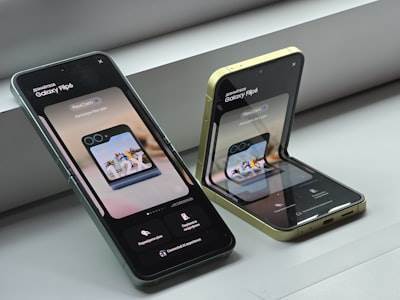
South Korean tech giant Samsung has once again captured the attention of the mobile world with a very particular teaser: the new shape of the Galaxy Z Fold 8 is hinted at in a promo for the upcoming movie Spider-Man: Brand New Day. In the images, Spider-Man pulls a foldable device from a 3D printer and opens it book-style, although the shots are intentionally obscured by lens flares. This marketing move is no coincidence: it points to a significant redesign that, according to rumors, would adopt a wider, passport-like proportion. With this launch, Samsung aims to redefine the foldable category, facing imminent competition from Apple, which is also preparing a foldable iPhone with a similar design. The Galaxy Z Fold 8 and the rest of the new device lineup are expected to be unveiled at the Galaxy Unpacked event on July 22.
From a technical perspective, the format change is not just an aesthetic whim. A wider unfolded screen implies a superior multitasking experience, closer to that of a compact tablet. For developers, this represents both a challenge and an opportunity: applications must adapt to new aspect ratios and multi-window functionalities. In this context, companies like Q2BSTUDIO, a specialist in custom software development, are already preparing solutions that take full advantage of these devices' capabilities. The key is to offer software that not only looks good on any format but also integrates artificial intelligence to anticipate user needs, something that will make a difference in the next generation of foldables.
The Spider-Man teaser is not just a nod to pop culture but a statement of intent from Samsung: it wants the Fold 8 to be as iconic as the superhero himself. However, the real challenge lies not in design but in functionality. Foldables have historically suffered from durability and software optimization issues. This is where cloud infrastructure (AWS/Azure) comes into play, enabling content synchronization across devices and delivering seamless experiences without relying entirely on local hardware. Moreover, cybersecurity becomes critical: a foldable with multiple usage modes expands the attack surface. Therefore, integrating AI agents for real-time threat detection is a trend already being implemented by companies like Q2BSTUDIO in their enterprise cybersecurity projects.
We cannot forget the role of Business Intelligence (BI) in this ecosystem. With larger and more versatile screens, Power BI solutions become ideal tools for visualizing data on the go, whether in tablet mode or folded mode. Imagine an executive reviewing interactive dashboards while traveling; the Galaxy Z Fold 8 could be the perfect companion. Q2BSTUDIO offers BI and Power BI services tailored to this type of device, enabling companies to make informed decisions from anywhere. And let's not overlook automation: foldables can manage complex processes through AI agents that learn from user behavior, optimizing tasks like meeting scheduling or email management.
The foldable war is just beginning. While Samsung bets on a squarer, more functional design, Apple is watching and preparing its own device. For developers, this scenario opens a market full of possibilities. Custom applications will cease to be a luxury and become a necessity: every company will want to offer a differentiated experience on these new formats. Q2BSTUDIO, with its focus on AI, cybersecurity, cloud, and automation, is perfectly positioned to lead this transformation. The Galaxy Z Fold 8 will not just be a phone; it will be a catalyst for change in how we interact with technology.
In summary, the Spider-Man teaser has achieved its goal: generating excitement. But the real impact will come when users can verify whether the new shape of the Fold 8 justifies the investment. Meanwhile, in the software development world, preparation is key. From now on, at Q2BSTUDIO we are working on solutions that integrate AI agents to make the most of these devices' capabilities. Because the future is not only foldable, but also anticipatory.