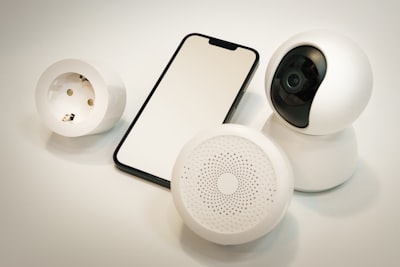
OpenAI has announced plans to launch a screenless smart speaker, a device that promises to integrate its GPT-Live language model to deliver natural and contextual responses. However, the immediate question is: what problems does this product actually solve that are not already covered by the Apple HomePod, Amazon Echo, or Google Nest ecosystems? Beyond the technological hype, the voice assistant market has been maturing for years, and users already expect features like home automation control, music playback, and answering questions. OpenAI's bet seems to focus on advanced personalization through integrated sensors and a camera, capable of gathering contextual information about the environment. But this very capability opens a sensitive front: privacy and cybersecurity.
From a technical perspective, the true differentiator of this speaker would be its ability to act as a proactive AI agent, learning routines and anticipating user needs. However, that level of intelligence requires processing sensitive data in real time, which inevitably raises risks. A device that 'knows you' —as OpenAI promises— becomes a juicy target for hackers and data brokers if security measures are not robust. This is where custom software development becomes relevant: it is not enough to integrate a cutting-edge LLM; the software architecture must be designed with protective layers from the start. Companies like Q2BSTUDIO, specialized in custom software, understand that security is not an add-on but a fundamental pillar in any connected solution.
OpenAI's approach also raises questions about its business model. Bloomberg estimates a price of $200 to $300, a low figure for hardware with quality components and proprietary AI development. Manufacturing at that cost implies either massive subsidies from investors —who already finance multibillion-dollar losses— or compromises in hardware quality. The alternative is that OpenAI ends up offering a freemium service where recurring revenue comes from subscriptions or data sales, which would clash head-on with privacy promises. In this sense, the experience of companies implementing cloud AWS/Azure shows that scalability and cloud security are critical to handle massive volumes of data without exposing users. Without a solid cloud infrastructure, any smart device becomes an open door to vulnerabilities.
Another key aspect is integration with business ecosystems. While home speakers focus on the end consumer, OpenAI could target professional use: assistants for offices, meeting rooms, or industrial environments. This is where concepts like BI/Power BI and AI agents come into play. Imagine a speaker that not only answers questions but also analyzes real-time data from a Power BI dashboard and delivers executive summaries. Or a device that, through AI agents, automates complex workflows: from scheduling meetings to inventory management. This would require a custom software layer that connects the speaker with ERP, CRM, and cloud platforms. Q2BSTUDIO, with its focus on BI/Power BI and AI agent development, could help companies create hybrid solutions that leverage these capabilities without compromising security.
The leak that Jony Ive, former Apple designer, is involved in the device's design adds an emotional factor but does not solve the fundamental question: why would this product exist? If OpenAI fails to articulate a clear value beyond 'a smarter assistant,' it risks being perceived as a luxury gadget without a defined purpose. The market already has robust solutions from Amazon and Apple, and consumers will not switch ecosystems just for a nice design. They need a compelling reason: perhaps native integration with productivity tools, or truly guaranteed privacy through end-to-end encryption and local data processing. At this point, cybersecurity is not optional; it is the factor that will determine whether the device becomes a success or a failure due to vulnerabilities. Companies developing cybersecurity know that any data collection point is a potential attack vector, and mitigating it requires constant audits and security updates.
In the business realm, the true potential of an AI speaker lies not in the home but in environments where productivity and automation make a difference. For example, an AI agent capable of managing technical incidents, responding to customers, or monitoring industrial processes. To achieve this, the device must integrate with legacy and cloud systems through robust APIs. This is where automation and cloud AWS/Azure solutions become essential. Instead of a generic speaker, OpenAI could offer a smart 'hub' that centralizes communication and control within an organization, similar to what AI agents do in customer experience platforms. However, currently there is no indication that OpenAI is developing that aspect. Its focus seems purely consumer-oriented, drastically reducing its potential market.
Another blind spot is competition. Apple has already sued OpenAI for alleged trade secret theft, suggesting that the design or underlying technologies may infringe on patents. If OpenAI fails to differentiate itself legally and functionally, the product could be delayed or redesigned, missing the window of opportunity. Moreover, mass manufacturing at competitive prices is a challenge that even giants like Apple handle with difficulty. OpenAI has no hardware experience and depends on partners who also work with Apple, creating tensions in the supply chain. This explains why the estimated price seems unrealistic: either the product will be expensive (over $500) or it will have negative margins.
For companies looking to leverage conversational AI without relying on a specific manufacturer, the most sensible option is to develop their own AI agents through custom software. Instead of waiting for OpenAI to solve privacy and pricing issues, organizations can build virtual assistants integrated into their own applications, using open-source LLMs or cloud services like Azure OpenAI. This way, they maintain data control and customize the experience to their needs. Q2BSTUDIO offers exactly that kind of solution: from cloud architecture design to implementing contextual chatbots, including integration with Power BI for real-time dashboards.
In summary, OpenAI's speaker, for now, is a question mark. It solves a problem that does not necessarily exist: most users already have functional voice assistants. Its success will depend on its ability to offer something genuinely new —perhaps more natural interaction thanks to GPT-Live— and to guarantee hacker-proof privacy. However, doubts about its business model, manufacturing, and security are numerous. Meanwhile, smart companies are investing in custom solutions that allow them to explore AI without compromising their technological sovereignty. And there, the role of developers like Q2BSTUDIO is key: transforming the promise of AI into real, secure, and scalable tools.