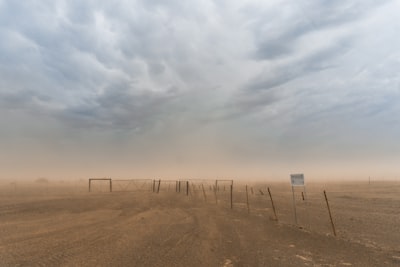
Forecasting the concentration of particulate matter (PM10) is a critical challenge for air quality management in urban and industrial environments. Traditional methods based on monitoring stations provide accurate but discrete data, while chemical transport models offer continuous fields with local biases. Fusing both sources, as proposed in approaches like OmniPMNet, represents a significant advance. However, implementing these solutions in production requires custom software development that integrates artificial intelligence, cloud infrastructure, and business analytics. In this article, we explore how technology companies like Q2BSTUDIO can help build environmental data fusion platforms.
The foundation of any fused forecasting system lies in the ability to transform irregular observations (stations) into regular representations (grids). Techniques such as terrain-aware Gaussian convolutions and multi-scale attention mechanisms allow combining station data with numerical model outputs. This process is nontrivial and demands efficient algorithms that can run in real time. This is where Q2BSTUDIO's artificial intelligence solutions can make a difference: we design custom deep learning models that learn to correct biases and spatially interpolate, maintaining accuracy at measurement points while generating continuous fields.
From a technical perspective, fusion architectures often employ a conditional neural process network (ConvCNP) that acts as a unified decoder. This decoder can read a shared latent representation and generate predictions at both stations and grid cells. A key aspect is the inclusion of spatial attention that dynamically weights each source's contribution based on region and forecast lead time. Implementing these mechanisms in a business environment requires not only AI expertise but also high-performance computing and pipeline orchestration. Q2BSTUDIO offers cloud services on AWS and Azure to scale these workloads, ensuring low latency even for 108-hour forecast windows.
The business value of such systems is enormous. Public administrations need early warnings of dust or pollution episodes to activate health protocols. Industries require accurate predictions to plan maintenance shutdowns or adjust production processes. A platform like this can integrate data from government stations, industrial IoT sensors, and external weather models, all powered by AI agents that orchestrate ingestion, cleaning, and fusion. Moreover, visualizing these forecasts through Business Intelligence dashboards (Power BI) enables decision-makers to act on data. Q2BSTUDIO develops custom applications that connect these modules, from the data layer to the user interface.
We cannot overlook cybersecurity. When handling data from critical infrastructure and potentially sensitive information (such as station locations or proprietary models), it is essential to protect both transmission and storage. Q2BSTUDIO incorporates cybersecurity practices throughout the development lifecycle, including vulnerability assessments, end-to-end encryption, and multifactor authentication. Furthermore, specialized AI agents for anomaly detection can alert on possible data deviations or unauthorized access.
A concrete use case would be building a fusion system for a regional monitoring network. Starting from meteorological and air quality stations, a base model is trained on historical data. Then, through transfer learning and fine-tuning, it is adapted to local conditions. Deployment is done in containers orchestrated on Azure Kubernetes Service, with auto-scaling based on demand. Results are stored in a data lake and served via REST APIs. Reports and alerts are distributed through Power BI Embedded, allowing managers to view heat maps and temporal projections. This entire ecosystem is made possible by Q2BSTUDIO's custom software development capabilities, combining AI, cloud, and BI.
In summary, fusing discrete and gridded PM10 forecasts is an example of how integrating multiple data sources improves accuracy and coverage. But the underlying technology is not exclusive to the environmental domain; it applies to sectors like logistics, energy, or finance, where combining point data and continuous models is a recurring need. Q2BSTUDIO is positioned to lead these developments, offering services in custom applications, artificial intelligence, cloud AWS/Azure, cybersecurity, Business Intelligence with Power BI, and AI agents. If your organization seeks to implement a similar data fusion solution, contact our team to discover how we can transform your scattered data into actionable insights.