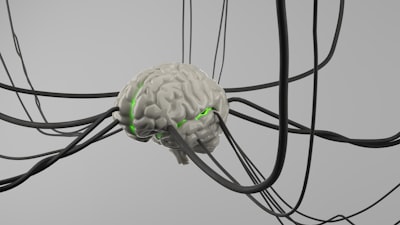
The healthcare sector faces a monumental challenge: musculoskeletal diseases —osteoarthritis, complex fractures, sports injuries or degenerative pathologies— are the leading cause of disability worldwide. Their clinical management requires a longitudinal view that integrates data from multiple visits, departments and hospital systems, something routine practice fails to achieve. Now, a breakthrough called OrthoPilot demonstrates how artificial intelligence (AI) can bridge that gap, transforming fragments of information into continuous, personalized decisions. In this article we explore how it works, its results, and from a technical and business perspective, how a company like Q2BSTUDIO can help build similar solutions.
OrthoPilot is a clinical system based on a large language model (LLM) that orchestrates real-time data: radiological images, labs, pathology reports and medical orders. Its ability to convert the patient's evolving state into evidence-based decisions —from admission diagnosis to rehabilitation planning— places it far above traditional approaches. In a study with 81 orthopedists, it surpassed experts with 25 years of experience in diagnostic reasoning, clinical decision-making and management planning. Furthermore, in a randomized deployment with 8,240 inpatients, it increased cumulative cases per bed by 9.7% and improved perceived access to health information. These data leave no doubt: AI no longer only predicts isolated events, but executes complete longitudinal management.
Behind a system like OrthoPilot lies a complex technological architecture. It requires integrating heterogeneous data sources (EHRs, PACS, labs), ensuring information security and privacy (cybersecurity), and scaling in cloud environments such as AWS or Azure to handle massive volumes. This is where expertise in AI agents and the ability to build custom applications become essential. Q2BSTUDIO, as a software development and technology company, offers precisely that expertise: from creating custom language models to orchestrating data pipelines, including deploying dashboards with Power BI to monitor clinical indicators.
For a system like OrthoPilot to work in the real world, cloud infrastructure is critical. Processing medical images and real-time inference require elastic and secure environments. AWS and Azure cloud services allow deploying models with high availability and complying with regulations like HIPAA or GDPR. Moreover, cybersecurity is not an add-on: patient information is one of the most sensitive assets. Q2BSTUDIO integrates cybersecurity practices into every layer of the system, from authentication to data encryption at rest and in transit.
Another fundamental pillar is business intelligence (BI). OrthoPilot not only generates clinical decisions but also produces a torrent of data on effectiveness, resource use and outcomes. With Power BI, medical teams and executives can visualize trends, detect bottlenecks and optimize flows. Q2BSTUDIO's BI solutions transform that data into actionable dashboards, directly connecting with AI models and clinical sources.
Beyond OrthoPilot, the digital health market is hungry for systems that automate complex processes. AI agents —like those developed by Q2BSTUDIO— can be customized for orthopedics, oncology or primary care. The key lies in combining language models with clinical workflows, requiring both AI know-how and legacy system integration. Companies that bet on this type of technology will not only improve care quality but also optimize operating costs and position their services as innovation benchmarks.
In conclusion, OrthoPilot marks a milestone in applying AI to musculoskeletal care. But its success is no coincidence: behind it is careful engineering in cloud, cybersecurity, BI and custom application development. At Q2BSTUDIO we understand that each project requires a unique combination of these capabilities. Whether to implement a clinical assistant, a remote monitoring system or a population health dashboard, our team is ready to accompany healthcare organizations in their digital transformation. The revolution is here, and the right technology makes the difference.