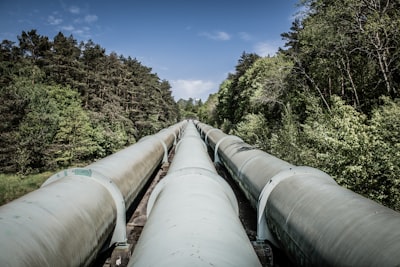
The growing demand for artificial intelligence is driving the construction of massive data centers, but these projects face a critical challenge: water consumption. A new data center project specialized in AI workloads has requested water rights from the Colorado River, sparking debate about water sustainability in a region already affected by drought.
The project, whose identity has not been officially revealed, plans to locate in the southwestern United States near the Colorado River to leverage its water resources for server cooling. High-density data centers, especially those running generative AI and large language model training, generate significant heat requiring efficient cooling systems. Evaporative cooling, which consumes large volumes of water, remains a common option due to its lower energy cost.
According to industry estimates, a 100 MW data center can consume between 1 and 2 million gallons of water per day, equivalent to the consumption of a small city. With the expansion of AI, water demand could skyrocket. The Colorado River project exemplifies the tension between technological innovation and natural resource management.
From a technical perspective, water efficiency has become a priority. Companies are exploring direct liquid cooling, water reuse, and adiabatic cooling. However, implementing these solutions requires specialized software to monitor and optimize consumption in real time. This is where companies like Q2BSTUDIO add value, developing custom applications that integrate sensors, weather data, and predictive models to dynamically adjust cooling systems.
Artificial intelligence plays a dual role: it is the cause of increased computing demand, but it can also be the solution for managing resources. AI agents, for example, can analyze workload and temperature patterns to recommend real-time adjustments, reducing water consumption without compromising performance. Q2BSTUDIO has implemented intelligent agent solutions for industrial clients, improving operational efficiency in critical environments.
Additionally, cloud infrastructure plays an important role. Many modern data centers operate in hybrid environments, using AWS and Azure services to scale resources on demand. Migrating to the cloud allows companies to reduce their carbon footprint by leveraging more efficient data centers, but also requires careful security management. Cybersecurity is another critical aspect: a data center controlling water and energy systems must be protected against attacks that could disrupt supply or cause environmental damage. Q2BSTUDIO offers pentesting and cybersecurity consulting to secure these infrastructures.
The use of Business Intelligence (BI) with tools like Power BI allows operators to visualize key metrics: water consumption per compute unit, energy efficiency (PUE), ambient temperature, etc. Custom dashboards developed by Q2BSTUDIO help managers make informed decisions to optimize resource usage.
The Colorado River project is not an isolated case. Worldwide, governments and communities are demanding greater environmental responsibility from data center operators. Some regions have imposed water consumption limits, forcing companies to innovate. The combination of custom software, artificial intelligence, cloud computing, and cybersecurity offers a path towards more sustainable data centers.
In conclusion, the demand for water from the Colorado River by an AI data center reflects a growing dilemma: how to balance technological progress with natural resource preservation. Companies that invest in advanced technological solutions, like those offered by Q2BSTUDIO, not only improve their operational efficiency but also contribute to a more sustainable future. The key lies in developing custom applications that integrate real-time monitoring, predictive analytics, and intelligent automation, thereby reducing the environmental impact of the AI revolution.
The Colorado River, which supplies over 40 million people and a vast agricultural area, is already facing a scarcity crisis due to climate change and overuse. The water request for a data center has alarmed environmental groups and local communities. Project advocates argue that water cooling is more energy-efficient than air conditioning, and that the data center could use recycled or treated water, reducing its impact. However, the infrastructure needed to treat and recycle water requires investment in advanced control systems.
Custom software development is essential for managing these systems. Q2BSTUDIO designs multiplatform applications that integrate IoT, real-time data analysis, and optimization algorithms. For example, an intelligent cooling system can adjust pump speeds and valve openings based on outdoor temperature, server load, and weather forecasts, minimizing water usage. Additionally, AI agents can predict demand spikes and proactively activate backup systems.
Cybersecurity is also critical: an attack on water control systems could have catastrophic consequences. Q2BSTUDIO offers security audits and penetration testing to ensure critical infrastructures are protected. Likewise, integration with cloud platforms like AWS or Azure allows storing and processing large volumes of sensor data, facilitating analysis with BI tools like Power BI. Dashboards developed by Q2BSTUDIO enable managers to visualize water consumption in real time and compare it with sustainability KPIs.
Artificial intelligence not only consumes resources but can also help conserve them. Machine learning algorithms can identify inefficient usage patterns and suggest operational changes. Q2BSTUDIO has implemented AI solutions for clients in sectors such as manufacturing and energy, achieving significant reductions in water consumption. In a data center context, AI agents can coordinate cooling across different rooms, prioritizing less heat-sensitive workloads to reduce cooling demand.
The Colorado River project also raises questions about transparency and governance. Data center operators must report their environmental impact to investors and regulators. Here, Business Intelligence tools play a crucial role. Q2BSTUDIO helps companies build custom dashboards that integrate data on water consumption, energy, and carbon emissions, facilitating ESG (Environmental, Social, Governance) reporting.
In a broader context, the data center industry is adopting sustainability commitments. Google, Microsoft, and Amazon have announced plans to replenish more water than they consume by 2030. However, achieving these goals requires technological innovation. Collaboration with software development companies like Q2BSTUDIO accelerates the adoption of custom solutions that address specific challenges, such as integrating alternative water sources (greywater, rainwater harvesting) or implementing immersion cooling systems.
Immersion cooling, where servers are submerged in a dielectric liquid, drastically reduces water consumption but involves high installation and maintenance costs. Custom applications can monitor liquid temperature and composition, alerting for potential leaks or degradation. Q2BSTUDIO develops control software for these systems, ensuring their reliability.
In summary, the debate over Colorado River water for an AI data center is a microcosm of the environmental challenges of the digital age. Companies that invest in smart technology – from custom software to AI agents and cloud computing – are better positioned to operate sustainably. Q2BSTUDIO, with its expertise in application development, cybersecurity, BI, and cloud, offers an ecosystem of solutions that enable data centers to optimize resources, comply with regulations, and maintain competitiveness.