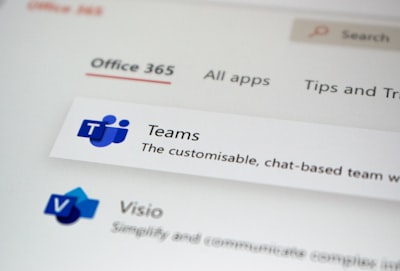
A new cyber threat has been identified by security experts, dubbed “Operation BlueDash.” This phishing campaign uses a convincing lure: a fake Microsoft Teams update that actually installs legitimate remote monitoring and management (RMM) tools on victims’ devices. The attack combines social engineering, compromised web infrastructure, and the appearance of an official Microsoft Store to deceive users into downloading software that is later used for malicious purposes. In this article, we analyze in depth the modus operandi, the technical and business implications, and how organizations can protect themselves with solutions such as those offered by Q2BSTUDIO in cybersecurity.
The scam begins with an email or direct message pretending to be from Microsoft. It informs the recipient that a secure document shared via Teams cannot be opened unless the application is updated. The message includes a link that redirects to a carefully forged webpage replicating the Microsoft Store. However, the URL has been manipulated by exploiting compromised legitimate websites, making early detection difficult. Upon clicking the “update” button, the user downloads a package containing RMM tools such as AnyDesk, TeamViewer, or ConnectWise, but with configurations that allow the attacker to take remote control of the device without raising suspicion.
The most dangerous aspect of this technique is that RMM tools are legitimate and widely used by IT teams for network administration. Traditional firewalls and antivirus software do not flag them as threats, so the malware goes unnoticed. Once installed, the cybercriminal can execute commands, extract data, deploy ransomware, or even use the system as a launching pad for lateral attacks within the organization. Operation BlueDash demonstrates how attackers are evolving toward more sophisticated methods, leveraging the trust employees place in corporate applications like Microsoft Teams.
From a business perspective, this type of incident underscores the need to integrate cybersecurity strategies that go beyond basic antivirus. Continuous staff training is essential, but so is having advanced detection and incident response tools. Artificial intelligence applied to security can identify anomalous patterns in network traffic or endpoint behavior, alerting before irreversible damage occurs. Q2BSTUDIO, as a software development and technology company, offers customized cybersecurity solutions, including vulnerability assessments and penetration testing tailored to each infrastructure.
The cloud also plays a key role in defending against campaigns like BlueDash. Cloud architectures on AWS or Azure enable granular access controls, continuous monitoring, and zero-trust policies. IT teams can configure alerts for any unauthorized remote software installation, and active directory services can restrict which applications can run. Moreover, using expert-managed cloud services reduces the attack surface by keeping systems automatically updated and patched.
Another vector exploited by attackers is the lack of visibility over update processes. Many companies still rely on users manually downloading and installing updates, which opens the door to this kind of phishing. This is where process automation solutions can make a difference: centralizing software updates through group policies or MDM tools eliminates the need for employees to interact with external links. Automation, combined with AI, can even predict which updates are legitimate based on historical system behavior.
Business Intelligence (BI) also plays a role in cybersecurity. Using Power BI dashboards, security officers can visualize real-time events such as software installations, unusual remote connections, or access attempts from unknown locations. Q2BSTUDIO develops custom BI solutions that integrate data from multiple sources (network logs, endpoints, cloud) to provide a unified view of security posture. With these tools, organizations can proactively detect phishing campaigns like BlueDash.
Finally, we cannot ignore the role of AI agents. These autonomous systems can be trained to simulate user behavior and detect anomalies in real time. For example, an AI agent could monitor remote desktop activity and stop any connection attempting to install unapproved software. The combination of AI agents with cloud platforms from AWS or Azure enables automated response, blocking the threat in milliseconds. Companies investing in custom software development, such as those performed by Q2BSTUDIO, have the advantage of adapting these technologies to their specific needs, creating unique barriers against targeted attacks.
In summary, Operation BlueDash is a reminder that phishing has evolved beyond the classic email with a malicious link. Attackers now use legitimate tools and exploit trust in collaboration platforms. To protect themselves, organizations must adopt a multi-layered approach including training, advanced cybersecurity solutions, automation, artificial intelligence, and constant monitoring. Q2BSTUDIO, with its expertise in custom application development, AI, cloud, and BI, is ready to help companies strengthen their defenses in an increasingly complex digital landscape.