In today's business ecosystem, technology is no longer a mere administrative support but a strategic engine capable of generating sustainable value. When an organization invests in enterprise software, it is not just acquiring an operational tool; it is building the foundation for smarter decisions, more efficient processes, and an adaptability that makes a difference against competition. The question many companies ask themselves is not whether they need software, but how to make that software deliver tangible benefits for years, avoiding it becoming a recurring expense without return. The answer lies in a comprehensive approach combining technology, governance, and change management, where custom software plays a key role by fitting exactly to the business needs, rather than forcing the team to adapt to a generic product.
Building long-term value requires thinking beyond the initial implementation. Many companies fall into the trap of choosing standard solutions that seem economical at first but accumulate hidden costs in customization, integration, and maintenance. The true return on investment comes from software that not only solves today's problem but evolves with the company. That is why customization and integration with existing systems—from ERPs to legacy CRMs—are decisive. This is where cloud platforms like AWS or Azure come into play, offering elastic scalability and enterprise security. By working with a technology partner like Q2BSTUDIO, organizations can design cloud AWS/Azure solutions that support everything from data management to high-performance computing, without compromising control or privacy.
One of the pillars of long-term value is the ability to capture and systematize institutional knowledge. When employee expertise, critical processes, and lessons learned are recorded in an accessible and structured platform, the company becomes immune to staff turnover and can scale its experience. Custom applications allow modeling those workflows exactly as they happen in reality, incorporating business rules that update dynamically. Furthermore, the inclusion of artificial intelligence turns that historical data into predictive models: a system that learns from order patterns, maintenance incidents, or customer behavior can anticipate needs and avoid bottlenecks before they occur. AI agents—virtual assistants trained in corporate logic—are beginning to automate customer service tasks, internal approvals, and risk analysis, freeing human talent for higher strategic value functions.
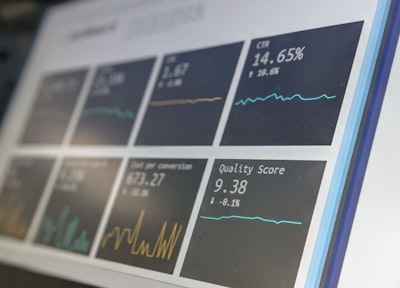
Continuous improvement should not be a one-off project but a cycle embedded in daily work. Enterprise software that creates long-term value includes feedback mechanisms: dashboards with key indicators, smart alerts, and periodic review processes. Here, Business Intelligence (BI) tools such as Power BI are essential. A well-designed dashboard not only shows what happened but also allows simulations and detection of emerging trends. For example, a logistics company can visualize route efficiency in real time and, thanks to integration with weather and traffic data, proactively adjust its operations. Q2BSTUDIO offers BI and Power BI services that transform scattered data into a single source of truth, accessible from any device and aligned with strategic objectives.
Scalability is another critical vector. Software that works for a team of 20 people must be able to support 200 or 2000 without trauma. Microservices architecture, containers, and cloud infrastructure allow growth by modules, adding functionalities without tearing down what has been built. Moreover, cybersecurity becomes an enabler, not a brake. When a company implements security from the design phase—end-to-end encryption, multi-factor authentication, continuous audits—it protects not only its data but also customer trust and market reputation. Cybersecurity must be part of the software's DNA, not an afterthought. Q2BSTUDIO integrates penetration testing and regulatory compliance controls in every development phase, ensuring the solution is robust against internal and external threats.
We cannot forget regulatory compliance and risk management. In regulated sectors like finance, healthcare, or energy, software must guarantee traceability, auditing, and personal data protection (GDPR, LOPDGDD, etc.). A custom-designed system can incorporate specific controls for each regulation, generating automatic reports and alerts for deviations. This not only avoids fines but also simplifies external audits and demonstrates commitment to best practices. Process automation, through rule engines and intelligent workflows, reduces human errors and speeds up response times. When automation is combined with AI agents, possibilities open up such as automatic invoice validation, resource allocation based on demand, or real-time fraud detection.
Finally, long-term value manifests in the organization's ability to anticipate market changes, strategic pivots, or geographic expansion. Well-built software is not a burden but an asset that can be redirected toward new business lines without starting from scratch. The key is to choose a technology partner that understands the business, offers development, integration, and automation services with a forward-looking vision. Q2BSTUDIO positions itself as that ally, combining technical expertise with governance and change management so that enterprise software is not just a tool but the nervous system connecting people, processes, and strategy. With a solid foundation in cloud, AI, BI, and cybersecurity, companies can build lasting competitive advantages, protect their intellectual capital, and grow with confidence.