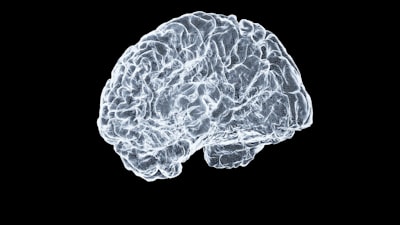
The electroencephalogram (EEG) is a fundamental tool in neuroscience and medicine, allowing non-invasive recording of brain electrical activity. However, its application in cognitive development studies and clinical diagnosis faces significant challenges: temporal resolution, source localization, and especially artifacts that contaminate the signal. Independent component analysis (ICA) has proven effective in separating source generators from artifacts, but traditional use requires manual inspection of each component—a slow process requiring expertise and limiting study scalability. To overcome this barrier, we propose an automated artifact rejection system based on computer vision, reducing processing time by a factor of 7200 and achieving 89.45% accuracy. This approach not only accelerates large-scale research but also enables real-time applications crucial for medical settings where speed and reliability are decisive.
The adoption of artificial intelligence in EEG signal processing is not new, but combining it with computer vision techniques to classify independent components represents a qualitative leap. Instead of relying on statistical thresholds or linear models, the system analyzes visual representations of components—such as topographical maps and waveforms—using convolutional neural networks (CNNs). This allows identifying typical patterns of ocular, muscular, or environmental noise artifacts with near-expert accuracy. Companies like Q2BSTUDIO are leading the integration of these capabilities into custom software platforms, offering modular solutions that can adapt to laboratory and healthcare institution workflows.
One pillar of this automation is the ability to work with consolidated tools like ICLabel and EEGLab. Our system integrates as an open-source plugin that leverages existing infrastructure but adds an AI layer trained on thousands of expert-labeled samples. This approach not only improves accuracy but also reduces the subjectivity inherent in manual classification. For companies looking to implement similar solutions in other biomedical domains, Q2BSTUDIO offers custom software development services, enabling customization from data acquisition to cloud deployment.
System scalability heavily depends on the underlying infrastructure. Using cloud services like AWS or Azure allows parallel processing of large EEG volumes while maintaining low latency for real-time applications. Q2BSTUDIO has experience in migrating and optimizing cloud workflows, facilitating the implementation of AI systems requiring high availability and security. Furthermore, integration with Business Intelligence tools like Power BI enables researchers to visualize signal quality metrics, track artifacts, and generate automated reports. This combination of cloud Azure and AWS services with BI capabilities empowers data-driven decision-making in clinical and research environments.
Cybersecurity is another critical aspect, especially when handling patient data. The artifact rejection system must comply with regulations such as GDPR or HIPAA, ensuring EEG records are stored and transmitted securely. Q2BSTUDIO offers cybersecurity and pentesting solutions to validate platform robustness, protecting both patient privacy and data integrity. Additionally, AI agents can be deployed to continuously monitor signal quality and trigger alerts for unexpected artifacts, enhancing system autonomy.
The impact of this automation goes beyond time reduction. It allows specialists to focus on clinical interpretation rather than data cleaning, and facilitates studies with large cohorts previously unfeasible. For example, in pharmacological trials with hundreds of patients, the system can process hours of EEG in minutes, identifying artifacts and providing clean signals for downstream analysis. The combination of computer vision, cloud computing, and AI agents creates a mature ecosystem for digital transformation in neuroscience.
From a business perspective, adopting these technologies provides a competitive advantage. Software development companies like Q2BSTUDIO can offer comprehensive packages including business logic, cloud deployment, BI integration, and data security. Our value proposition focuses on customization: each client has unique needs in terms of accuracy, data volume, and regulations, and our custom software solutions adapt precisely to those requirements.
In conclusion, automatic EEG artifact rejection using computer vision represents a significant advancement for neuroscience and medicine. By combining AI techniques with cloud infrastructure and a security focus, it opens the door to a new generation of clinical and research tools. Q2BSTUDIO is positioned to accompany organizations in this transformation, offering software development, cloud, AI, cybersecurity, and BI services that enable efficient and reliable implementation of these solutions.