Enterprise software has ceased to be a mere administrative support and has become the strategic core of modern organizations. In the coming decade, its role will be as decisive as that of physical infrastructure: it will manage data, orchestrate processes, enable real-time collaboration, and adapt to business models we can barely imagine today. Asking what role enterprise software will play in the digital future is, in fact, asking how companies will survive and thrive in an environment of constant change. The answer lies not in a packaged product, but in a flexible, secure, and intelligent architecture that allows each company to evolve at its own pace.
Historically, enterprise software solutions were limited to automating repetitive tasks or centralizing financial information. However, the convergence of technologies such as artificial intelligence, cloud computing, the Internet of Things, and advanced data analytics has transformed these tools into living platforms capable of learning, predicting, and recommending. The enterprise software of the future will act as the organization's digital nervous system, integrating every department, every device, and every decision into a continuous flow of information and action. It is no longer just about recording a sale or managing inventory; it is about anticipating demand, personalizing the customer experience, and optimizing resources in real time.
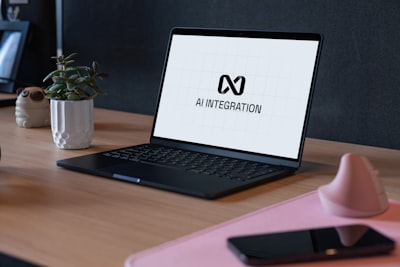
One of the most profound changes will be the software's ability to serve as an integration layer between disparate ecosystems. Companies no longer work with a single monolithic system; they operate with dozens of SaaS applications, legacy platforms, third-party APIs, and IoT devices. The enterprise software of the future must orchestrate this complexity transparently, allowing data to flow seamlessly between CRM, ERP, marketing tools, cloud storage, and cybersecurity systems. This is where integration solutions and microservices-based architectures become especially relevant, offering the flexibility needed to connect any component without compromising stability.
In parallel, artificial intelligence will cease to be an optional add-on and become a central engine of enterprise software. AI agents (or intelligent assistants) will take on analysis, recommendation, and automation tasks that currently require human intervention. For example, an AI-powered BI system can detect anomalous sales patterns, suggest inventory adjustments, and even generate narrative reports without analyst input. Similarly, AI agents integrated into customer service platforms will resolve routine issues, freeing human teams for higher-value work. For this to happen, software must be designed with continuous learning capabilities and intuitive interfaces that allow users to configure and monitor these agents.
The cloud will continue to be the fundamental enabler of this transformation, but it will no longer be enough to simply migrate to a single provider. Companies will need multi-cloud and hybrid strategies that combine public environments (AWS, Azure) with private infrastructures that ensure data sovereignty and regulatory compliance. Enterprise software must automatically manage resource allocation, scalability, and security across these distributed environments. Moreover, adopting cloud-native services will enable capabilities such as real-time analytics, machine learning, and distributed databases without the complexity of managing underlying hardware.
Cybersecurity, for its part, must be embedded in the software from its design, not as an additional layer. The digital future will bring an exponential increase in attack vectors: connected devices, exposed APIs, cross-border data flows. Enterprise software must incorporate automated detection and response mechanisms, behavioral analysis, and end-to-end encryption. Penetration testing and continuous monitoring will become standard practices, not exceptions. Companies that fail to embed cybersecurity into their digital DNA will be exposed to risks that can paralyze their operations.
Another key role of enterprise software will be to empower autonomous teams through self-service access to data and tools. Instead of relying on a central IT department or analysts for every report, employees across all areas can build dashboards, execute natural-language queries, or trigger automations directly from their work panels. Business Intelligence platforms like Power BI, combined with AI engines, will allow anyone—without deep technical knowledge—to extract actionable insights. This democratizes decision-making and accelerates response to market changes.
Real-time collaboration, without geographical or time-zone boundaries, will be another indispensable function. Enterprise software must support synchronous communications (video conferencing, collaborative editing) and asynchronous ones (discussion threads, shared documents) integrated into the same workflows. APIs and webhooks will enable any event in one system to trigger notifications, updates, or actions in others, creating a network of interconnected processes that run 24/7.
In this scenario, custom applications take on special prominence. Every company has unique processes, cultures, and needs that generic software can hardly cover. Developing custom software allows building solutions that fit exactly with the organization's operations, avoiding workarounds and efficiency losses. Moreover, being designed with modular architectures and well-defined APIs, these applications can evolve with the business and integrate with new technologies without needing to replace the entire system.
Artificial intelligence is undoubtedly the technology that will have the greatest impact on enterprise software in the future. From process automation to predictive insights generation, AI is becoming the most important competitive differentiator. Companies that implement artificial intelligence in their operations report significant increases in productivity, error reduction, and the ability to detect business opportunities that previously went unnoticed. However, for AI to be effective, it needs supporting software: clean data pipelines, trainable models, and scalable cloud infrastructure.
Q2BSTUDIO understands this complexity and accompanies organizations in building their digital future. We do not offer generic solutions, but a personalized approach combining custom software development, process automation, integration with cloud platforms like AWS and Azure, cybersecurity, and Business Intelligence. Our team works side by side with business leaders to design architectures that not only solve current problems but prepare the company for tomorrow's challenges. Whether deploying AI agents to automate repetitive tasks, migrating legacy systems to the cloud, or establishing a comprehensive dashboard with Power BI, our goal is for software to become the engine driving every strategic decision.
In short, the role of enterprise software in the digital future will be that of a total enabler of transformation: it will connect people, data, and processes; protect critical information; learn from every interaction; and allow companies to adapt to volatile markets with agility. Companies that today invest in a solid software strategy based on modular, secure, and intelligent components will be better positioned to lead in their sectors. The future is not waited for: it is built with code, with vision, and with the right technology partner.