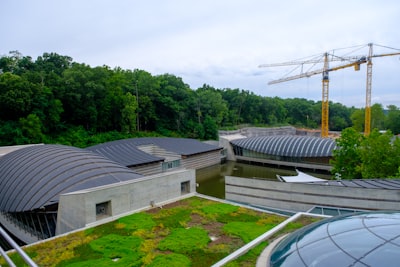
In the current context of climate change and uncontrolled urban growth, cities are seeking intelligent solutions to mitigate the urban heat island effect and improve environmental resilience. One of the most promising strategies is the installation of green roofs, which not only reduce surface temperature but also improve stormwater management and air quality. However, to plan their deployment efficiently, urban planners need accurate information about which buildings are suitable for hosting this type of infrastructure. This is where artificial intelligence (AI) and open data, such as those provided by the Swiss Swisstopo system, become indispensable tools.
A recent study, based on the Roofpedia framework from the Urban Analytics Lab at the National University of Singapore, has developed a rooftop classifier that combines high-resolution aerial imagery with slope information derived from digital surface models. Using exclusively Swiss public datasets (SWISSIMAGE orthophotos, swissSURFACE3D elevation data, and swissTLM3D building footprints), the model can identify four categories: existing green roofs, flat roofs suitable for green roof installation, roofs with solar panels, and unsuitable flat roofs. This classification gives urban planners a realistic view of green roof expansion opportunities in cities such as Bern.
From a technical perspective, the approach involves deep convolutional neural networks (DCNN) adapted for semantic segmentation. Integrating roof slope as an additional feature significantly improves accuracy, as steep roofs are not viable for intensive gardening. This type of model requires a robust data processing pipeline, from downloading and preprocessing datasets to training on scalable cloud infrastructure. Companies like Q2BSTUDIO offer custom software to implement these systems, ensuring algorithms are adapted to each city's specificities and local data sources.
The real value of this technology lies not only in the classification model but in its integration into Business Intelligence (BI/Power BI) platforms that allow urban managers to visualize interactive maps, conduct impact analyses, and simulate investment scenarios. For example, combining classification results with demographic and climatic data helps prioritize neighborhoods where green roofs would generate the greatest benefits. Q2BSTUDIO develops specialized AI agents that automate the updating of these maps when new datasets are released, reducing the operational burden on municipal technical teams.
Cybersecurity is another critical aspect, especially when critical infrastructure data is stored and processed in the cloud. The cloud AWS/Azure solutions provided by Q2BSTUDIO incorporate encryption, access control, and continuous audits to protect sensitive information. Additionally, the company integrates cybersecurity services such as pentesting and vulnerability analysis into the applications it deploys, ensuring that rooftop classification systems meet the highest standards.
From a business perspective, the transferability of the classification framework to other cities is a key factor. Being fully open source and based on open data, any municipality worldwide can adapt the model to its own geospatial datasets. However, customization and maintenance require advanced knowledge in AI, image processing, and cloud pipeline orchestration. This is where Q2BSTUDIO's custom software services make the difference: they offer consulting, development, and implementation of modular solutions that integrate with existing Geographic Information Systems (GIS).
The future of urban planning lies in the convergence of open data, advanced AI models, and interactive visualization tools. Green roof classification is just one example of how technology can generate actionable information to combat global warming. Technology companies have a responsibility to facilitate this process, and Q2BSTUDIO takes on that role by providing robust, secure, and scalable software. Whether implementing a classifier like the one described or building a Power BI dashboard to monitor interventions, the combination of expertise in AI, cloud, and cybersecurity proves essential.
In summary, the Roofpedia study applied to Switzerland demonstrates the potential of AI to transform urban management. But true innovation arises when these capabilities are integrated into business platforms that enable decision-makers to act quickly and precisely. If your organization seeks to develop similar systems, partnering with a technology provider like Q2BSTUDIO, specialized in custom software and AI, can make the difference between a pilot project and an operational solution that endures over time.