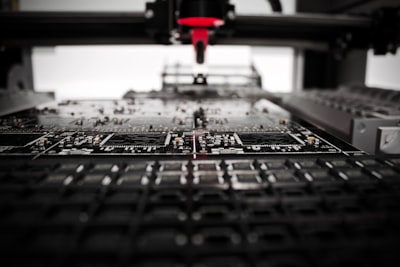
China has taken a decisive step in its race for technological self-sufficiency by announcing the mass production of immersion lithography machines. This milestone, achieved by the state-owned Shanghai Micro Electronics Equipment (SMEE), directly challenges ASML's monopoly in the advanced lithography equipment market. The ability to manufacture these systems locally not only accelerates China's semiconductor independence but also reshapes the geopolitical balance of the global industry. Immersion lithography, which uses a liquid layer between the lens and wafer to improve resolution, is essential for producing 7nm and 5nm chips—key technologies in servers, mobile devices, and artificial intelligence systems.
From a technical perspective, immersion lithography increases the numerical aperture of the optical system, enabling finer patterns without resorting to extreme ultraviolet (EUV), which remains a bottleneck due to its complexity and cost. The new Chinese machines, though initially focused on mature nodes (28nm and 14nm), could quickly evolve to more advanced processes thanks to improvements in lenses, light sources, and temperature control systems. This advancement not only boosts China's production capacity but also reduces dependence on imported equipment, a strategic goal amid trade restrictions imposed by the United States and its allies.
The business impact is immense. Local chip manufacturers like SMIC and Hua Hong now have access to a more reliable and cost-effective supply chain. Furthermore, the availability of these machines opens the door to new partnerships and business models. In this context, software and technology companies play a fundamental role in maximizing the return on these investments. For example, optimizing lithographic processes requires advanced artificial intelligence solutions capable of detecting defects in real time and automatically adjusting parameters. Here, companies like Q2BSTUDIO, specialists in custom software and AI systems, add value by integrating deep learning algorithms into production lines.
Cybersecurity also becomes critical: chip design data and manufacturing processes are high-value assets that must be protected against industrial espionage and cyberattacks. Q2BSTUDIO offers cybersecurity services including pentesting, security audits, and encryption solutions, ensuring that the lithography infrastructure operates in a secure environment. Complementarily, cloud computing (AWS/Azure cloud) provides the computational power needed for lithography simulations and large-scale data analysis, allowing engineers to iterate designs faster and reduce time-to-market.
Business intelligence (BI) is another pillar: through tools like Power BI, factories can monitor key indicators in real time such as machine performance, defect rates, and energy consumption. Q2BSTUDIO integrates BI/Power BI solutions that transform raw data into actionable dashboards, facilitating strategic decision-making. Additionally, the AI agents developed by the company can automate predictive maintenance tasks and route optimization within the factory, reducing unplanned downtime and increasing overall efficiency.
In parallel, process automation becomes a key enabler for scaling production without compromising quality. Q2BSTUDIO implements automation systems that connect lithography machines with MES (Manufacturing Execution System) and ERP systems, creating an integrated workflow. All of this aligns with China's vision of building an autonomous semiconductor ecosystem, where hardware and software innovation go hand in hand.
The announcement of mass-produced immersion lithography is not only a technical achievement but also a catalyst for global tech companies to rethink their strategies. As Chinese manufacturers ramp up capacity, demand for custom software solutions, artificial intelligence, and cybersecurity will soar. Q2BSTUDIO, with its expertise in cloud, BI, automation, and intelligent agents, is ready to accompany organizations in this transition, offering tools that maximize return on investment in these cutting-edge machines. The era of Chinese lithography has begun, and with it, new opportunities for collaborative innovation in the semiconductor value chain.