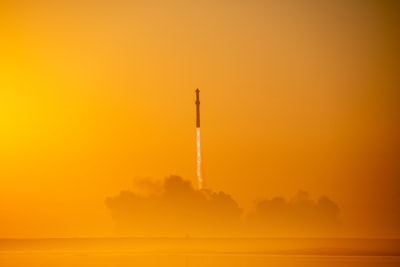
SpaceX has once again demonstrated why it is the undisputed benchmark in modern space exploration. The thirteenth flight of its Starship mega-rocket, which took place last Friday from the Boca Chica facilities in Texas, came close to technical and operational perfection. After several delays and engine replacements, the stainless steel colossus lifted off at 5:51 PM local time, starting a mission that lasted one hour, five minutes and twenty-one seconds. The rocket completed nearly all of its planned objectives: from the successful separation of its two stages to a controlled splashdown in the Indian Ocean, including the first in-space ignition of a Raptor engine during the coast phase.
However, the most relevant aspect from a business and technological perspective is not just the success of the test, but what this flight means for the future of reusable space hardware and cost reduction in commercial missions. Starship is not a simple rocket; it is a platform designed to be fully reusable, with a payload capacity that doubles any existing system. In this mission, SpaceX tested a new reentry profile for the Super Heavy booster, igniting all 33 engines during the boostback burn, although the landing was not as smooth as hoped — the booster ended up with a hard splashdown in the Gulf. Even so, the data collected on Starship's heat shield and the dynamic banking maneuvers are crucial for refining the reentry system and accelerating turnaround times for future flights.
The deployment of 20 Starlink V3 satellites, although not intended to remain in orbit, allowed testing of the ship's ability to release payloads in space. SpaceX verified their functionality and, after twenty minutes, the satellites disintegrated in the atmosphere, thus validating safety procedures. This type of testing is essential for companies looking to launch their own constellations or conduct microgravity experiments. The integration of remote control systems, real-time telemetry analysis, and massive data management reminds us of the challenges faced by tech companies when developing custom software for critical environments.
Precisely, the ability to manage complex data flows and process millions of data points during a space flight has direct parallels with the world of enterprise software development. At Q2BSTUDIO, a software and technology development company, we understand that aerospace innovation and corporate digital transformation share common foundations: the need for custom software, high-availability cloud infrastructure, and artificial intelligence systems capable of predicting failures before they occur. SpaceX uses AI models to optimize reentry trajectories and thermal control; in the same way, any organization can benefit from intelligent agents that automate business processes or detect anomalies in real time.
The success of Starship 13 also highlights the importance of cybersecurity in critical systems. A failure in communication between engines, sensors, and the control center could have catastrophic consequences. That is why SpaceX invests in cybersecurity protocols that protect both data links and embedded systems. This lesson is transferable to any company that handles sensitive data or connected infrastructures. At Q2BSTUDIO we offer cybersecurity services to ensure that web applications, mobile apps, and cloud systems are protected against intrusions and vulnerabilities.
Another notable aspect of the flight was the test of a Raptor engine ignition during the coast phase, a necessary step for future missions requiring precise orbital maneuvers, such as those that NASA's Artemis spacecraft will perform to take humans to the Moon. This capability for fine propulsion control in space opens the door to interplanetary travel. From a business perspective, the ability to iterate and test components in real conditions is a model to follow. In software development, agile methodologies and continuous testing (CI/CD) allow new features to be released with the same philosophy of incremental improvement that SpaceX applies to its rockets.
The intensive use of data during the flight — telemetry, thermal images, performance metrics — requires robust analytics platforms. Business Intelligence tools like Power BI allow SpaceX engineers to visualize in real time the status of each subsystem. Similarly, in the corporate world, implementing BI / Power BI solutions helps companies turn raw data into strategic decisions, whether to optimize the supply chain, predict demand, or monitor key indicators. Integration with clouds like AWS or Azure provides the scalability needed to process massive volumes of information.
The cloud is another fundamental pillar in SpaceX's strategy. Telemetry and ship control depend on cloud infrastructures that guarantee low latency and high availability. Services like AWS and Azure offer distributed computing, storage, and machine learning capabilities that are directly applicable to any industry. At Q2BSTUDIO we help companies migrate and optimize their environments on cloud AWS/Azure, reducing costs and improving resilience. The same flexibility that allows SpaceX to adjust its engines in flight is what allows a business to scale its infrastructure on demand.
Elon Musk has stated that the next test flight could include capturing the Super Heavy with the robotic arms of the launch tower, a milestone that would further accelerate reuse. This vision of continuous improvement, where each mission provides data for the next, is the same one that drives innovation in software. Generative artificial intelligence and AI agents are revolutionizing the way companies interact with their customers and manage internal processes. From intelligent chatbots to virtual assistants for technical support, AI allows automating repetitive tasks and offering personalized experiences.
In short, Starship's 13th flight not only marks an advance in space exploration but also serves as a metaphor for the current state of technology: the convergence of extreme hardware, intelligent software, and cloud services. Companies like Q2BSTUDIO align with this philosophy, providing technological solutions that allow their clients to compete in an increasingly digital world. Whether developing custom software, implementing BI platforms, securing critical infrastructures, or integrating AI agents, the goal is the same: to make technology work almost perfectly, like SpaceX's Starship.