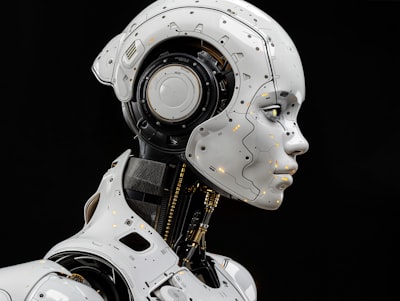
Artificial intelligence has moved far beyond chatbots and recommendation systems. Today we talk about Physical AI, a branch that endows machines with the ability to perceive, decide and act directly on the real world. It is not just about algorithms processing data, but about robots, autonomous vehicles, drones and smart devices that interact with their physical environment without constant human intervention. Companies like Q2BSTUDIO are already helping their clients integrate these capabilities through custom AI solutions that combine software, hardware and connectivity.
To understand how Physical AI works, we must break down its essential components. First, sensors (cameras, LiDAR, ultrasonics, IoT) capture environmental data with high precision. That data is processed by AI models (deep neural networks, reinforcement learning, multimodal models) that make decisions in real time. Finally, actuators (motors, robotic arms, control systems) execute physical actions. This entire cycle requires processing close to where events occur, hence the importance of edge computing to minimize latency. A well-designed architecture, such as the cloud services on AWS and Azure offered by Q2BSTUDIO, enables the orchestration of these elements in a scalable and secure manner.
The impact of Physical AI spans multiple sectors. In collaborative robotics, cobots work side by side with people in factories and warehouses, adapting to unstructured environments. Smart spaces (homes, offices, buildings) adjust lighting, HVAC and security based on user presence, improving energy efficiency. In IT operations, Physical AI automates maintenance, inventory and logistics processes, freeing teams from repetitive tasks. Industry benefits from flexible production lines and predictive maintenance, while security systems with AI detect anomalies and coordinate automatic responses. Even scientific research leverages autonomous laboratories that operate 24/7 to accelerate discoveries in particle physics or new materials.
The strategic advantages of adopting Physical AI are clear: greater operational autonomy, energy efficiency, improved safety and the ability to create new business models. However, the challenges are not minor. Integration of heterogeneous systems, edge latency, expansion of the cybersecurity perimeter and the need for specialized talent are obstacles that must be addressed. That is why having a technology partner that offers custom software, integrated cybersecurity and BI/Power BI capabilities to monitor performance becomes crucial. Q2BSTUDIO, for example, develops AI agents deployed in physical environments, combining cloud, edge and IoT devices under strict data protection protocols.
Looking ahead, convergence with generative AI will enable more creative and adaptive robots. Distributed intelligence will lead to systems where each component has a degree of autonomy. Government regulation will play a key role in ensuring ethics and safety. Physical AI is not a passing trend; it is the next step in the evolution of technology, and companies like Q2BSTUDIO are already prepared to accompany organizations in this transformation, offering everything from consulting to turnkey solutions. The future is physical, and artificial intelligence is ready to step out of the screen.