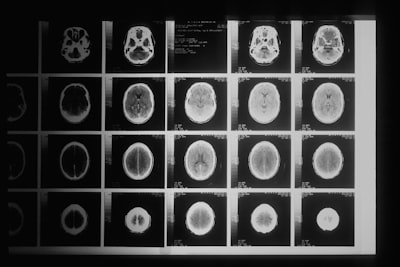
Microbial density in the tumor microenvironment is a critical factor for cancer assessment and therapeutic decision-making. However, measuring it non-invasively remains a clinical challenge. Recently, an innovative artificial intelligence model called CHM-Net (Center Heatmap-driven Macro-micro modeling Network) has shown that it is possible to stratify microbial density from multimodal magnetic resonance imaging, opening a new pathway for precision medicine. This article analyzes the technical foundations of CHM-Net, its potential impact, and how companies like Q2BSTUDIO can help implement similar solutions in healthcare and business environments.
What is CHM-Net and why is it relevant? CHM-Net addresses MRI-based microbial density stratification (MRI-MDS) as a patient-level representation learning task. The model establishes a link between imaging phenotypes and microbial states using a central heatmap that guides small-lesion response localization. From these localized responses, it builds patient-level macro-micro evidence for microbial density prediction. On the novel GBNPC 2026 dataset specifically designed for MRI-MDS, CHM-Net outperformed representative baselines with an absolute accuracy improvement of 12.06% over the strongest competitor. Additionally, validation on two additional 3D medical image datasets demonstrated its robustness in volumetric classification scenarios.
Architecture and operation The key innovation of CHM-Net lies in its central heatmap module. Instead of treating the whole image equally, the model identifies regions of interest that correlate with high microbial density. These regions generate heatmaps that are integrated into a macro (global) and micro (local) patient representation. Joint learning captures subtle spatial patterns that conventional methods miss. This approach is especially useful when lesions are small or heterogeneous, as heatmap guidance prevents signal dilution in the image background.
Clinical and business applications In the clinical context, CHM-Net could be integrated into AI-assisted diagnostic workflows, enabling radiologists to obtain a non-invasive estimate of tumor microbial burden. This directly influences therapy choices, such as antibiotics or immunotherapy. From a business perspective, developing models like CHM-Net requires expertise in artificial intelligence, medical image processing, and cloud deployment. This is where companies like Q2BSTUDIO add value. We offer custom software development services to build personalized AI pipelines, from data annotation to production deployment.
How Q2BSTUDIO can drive medical AI solutions Our team combines skills in data science, software engineering, and cloud architecture. For example, for a solution similar to CHM-Net we can: design deep learning models with PyTorch or TensorFlow; manage infrastructure on AWS or Azure to scale training and inference; implement cybersecurity measures to protect sensitive medical data; and create BI dashboards with Power BI that visualize microbial density predictions for clinical teams. Additionally, we explore the use of AI agents that automate image ingestion, report generation, and integration with hospital systems.
The role of cloud and automation Processing multimodal MRI volumes requires substantial computational resources. Cloud solutions (AWS, Azure) provide on-demand GPUs, scalable storage, and MLOps services like SageMaker or Azure Machine Learning. Process automation, such as lesion segmentation or heatmap generation, can be orchestrated via data pipelines and serverless functions. Q2BSTUDIO has experience in designing these architectures, ensuring efficiency and regulatory compliance (HIPAA, GDPR) in healthcare settings.
Use cases beyond oncology Although CHM-Net has been validated in cancer, its central heatmap approach to modeling macro-micro relationships is transferable to other medical imaging tasks: infection detection, liver fibrosis assessment, or neurodegenerative disease classification. It can also be applied in sectors like precision agriculture or industrial inspection where local patterns correlate with global variables.
Conclusion CHM-Net represents a significant advance in non-invasive microbial density estimation via MRI, with performance far surpassing current alternatives. Its central heatmap-based architecture provides valuable interpretability for clinicians. For companies wishing to adopt similar technologies, having a technology partner like Q2BSTUDIO is key. We offer comprehensive services in custom application development, AI, cloud, cybersecurity, and BI/Power BI, as well as the implementation of AI agents to automate complex workflows. The future of medicine and industry lies in intelligent integration of multimodal data; at Q2BSTUDIO we are ready to lead that transformation.