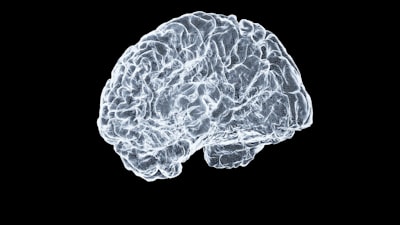
Alzheimer\'s disease (AD) represents one of the greatest health and social challenges of our time. Early diagnosis is crucial to slow symptom progression and enable timely interventions. Mild cognitive impairment (MCI) serves as an intermediate stage between normal aging and dementia, making the identification of accurate biomarkers at this phase a priority. In this context, structural magnetic resonance imaging (sMRI) provides a detailed window into brain anatomy, but traditional methods for constructing brain networks from sMRI often rely on a single graph strategy, limiting their ability to jointly capture spatial relationships and morphological similarities between regions.
To overcome these limitations, the MVMGNN (Multi-View Masked Graph Neural Network) model proposes a novel approach: it uses multiple views of the same sMRI data and applies a joint node-edge masking mechanism. This automatically selects the most relevant radiomics feature dimensions and structural connections, reducing redundancy during graph learning. It also incorporates a patient-level cross-view gated fusion mechanism that integrates representations from different views. Experimental results on the ADNI dataset demonstrate that MVMGNN outperforms several competing methods in AD classification, and its interpretability analysis reveals key brain regions associated with the disease.
From a technical and business perspective, implementing such sophisticated models as MVMGNN requires a solid foundation in software engineering and artificial intelligence expertise. This is where companies like Q2BSTUDIO play a fundamental role. Specializing in custom software development and AI solutions, Q2BSTUDIO possesses the necessary capabilities to transform academic research into operational products. For instance, deploying a multi-view graph neural network model not only demands efficient algorithms but also a robust cloud infrastructure for training and inference. Cloud services such as AWS or Azure allow scaling computational resources on demand, managing large volumes of medical imaging data, and ensuring system availability. Q2BSTUDIO integrates these platforms into its projects, offering comprehensive cloud AWS/Azure support tailored to each client\'s specific needs.
Cybersecurity is another critical pillar when handling health data. AI-based diagnostic models must comply with strict regulations such as HIPAA or GDPR. Q2BSTUDIO incorporates cybersecurity practices across all development phases: from data encryption during training to protecting inference endpoints. Furthermore, integration with Business Intelligence tools like Power BI enables clear and actionable visualization of model results for clinical professionals. Through interactive dashboards, physicians can explore the brain regions identified by MVMGNN and correlate them with patient progression. Q2BSTUDIO offers BI/Power BI services that facilitate this connection between artificial intelligence and decision-making.
Another relevant aspect is process automation through AI agents. In a typical Alzheimer\'s diagnostic workflow, sMRI data must be preprocessed, segmented, and analyzed automatically. AI agents can handle these repetitive tasks, freeing up time for radiologists and neurologists. Q2BSTUDIO develops intelligent automation solutions that integrate models like MVMGNN into complete pipelines, from image acquisition to report generation. These agents can even learn from interactions with specialists to improve their accuracy over time.
In summary, the MVMGNN proposal represents a significant advance in early Alzheimer\'s diagnosis using sMRI, by combining multiple views and innovative masking. However, for this technology to effectively reach the clinical setting, collaboration between researchers and development companies like Q2BSTUDIO is required. With its expertise in custom software, cloud, cybersecurity, BI, and AI agents, Q2BSTUDIO is uniquely positioned to turn these innovations into practical tools that improve patients\' quality of life. The synergy between cutting-edge research and robust software engineering is key to accelerating the diagnosis and treatment of neurodegenerative diseases.