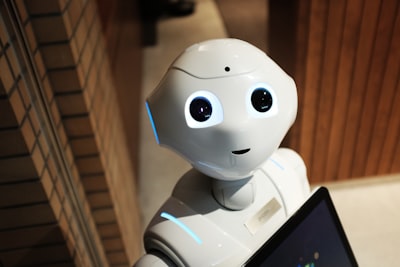
The vision of long-term physical coexistence with intelligent robots has moved beyond science fiction to become a top-tier technical and business challenge. Systems like PHILIA demonstrate that the key lies not only in more sophisticated control algorithms but in an architecture capable of integrating diverse interfaces, persistent memories, multiple robotic platforms, and a reasoning layer that translates human intent into safe actions. This approach introduces the concept of a 'robot gateway': an abstraction that separates high-level, slow, semantic reasoning from low-latency physical execution. For any company developing automation solutions or robotic assistants, understanding this separation is essential for building scalable, maintainable, and future-proof systems.
From a business perspective, PHILIA's architecture offers a valuable lesson: the need to decouple components. In a real-world scenario, a robotic assistant must support changing user interfaces —voice, gestures, touchscreens— store long-term preferences, coordinate different robotic arms or mobile platforms, all while ensuring physical safety. The unified gateway proposal allows advances in interfaces, navigation algorithms, or control policies to be incorporated without redesigning the entire system. This has a direct impact on development time and the ability to innovate incrementally. Companies that adopt such modular architectures can reduce integration costs and accelerate the time-to-market for new features.
In this context, Q2BSTUDIO positions itself as a strategic ally for organizations seeking to implement intelligent robotic systems. Their experience in custom software development enables building the software layers that connect sensors, actuators, and reasoning algorithms with user interfaces and enterprise management systems. Whether integrating an Astribot S1 robotic arm with a cloud-based planning platform or developing a control dashboard to monitor a fleet of robots, customized software is the glue that makes the architecture work. Furthermore, Q2BSTUDIO's ability to deploy solutions in cloud environments like AWS or Azure facilitates scalability and remote management of robotic agents, which is essential when talking about long-term coexistence in homes or businesses.
One of the pillars of systems like PHILIA is artificial intelligence. It is not just about vision models or motion planning, but about AI agents capable of understanding context, remembering preferences, and making real-time decisions. These AI agents, which can run both at the edge and in the cloud, require careful orchestration to avoid latencies that compromise safety. Here, Q2BSTUDIO's artificial intelligence solutions allow training, deploying, and monitoring models that endow robots with semantic reasoning. For example, a home assistant robot could learn that a user prefers trash to be taken out in the morning and incorporate that preference into task planning. This kind of personalization is only possible through well-designed software and a robust cloud infrastructure that supports continuous learning.
Cybersecurity is another critical aspect that cannot be ignored. A robot that physically coexists with people and accesses personal data, home or industrial networks must be protected against intrusions. Integrating pentesting systems and security audits, such as those offered by Q2BSTUDIO in its cybersecurity area, ensures that communication between the robotic gateway and cloud services is encrypted and that AI agents cannot be manipulated. In a scenario where the robot manages everything from the smart refrigerator to the alarm system, perimeter and application security becomes a non-negotiable requirement.
Likewise, the data analytics generated by human-robot interaction offers enormous potential for continuous improvement. Business Intelligence platforms, such as Power BI, allow visualization of usage metrics, execution times, error rates, and user preferences. Q2BSTUDIO, with its BI/Power BI offering, helps companies build dashboards that transform raw sensor data into actionable insights. For example, a domestic robot manufacturer could identify which tasks generate the most demand for human confirmation or which movement sequences cause the most mechanical wear, thus optimizing both software and hardware.
The use cases presented in PHILIA —from organizing objects to lifting garbage bags— illustrate the complexity of long-horizon tasks. For a company, translating this complexity into a viable product involves not only the technical architecture but also the ability to integrate legacy systems, adapt to different environments, and offer multilingual interfaces. Here, custom software development becomes fundamental again. Each client may require a specific sensor configuration, a proprietary communication protocol, or integration with an existing ERP. The flexibility of custom software allows the robotic solution to adapt to the business, not the other way around.
The cloud, whether AWS or Azure, provides the elasticity needed to handle computational demand peaks —for example during training of new AI models— and store interaction history securely. Q2BSTUDIO's experience in cloud services ensures a gradual migration and efficient resource management, avoiding unnecessary costs. Moreover, the ability to orchestrate containers with Docker and Kubernetes facilitates the deployment of robotic agents in distributed environments, a feature increasingly demanded in logistics and manufacturing.
In summary, the PHILIA architecture establishes a reference framework for physical coexistence with intelligent robots, but its real success depends on the quality of the software that implements it. Companies that want to lead this space must invest in custom applications, artificial intelligence, cybersecurity, cloud, and data analytics. Q2BSTUDIO, with its comprehensive service portfolio, becomes a natural partner to tackle these challenges. From the conception of the robotic gateway to the visualization of KPIs in Power BI, including communication protection and cloud deployment, each layer of the solution requires a professional and customized approach. Only then can we ensure that coexistence with robots is not only possible but also safe, efficient, and truly useful for people.