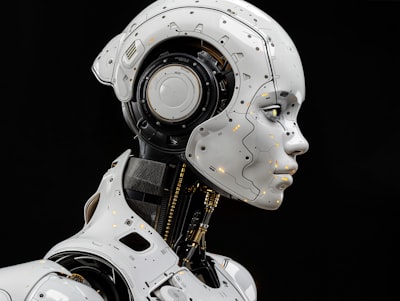
The advance of artificial intelligence in robotics has reached a new milestone with the arrival of Lumo-2, a latent world-action model that redefines how machines learn to interact with their environment. Unlike traditional approaches based on memorization, Lumo-2 is built on the ability to reason and solve novel problems by navigating a space of possibilities. This model generates actions by reasoning over world dynamics in a latent space, capturing physically grounded visual transitions that naturally encode future possibilities. What does this mean for the development of robotic systems? That the machine does not merely repeat learned patterns, but predicts, reasons, and adapts to never-before-seen scenarios — a qualitative leap toward true embodied intelligence.
The key to Lumo-2's success lies in the geometry of its latent space. Recent research shows that reconstruction-based action tokenization objectives induce representations biased toward low-level signal fidelity, causing misalignment between reconstruction quality and control performance. To overcome this limitation, Lumo-2 introduces a multi-stage modality pre-alignment strategy, where action representations are progressively aligned with latent world dynamics, vision, and language. This process not only ensures multimodal consistency but also promotes abstraction and structures a latent space conducive to predictive reasoning. In practical terms, a robot equipped with Lumo-2 can understand complex instructions, anticipate physical consequences, and perform precise manipulations over long horizons, outperforming competing models such as vision-language-action (VLA) or world-action models (WAM).
From a business and technical perspective, the principles that make Lumo-2 successful directly resonate with current market needs: scalability, alignment, and predictive reasoning. In the software development world, the ability to build custom applications that dynamically adapt to changing contexts is a competitive differentiator. Just as Lumo-2 aligns its representations with multiple modalities, companies require systems that integrate disparate data — from IoT sensors to transactional databases — into a coherent framework. This is where Q2BSTUDIO's expertise, with its focus on AI agents and intelligent automation, becomes relevant. The firm offers software solutions that not only perform repetitive tasks but learn from interaction and predict future needs, emulating on a small scale what Lumo-2 achieves in robotics.
Cloud plays a fundamental role in this equation. Predictive models like Lumo-2 require scalable infrastructure for training and inference. Q2BSTUDIO deploys architectures on AWS and Azure clouds that allow businesses to run AI models with low latency and high availability. Moreover, cybersecurity becomes an essential pillar: when a robotic system makes autonomous decisions based on real-time data, any vulnerability could have catastrophic consequences. Therefore, the cybersecurity solutions offered by Q2BSTUDIO protect both the data layer and communication channels, ensuring that predictive reasoning takes place in a secure environment.
Another key aspect is business intelligence (BI). In the context of Lumo-2, reasoning about world dynamics involves analyzing large volumes of sensory data to extract meaningful patterns. Analogously, companies need to transform their data into informed decisions. Power BI tools, integrated by Q2BSTUDIO, enable visualizing and modeling these patterns, facilitating strategic decision-making. The multimodal alignment proposed by Lumo-2 — vision, language, actions — has its parallel in integrating marketing, sales, operations, and finance data into a unified dashboard.
The concept of AI agents is particularly relevant. Lumo-2 can be seen as an agent that perceives, reasons, and acts. In the business ecosystem, AI agents are revolutionizing process automation, from customer service to inventory management. Q2BSTUDIO develops these agents with continuous learning capabilities, similar to the model's progressive alignment approach. The key difference is that while Lumo-2 operates in the physical world, software agents operate in the digital one, but both share the need for a structured and predictive representation space.
The scalability of Lumo-2, demonstrated in tasks demanding temporal reasoning and physical understanding, suggests that the principles of multimodal alignment and predictive reasoning are fundamental for advancing embodied intelligence. In the realm of custom software development, these same principles allow building systems that grow with the company, adapt to new requirements without rewriting the codebase, and anticipate bottlenecks before they occur. Q2BSTUDIO applies agile methodologies and event-driven architectures to achieve these capabilities in enterprise applications.
For companies looking to adopt technologies similar to Lumo-2, the recommendation is clear: invest in robust cloud infrastructure, state-of-the-art cybersecurity systems, and BI tools that extract value from data. But more importantly, they need a technology partner who understands how to align these pieces into a coherent ecosystem. Q2BSTUDIO offers precisely that: a holistic vision that combines custom software development, artificial intelligence, cloud computing, cybersecurity, and business analytics to build solutions that not only solve current problems but anticipate future ones.
In conclusion, Lumo-2 represents a step forward in predictive, aligned, and scalable robotics. Its principles — reasoning over latent spaces, multimodal alignment, and progressive learning — transcend the field of robotics and offer valuable lessons for any organization seeking to leverage AI effectively. Whether through custom applications, intelligent agents, or cloud platforms, the key is to build systems that do not just remember but understand and anticipate. With allies like Q2BSTUDIO, companies can be prepared to navigate that space of possibilities.