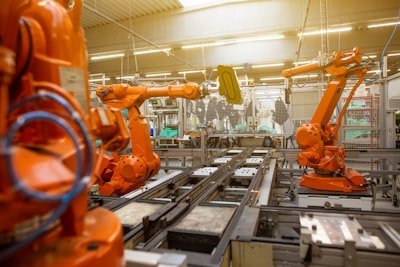
In modern robotics, the ability to manipulate objects based on human intentions expressed in natural language represents a qualitative leap toward intelligent autonomy. Manipulation with affordances, combined with text goals and sim-to-real strategies, is redefining how robots understand and execute complex tasks. This article explores in depth the technical foundations, implementation challenges, and business opportunities arising from integrating these concepts into real systems, with a focus on how companies like Q2BSTUDIO can help materialize these solutions through custom software development.
The core idea of affordances comes from ecological psychology: they are the action possibilities that an environment offers to an agent. In robotics, affordances like 'graspable', 'pushable' or 'stackable' allow a system to recognize which interactions are feasible with each object. For example, a cup has the affordance of being grasped by the handle, but also of containing liquid. An affordance-based manipulation planning system visually analyzes the scene, extracts these properties, and matches them with the textual goal—for instance, 'place the cup on the table'—to generate action sequences. This requires an affordance recognition module trained with labeled data, typically obtained through simulations, which directly connects to the need for robust sim-to-real techniques.
The process begins with capturing an image of the current environment state, which may include objects of varied shapes and appearances. An image conversion module transforms these realistic representations into a consistent visual format, facilitating transfer from simulation training. This step is critical because models trained in virtual environments usually fail when faced with real textures, lighting, and shadows. The proposed solution in the reference system uses a generative network to standardize object appearance, retaining only the geometric and functional features relevant for affordances. Thus, a robot can operate in a real warehouse with boxes of different colors and materials without losing precision.
Once the system recognizes affordances, it must predict action effects. This is where planning based on possible futures represented visually comes into play. The robot mentally simulates different sequences—e.g., grasping an object and rotating it—and generates images of the resulting state. These predicted images are compared with the textual goal via a multimodal matching module that evaluates whether the visual content matches the linguistic description. For instance, if the goal is 'the cup is to the left of the plate', the system checks in the predicted image that relative positions are correct. A notable advantage is that object tracking is maintained even when objects become occluded during manipulation, because internal visual predictions preserve the estimated location based on the world model.
Integrating text goals adds an unprecedented layer of flexibility. Unlike traditional systems that require predefined commands or demonstrations, the robot can interpret natural language orders at runtime. This opens the door to applications in dynamic environments such as customized manufacturing, intelligent logistics, or domestic assistance. However, for this vision to be viable in the real world, barriers of scalability, robustness, and computational cost must be overcome. This is where AI and cloud computing solutions play a decisive role.
From a technical perspective, implementing an affordance-based manipulation system requires a complex software ecosystem. Computer vision, motion planning, robot control, and natural language processing modules must be efficiently orchestrated. Companies offering custom software development, like Q2BSTUDIO, have the expertise to design modular architectures that integrate these components, whether in cloud environments with AWS or Azure to scale model training, or on edge systems to ensure low-latency execution. Cybersecurity is also relevant, especially when robots operate in shared human environments or handle sensitive data; periodic pentesting and security protocols can prevent vulnerabilities.
Another key aspect is generating synthetic data to train affordance and prediction models. Simulation allows creating millions of varied scenarios without physical cost, but the sim-to-real gap requires domain randomization and adversarial adaptation techniques. A robust approach combines simulations with an image conversion module that normalizes appearance, as described in the reference system. This processing layer, if properly deployed, drastically reduces the need for manual labeling, accelerating the development cycle. Additionally, integration with BI tools like Power BI can report system performance metrics—such as task success rate, cycle times, and resources consumed—facilitating business decision-making.
In the business realm, intelligent manipulation solutions based on affordances have direct applications in logistics automation, robotic picking in warehouses, flexible assembly in factories, and service robotics. For example, a robotic arm equipped with this system can receive a textual order like 'pick the red box and place it on the conveyor belt' and execute it without human intervention, even if the box changes position or becomes partially hidden by other objects. This represents a significant advance over traditional vision systems that require exact calibration and controlled environments.
Q2BSTUDIO, as a technology and software development company, offers services ranging from initial consulting to full implementation of robotic systems with artificial intelligence. Its expertise in cloud computing (AWS, Azure) allows scalable deployment of deep learning models, while its cybersecurity capabilities ensure that data and communications between robots and servers are protected. Furthermore, integrating BI dashboards with Power BI provides real-time operational performance insights, enabling data-driven adjustments. All this aligns with the process automation philosophy that the company promotes, where robotics is just one piece of the digital ecosystem.
The future of robotic manipulation lies in the convergence of advanced visual perception, symbolic reasoning, and continuous learning. Systems based on affordances and text goals offer a promising path, but successful deployment requires a multidisciplinary approach where custom software, AI, cloud, and cybersecurity converge. Companies investing in these technologies today will be better positioned to lead the next wave of intelligent automation. With partners like Q2BSTUDIO, it is possible to transform research concepts into real competitive advantages, from simulation to reality.