Running large language models (LLMs) on consumer devices like laptops and desktops has become an unstoppable trend. However, GPU memory is often insufficient to hold the full model weights, forcing partial offloading to CPU memory. Traditional systems operate at the layer or expert level, ignoring the internal heterogeneity of tensors and adapting poorly to hardware load fluctuations. This is where finer optimization becomes necessary: tensor-level management enables intelligent distribution between CPU and GPU to maximize performance.
Systems like ATSInfer, which implement hybrid scheduling with static tensor placement and load-aware dynamic transfers, represent a qualitative leap. By asynchronously coordinating storage, data movement, and computation across heterogeneous backends, they achieve much more efficient use of available resources. On representative consumer platforms, improvements in prefill and decode throughput are remarkable, sometimes doubling or tripling performance compared to previous systems. This not only speeds up inference but also increases GPU utilization and makes better use of PCIe bandwidth.
For companies looking to integrate artificial intelligence into their processes without relying solely on the cloud, this optimization opens the door to faster and more cost-effective local deployments. At Q2BSTUDIO we understand that every organization has unique needs, which is why we offer custom software that integrates these hybrid inference solutions. Our engineering team designs personalized software that makes the most of available hardware, whether for generative AI models, recommendation systems, or virtual assistants.
The key lies in granularity. While layer-level offloading treats each block as an indivisible unit, tensor-level approaches distinguish between parts of the model that benefit from GPU acceleration and those that can run efficiently on CPU. This is especially relevant for mixture-of-experts (MoE) models, where routing is dynamic. Intelligent scheduling reduces latency and improves end-user experience, critical in interactive applications like chatbots or productivity assistants.
From a business perspective, adopting hybrid CPU-GPU systems with tensor optimization must be accompanied by a comprehensive technology strategy. At Q2BSTUDIO we combine AI development with cloud infrastructure like AWS and Azure for scaling when needed. We also incorporate cybersecurity practices to protect sensitive data processed locally, and BI and Power BI tools to extract value from inference results. All this aligns with creating AI agents that automate repetitive tasks, boosting operational efficiency.
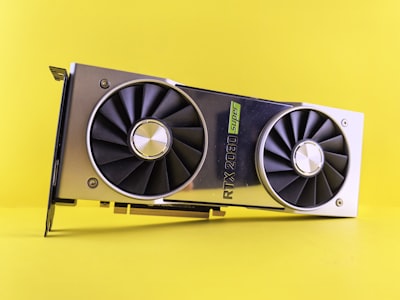
One of the biggest challenges on consumer devices is resource variability: a GPU may share bandwidth with other applications, or the CPU may run background processes. Tensor-aware systems can dynamically adjust which tensors are transferred and when, leading to a more predictable experience even on modest hardware. For example, a laptop with an RTX 3060 GPU and 16 GB RAM can run 7B parameter models with acceptable performance, something unthinkable with coarser approaches.
Tensor optimization also has implications for energy consumption. By reducing inference times and minimizing unnecessary data movement, battery drain decreases and device lifespan increases. For companies with fleets of equipment or those developing solutions for clients with varied hardware, this is a competitive advantage. At Q2BSTUDIO we work with multidisciplinary teams to create software that adapts to these conditions, offering AWS/Azure cloud services as a complement when local capacity falls short.
Another relevant aspect is integration with cybersecurity systems. By keeping some processing on the device, the attack surface is reduced compared to purely cloud solutions. Our teams implement end-to-end encryption and secure key management, ensuring sensitive data never leaves the controlled environment. Additionally, logs and metrics from AI agents can be visualized with Power BI dashboards, facilitating data-driven decision-making.
Looking ahead, the trend points to a convergence between ever-larger models and more powerful consumer hardware. Tensor-level optimization will be a fundamental piece in the edge AI ecosystem. Companies investing now in such architectures will be better positioned to leverage next-generation chips and memory. At Q2BSTUDIO we are committed to continuous innovation, developing solutions that span from initial consulting to deployment and maintenance of hybrid AI systems.
In summary, tensor optimization for hybrid CPU-GPU inference on consumer devices is not just a technical improvement; it is a business strategy that democratizes access to artificial intelligence. By reducing cloud dependency, improving privacy, and speeding up response times, organizations can offer smoother user experiences. Q2BSTUDIO provides an expert team in custom software development, cloud, and BI to help clients make this leap. Contact us to discover how we can transform your ideas into tangible solutions.