Graph Neural Networks (GNNs) have revolutionized how businesses process and analyze graph-structured data, especially when combined with Knowledge Graphs (KGs). These models capture complex relationships and semantic dependencies, opening new opportunities in fields like artificial intelligence, cybersecurity, and business analytics. In this article, we explore how the integration of GNNs and KGs is transforming the technological landscape, with a practical focus for companies seeking custom software and advanced solutions.
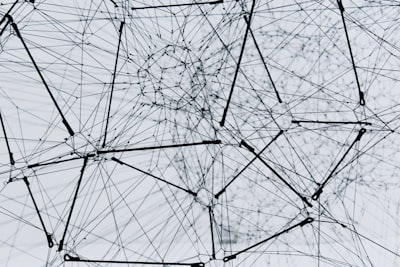
A Knowledge Graph represents real-world entities (people, objects, events) and the relationships among them. Traditionally, its management relied on logical rules or simple embeddings. However, GNNs — such as GCN, GAT, or HGNN — introduce deep learning that propagates information through the graph structure, improving tasks like link prediction, node classification, and question answering. This synergy not only accelerates KG construction and reasoning but also uncovers hidden patterns that classical methods miss.
In the business realm, the combination of GNNs and KGs has direct applications. For example, on cloud AWS/Azure, it is possible to deploy GNN pipelines that ingest large volumes of heterogeneous data and integrate them into a corporate KG. This facilitates anomaly detection in cybersecurity: a GNN model trained on a KG of network events can identify attack patterns with high accuracy. Additionally, in artificial intelligence, GNN-based AI agents can reason over a KG to make contextual decisions, for instance, in recommendation systems or expert chatbots.
Another field where this technology shines is Business Intelligence (BI). Knowledge Graphs enriched with GNNs allow BI tools like Power BI to connect scattered data and generate smarter dashboards. A GNN model can infer causal relationships between business metrics, offering insights beyond simple correlations. Q2BSTUDIO, as a software and technology development company, integrates these capabilities into its BI / Power BI projects to provide clients with a real competitive advantage based on data.
Building a KG with GNNs involves several stages: entity and relation extraction (NER, relation extraction), alignment with existing ontologies, and training GNN models to complete the graph. Once ready, the KG can be used for deductive and inductive reasoning. GNNs facilitate reasoning by learning vector representations of nodes and edges, enabling complex queries like 'Which suppliers have the highest risk of default?' In cybersecurity, an up-to-date KG with GNNs can correlate indicators of compromise (IoCs) and predict attack vectors. To achieve this, many companies rely on scalable cloud services like AWS or Azure, where Q2BSTUDIO deploys customized solutions that optimize cost and performance.
Nevertheless, challenges remain. GNNs require large amounts of labeled data and computational power. Moreover, scalability to massive graphs is still an active research area. Techniques like subgraph sampling, hierarchical attention, or heterogeneous networks aim to mitigate these issues. There is also a need for explainability: why does a GNN model predict a particular link? In regulated sectors like finance or healthcare, transparency is critical. Here, Q2BSTUDIO applies its expertise in AI to design interpretable models, combining GNNs with attention mechanisms and counterfactual techniques.
AI agents represent another frontier. These agents can interact with a KG in real time, updating it and learning from new interactions. For instance, a virtual assistant for customer service could use a KG of products and policies, powered by GNNs, to resolve issues autonomously. Process automation combining GNNs, KGs, and AI agents is already a reality in companies adopting intelligent automation. Q2BSTUDIO develops such custom systems, also integrating cybersecurity layers to protect KGs against data poisoning or adversarial attacks.
From a business perspective, investing in GNNs and KGs is not just a technical decision but a strategic one. Companies that unify their data into a Knowledge Graph and apply GNNs gain a holistic view of their operations, identifying efficiency opportunities and reducing risks. To maximize return, it is advisable to have a technology partner who understands both theory and practical implementation. Q2BSTUDIO, with its multidisciplinary team, offers services ranging from initial consulting to cloud deployment (AWS/Azure), including integration with BI systems and creation of personalized applications. Each project is tailored to specific needs, whether in cybersecurity, AI, or automated processes.
In conclusion, the convergence of Graph Neural Networks and Knowledge Graphs represents a qualitative leap in enterprise data management. Their ability to model complex relationships, learn in a semi-supervised way, and reason over rich contexts makes them indispensable tools for digital transformation. Companies like Q2BSTUDIO are at the forefront of this revolution, offering comprehensive solutions from custom software development to advanced AI agent implementation. If your organization seeks to harness the full potential of connected data, integrating GNNs and KGs is the path forward.