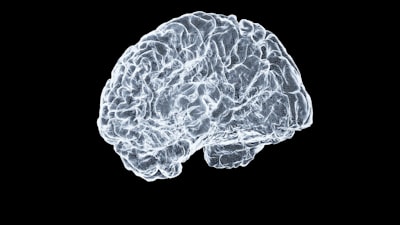
Monitoring dream activity through electroencephalography (EEG) has traditionally been limited by the exclusive use of power spectral density (PSD) and statistical moments. Although these methods have achieved an area under the ROC curve (AUC) close to 0.70 on the DREAM database, their focus on spectral energy ignores the underlying geometric richness of neural activity. This article introduces PHINN-EEG (Persistent Homology Inspired Neural Network for EEG), a topological time-series framework that revolutionizes dream detection by analyzing the geometric architecture of brain signals through dynamic Betti curves extracted from sliding-window Takens embeddings and Vietoris-Rips filtrations. With an analytical projection targeting an AUC between 0.82 and 0.90 on the subset of 1,462 awakenings from the DREAM database, PHINN-EEG promises a paradigm shift: from spectral energy to phase-space geometry. This breakthrough opens immense opportunities for developing custom software in portable brain monitoring, sleep therapies, and neurotechnology. At Q2BSTUDIO, as a software and technology development company, we understand that bringing these topological models to commercial products requires a combination of artificial intelligence, cloud computing, and data analytics. Our team can implement AI solutions that integrate persistent homology-inspired neural networks, optimizing real-time dream state classification. Furthermore, the synthesis of dream EEG through topology-conditioned rectified flow models — which we introduce as a complementary innovation — allows generating synthetic data to train classification systems without requiring extensive clinical databases. This capability is especially relevant for companies looking to develop custom software in applied neuroscience, as it reduces data acquisition costs and accelerates model iteration cycles. The infrastructure needed to process complex topological computations — such as Vietoris-Rips filtrations on multi-channel time series — demands robust cloud environments. This is where our cloud services on AWS and Azure provide the scalability and performance required to deploy inference pipelines handling terabytes of EEG data efficiently. Integration with Business Intelligence dashboards (Power BI) enables real-time visualization of dynamic Betti curves and their correlation with phenomenological dream reports, offering researchers and clinicians an unprecedented analytical tool. Cybersecurity is another fundamental pillar when handling sensitive biomedical data. The solutions we design at Q2BSTUDIO include encryption protocols, multi-factor authentication, and security audits to ensure compliance with regulations such as GDPR or HIPAA. Additionally, IA agents can automate the detection of dream transitions and the generation of personalized reports, freeing specialists from repetitive tasks. On the horizon, PHINN-EEG will not only improve dream detection accuracy but also open the door to next-generation brain-computer interfaces (BCI). Imagine wearables that interpret the geometry of our brain activity and send data to the cloud for analysis with topological models trained via conditioned flow. The combination of AI and computational topology promises to unlock a deeper understanding of the mind during sleep. From a business perspective, this approach represents a unique opportunity to differentiate in the digital health market. Companies that adopt these techniques early can offer sleep monitoring services with radically superior precision. At Q2BSTUDIO, we accompany our clients through every stage of the process: from the conceptual design of the topological architecture to the implementation of cross-platform applications and their deployment in cloud environments. If you are looking to incorporate advanced artificial intelligence or need cloud services on AWS or Azure for your neurotechnology projects, our team is ready to collaborate. Topological EEG analysis is not just an academic promise; it is a technological reality we are prepared to industrialize. Contact us to explore how we can apply PHINN-EEG and its derivatives in your next custom software project.

PHINN-EEG: Topological Dream EEG Analysis for Classification and Synthesis
Learn how PHINN-EEG uses topological data analysis to achieve AUC 0.90 in dream classification and synthesize dream EEG signals. A paradigm shift for BCI.
A BREAK?
Play for a moment before you go
OUR SERVICES
How we can help you
Artificial intelligence
AI agents, chatbots, and intelligent assistants that automate tasks and serve your customers 24/7 to improve the efficiency of your business.
More info →Software Development
Web, mobile and desktop applications, intranets, e-commerce, SaaS and management platforms designed for the specific needs of your company, with accessibility and best practices included.
More info →Cloud services
Migration, infrastructure, landing zones, networks, managed databases, scalable hosting and security in Microsoft Azure and Amazon Web Services so that your business grows according to the capacity you need.
More info →Cybersecurity and pentesting
Security audits, penetration testing and protection of applications, data and infrastructure on-premise and cloud. Ethical hacking and support in regulatory compliance (ENS, ISO 27001, GDPR) without promising certification.
More info →Business Intelligence
Operational reporting and predictive analytics with Power BI and Microsoft Fabric: we integrate your sources, design dashboards and KPIs and turn your data into informed decisions.
More info →Process automation
We automate repetitive tasks and connect your applications with n8n (open-source, self-hosted), Power Automate (Microsoft 365), Make or RPA, eliminating manual work. If you need AI agents, you'll find them in our AI hub.
More info →Training for companies
We train your teams in technology with criteria: web development, databases, Git, best practices and security, automation with n8n, artificial intelligence for companies and creation of AI solutions with Microsoft Foundry (formerly Azure AI Foundry).
More info →Code Auditing
We audit the code that you, your team or an AI create: we tell you what is good and what to improve, we secure it and make it ready for production, with evidence for ENS, ISO 27001, GDPR, NIS2 and DORA.
More info →Conversational avatars with AI
We create conversational avatars with AI – digital humans with a face and voice – for B2B cases: internal training, retail, events and customer service. They are not text chatbots or multimedia content; they are visual interlocutors with the knowledge of your company.
More info →Online Marketing and AI
Paid media, technical SEO, GEO/AEO, email marketing, landing/CRO and analytics: we capture useful demand and measure results without promising positions.
More info →AI Governance, Security, and Responsible Operation
We help inventory, control, and professionalize AI applications, automations, and agents without slowing down teams' ability to innovate.
More info →




Do you have a project in mind?
Tell us your vision and we'll turn it into a software solution. Whatever the scope, we make your idea real.