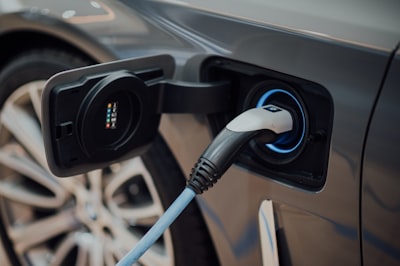
Accurate prediction of battery state and performance is one of the biggest technical challenges in electric mobility. Deep learning models have proven effective for forecasting available power in real time, but their performance degrades when confronted with data distributions different from the initial training set. In this context, an innovative solution emerges: on-device learning, which allows pre-trained models to adapt to new conditions without relying on external connections. This approach not only improves prediction accuracy but also opens the door to safer, more efficient, and personalized applications in electric vehicles (EVs).
Recent research shows that transforming existing models into adaptable versions—preserving critical hyperparameter knowledge—can reduce mean absolute error by up to 14.88% using offline techniques and 7.49% with online adaptation. These results underscore the importance of continuous adaptation in real-world environments, where temperature, wear, and usage patterns constantly vary. For companies in the sector, this represents a qualitative leap toward intelligent energy management and extended battery lifespan.
At Q2BSTUDIO, as a software and technology development company, we understand that implementing these algorithms requires a robust and flexible infrastructure. That is why we offer custom software that integrates AI models capable of learning at the edge. Our team designs systems combining the power of the cloud with local adaptability, using AWS and Azure cloud services to orchestrate distributed training and model synchronization. Furthermore, we ensure data security through advanced cybersecurity practices, protecting both vehicle information and user privacy.
Offline adaptation, which retrains the model with historical batches of vehicle data, is ideal for fleets where representative samples can be collected without time pressure. On the other hand, online adaptation adjusts weights in real time while the vehicle operates, demanding efficient memory and computational resource management. In both cases, integration with Business Intelligence (BI) platforms such as Power BI allows visualizing performance evolution and making informed decisions about predictive maintenance and route optimization.
From a business perspective, adopting these solutions not only improves the end-user experience but also reduces operational costs and accelerates the development of new data-driven business models. For example, EV manufacturers can offer battery subscription services with dynamic guarantees, adjusting prices based on actual cell state. Logistics companies can predict fleet range with greater reliability, avoiding unexpected downtime. All of this is possible thanks to the convergence of artificial intelligence, cloud computing, and custom software.
At Q2BSTUDIO we help organizations design and implement these architectures. Our services range from developing custom applications for fleet management to creating AI agents that autonomously monitor and adjust models. The key is to build modular, scalable, and secure systems where data privacy is a fundamental pillar. Cybersecurity, in particular, becomes critical when models are updated over-the-air (OTA), preventing malicious actors from tampering with battery predictions and compromising vehicle safety.
The future of electric mobility lies in adaptability. Static models are no longer sufficient; they need to evolve with every kilometer traveled. The combination of machine learning techniques, cloud infrastructure, and tailor-made software enables vehicles not only to consume energy but also to learn how to manage it intelligently. At Q2BSTUDIO we are committed to this transformation, offering technological solutions that drive efficiency, sustainability, and innovation in the transportation sector.
If your company is looking to implement adaptive battery prediction systems or needs advice on how to integrate AI, cloud, or Business Intelligence into its operations, do not hesitate to contact us. Our team of experts in custom software and cybersecurity is ready to help you take the next step toward smart mobility.