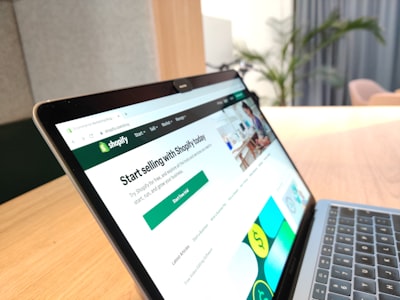
The Shopify ecosystem has grown into a massive marketplace of applications solving everything from logistics to marketing. Behind each app there is a developer or agency that needs tools, training, cloud services, and most importantly, customers. For any B2B strategy, reaching those developers is a smart move, but traditionally it has required paid APIs, intermediaries or complex scraping. However, the Shopify App Store itself unknowingly exposes a goldmine of data that anyone can leverage for free and without authentication. In this article you will discover how to obtain B2B leads directly from the public app listing, and how companies like Q2BSTUDIO can help you scale that process with custom software, artificial intelligence and cloud architectures.
The key lies in two resources that Shopify publishes openly: the XML sitemap and the detail pages of each application. The App Store sitemap lists all indexed apps without pagination or limits. Simply download that file to get the unique handle of each app, a URL fragment that lets you access its profile. From there, each detail page includes in its HTML, inside a data attribute, the support email that the developer is required to publish. Along with that email you also get the developer name, partner page, company website, average rating, review count and pricing plans. All this information is served in server-rendered HTML, without needing JavaScript or access tokens.
This approach has huge advantages over other lead sources. First, coverage is virtually total: all listed apps have a public support email by platform requirement. Second, you do not need to register or pay for an API subscription. Third, having ratings and review counts lets you sort developers by traction, prioritizing those who are already generating revenue and likely reinvesting in their apps. That means instead of prospecting blindly, you can focus your efforts on the most active and solvent partners.
From a technical perspective, implementing this collector is straightforward if you know how to handle HTTP requests and regular expressions. A Python or Node.js script can download the sitemap, extract handles, crawl each detail page and capture the data with a regex looking for the data-developer-support-email attribute. The result is a database of thousands of B2B contacts in minutes. But if you need to scale to tens of thousands of apps, enrich the data with additional information, or integrate it into a CRM, things get complicated. That is where having a technology partner like Q2BSTUDIO, specialists in custom software development, makes the difference.
Imagine you want to automate the entire lead capture, cleaning and enrichment process. A development team can build a robust scraper that runs periodically, with error handling, IP rotation and secure database storage. If you also add artificial intelligence layers, such as a model that classifies developers by industry or detects which apps have the highest growth potential, the lead value multiplies. For example, an AI agent could analyze app descriptions and suggest which products or services to offer each developer, personalizing outreach at scale.
Another critical aspect is infrastructure. Processing thousands of pages efficiently requires cloud resources. With services like AWS or Azure you can deploy serverless workers that only consume when they run, keeping costs under control. At Q2BSTUDIO we offer cloud consulting and migration (AWS/Azure) so your scraping solution is scalable, resilient and secure. And let‘s not forget cybersecurity: when handling third-party data, even if public, it is essential to protect both the collected information and the systems processing it. A pentesting and security audit ensures you do not expose vulnerabilities.
Analytics also plays a key role. Once you have the leads, you need to understand them. With Business Intelligence tools like Power BI you can visualize trends: which app categories are growing fastest, which developers have the best reputation, or how ratings evolve over time. At Q2BSTUDIO we help implement BI solutions with Power BI that turn raw data into actionable dashboards for your sales team.
This method is not only useful for direct sales. It also helps marketing agencies that want to offer App Store Optimization (ASO) services to developers, tooling companies looking for strategic partners, or even investors wanting to identify promising startups in the Shopify ecosystem. The information is free and public, but the real value lies in how you process, enrich and integrate it into your workflow. That is where technical knowledge and software development experience become a competitive advantage.
In summary, the Shopify App Store is an undervalued source of B2B leads. With a simple sitemap and a regular expression, you can build a list of qualified contacts without spending a cent. But to turn that list into a revenue machine you need automation, intelligence, scalability and security. If you want to jump from a homemade script to an enterprise solution, partnering with a company like Q2BSTUDIO will let you focus on what you do best: selling, innovating and growing.