In the early days of home computing, when Microsoft launched Windows 95 in August 1995, the software world experienced a quiet but profound revolution: the graphical interface became ubiquitous, the Start button became a standard, and for the first time, the platform offered a truly robust multitasking experience. However, beneath that friendly visual shell hid technical decisions that today seem almost anachronistic. One of the most curious and revealing is how Windows 95 handled installer detection: it did not recognize them via metadata, digital signatures, or application manifests; instead, it simply guessed their function by the file name. If an executable was named 'setup.exe', 'install.exe', or even 'instalar.exe', the operating system assumed it was an installation program. If it was called 'myprogram.exe', it did not treat it as such. This primitive heuristic, although functional in a world of shareware software and magazine CD-ROMs, reveals much about the software engineering limits of the era and, by contrast, illuminates the complexities we solve today with modern platforms like those offered by Q2BSTUDIO.
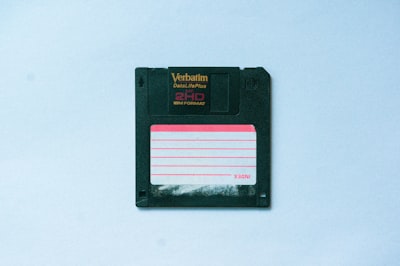
To understand why Windows 95 adopted this approach, we must go back a few years. Windows 3.1 and MS-DOS did not have a unified concept of 'installation'. Programs were distributed on floppy disks and the user had to manually copy files or run a rudimentary script. With the arrival of the CD-ROM and the proliferation of commercial software, Microsoft needed a way to automate installation. The pragmatic solution was to program the system so that, when inserting a disk or executing a file, it looked for common names like 'setup.exe'. This list of names was stored in the registry (HKEY_LOCAL_MACHINE\Software\Microsoft\Windows\CurrentVersion\App Paths) and also coded into the explorer kernel. The mechanism was as simple as effective: if a user double-clicked 'instalar.exe', Windows 95 launched the corresponding installation wizard (often 'rundll32.exe' with parameters). But if the file was named 'myprog.exe', the system simply executed it as a normal application, without offering uninstall or registration options.
This technical decision had interesting consequences. On one hand, it fostered de facto standardization: almost all developers named their installation programs 'setup.exe' or 'install.exe', making life easier for users. On the other hand, it created security and usability problems. Any malicious executable could adopt that name and trick the system into posing as a legitimate installer. Moreover, Windows 95 did not distinguish between a new installation and an update, nor did it verify file integrity. In an ecosystem where software was shared on floppy disks and BBSs, the risk was real, although cybersecurity was not discussed as it is today. Over time, Microsoft improved this system by incorporating digital signatures, application manifests (in Windows XP), and finally the modern packaging model (MSIX, AppX) used in Windows 10 and 11. However, the lesson persists: software engineering must anticipate usage contexts, and a purely heuristic approach can create vulnerabilities.
From a business perspective, this historical case reminds us of the importance of designing robust systems from the start. Today, companies that develop custom software, like those built by Q2BSTUDIO, cannot afford improvised solutions. Modern software must integrate with package management systems, digital signatures, group policies, and increasingly with artificial intelligence to detect anomalous behavior. AI and AI agents allow analyzing installation patterns in real time, identifying unwanted software and automating deployments in cloud environments such as AWS or Azure. In fact, many organizations are migrating their installation processes to cloud platforms, where package management is done via containers and orchestration tools like Kubernetes. Q2BSTUDIO offers cloud AWS/Azure services that facilitate this transition, ensuring that software is distributed securely and scalably.
Cybersecurity is another area where file-name heuristics would be disastrous today. Modern attackers use techniques like renaming malicious files to evade detection. Therefore, current cybersecurity solutions, such as those integrated by Q2BSTUDIO into its projects, employ behavioral analysis, machine learning, and hash signatures to identify legitimate software. In addition, generative artificial intelligence can simulate spoofing attacks and train models to recognize dangerous installation patterns. In a world where ransomware spreads through fake installers, trusting the file name would be an open door to disaster.
On the other hand, the Windows 95 approach also speaks to the evolution of user experience. Back then, users were more tolerant of manual processes. Today, an installation wizard that does not adapt to the user's language, does not check dependencies, or does not offer clean uninstall options is unacceptable. Modern applications must be custom software that integrates with Business Intelligence (BI) systems like Power BI to analyze adoption metrics, or with process automation tools that reduce manual intervention. Q2BSTUDIO develops BI/Power BI solutions that allow companies to monitor the lifecycle of their applications, from installation to update, detecting bottlenecks and improving operational efficiency.
The history of installer detection in Windows 95 is not just a technical anecdote; it is a lesson in how early design decisions in operating systems can have lasting effects. Microsoft eventually abandoned that model, but its legacy persists in certain conventions. For example, many modern applications still use 'setup.exe' as the default name, although the operating system no longer interprets it specially. True innovation came with the cloud and intelligent agents. Today, companies can deploy software in seconds using CI/CD pipelines, without depending on file names. Process automation, another key service of Q2BSTUDIO, allows installations to be performed via orchestrated scripts, verifying each step with business rules and real-time alerts.
In summary, the case of Windows 95 and its installers guessed by file name shows us that innovation is not always synonymous with perfection. Sometimes pragmatic solutions solve an immediate problem but create others in the long term. Current software engineering, supported by artificial intelligence, cybersecurity, cloud computing and Business Intelligence, can overcome those limitations. Companies like Q2BSTUDIO are at the forefront of this change, offering custom software development services that incorporate the best industry practices. If you want to avoid the mistakes of the past in your projects, trust professionals who understand both the history and the future of technology.