The Linux kernel has reached version 7.2-rc3, and this update brings two pieces of news that have caught the attention of the technical community: the inclusion of drivers for the Dreamcast controller and the definitive removal of support for the i486 processor. These changes reflect the kernel’s continuous evolution, balancing compatibility with old hardware and the incorporation of new features. In this article, we analyze in depth what these modifications imply, how they affect developers and businesses, and what business opportunities arise around legacy software adaptation, cybersecurity, and artificial intelligence.
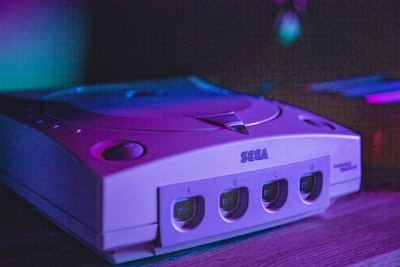
Support for the Dreamcast controller is based on the Maple protocol, originally used by Sega’s console to connect controllers and peripherals. Thanks to the work of independent developers who contributed to the kernel’s input subsystem, it is now possible to use original Dreamcast controllers on Linux systems via USB adapters. This opens the door to emulators like Flycast or Reicast, as well as retro gaming preservation projects. From a technical point of view, implementing the driver required understanding the Maple protocol, managing device enumeration, and translating signals into standard input events. This contribution demonstrates the vitality of the open-source community and how the kernel remains a canvas for innovation.
On the other hand, the removal of support for the i486 architecture marks the end of an era. The i486, released by Intel in 1989, was for decades a mainstay in embedded systems, industrial controllers, and legacy equipment. However, its maintenance in the kernel had become unsustainable: the lack of real hardware for testing, the accumulation of outdated security patches, and the growing complexity of the code led to the decision to retire it. Distributions like Debian and Ubuntu had already stopped offering images for i486 years ago, and this official removal in the kernel accelerates the migration to more modern architectures like i686 or x86_64. For companies that still rely on i486-based systems, this news is a wake-up call: they must plan an urgent upgrade to avoid security vulnerabilities and loss of support.
From a business perspective, these news are relevant for companies that offer software update and cloud migration services. For example, Q2BSTUDIO specializes in custom software development for environments that require compatibility with old hardware or system modernization. The obsolescence of the i486 forces many companies to rethink their embedded systems, migrating to newer architectures such as ARM or x86_64, which in turn opens opportunities for process automation projects and software customization. A company manufacturing industrial devices with i486 processors could hire Q2BSTUDIO to redesign the embedded software, adapt it to an ARM SoC, and migrate data to the cloud, all with the necessary cybersecurity guarantees.
The inclusion of the Dreamcast driver also has commercial implications. Emulator and retro game developers can benefit from native Linux support, facilitating the creation of gaming experiences with original hardware. Furthermore, companies working with artificial intelligence can use these drivers to train machine learning models that recognize input patterns or generate virtual environments. AI agents, for example, could analyze the data flow of the Maple protocol to detect anomalies or improve latency. Q2BSTUDIO offers artificial intelligence solutions applied to business processes, from chatbots to computer vision systems, which could be integrated with these drivers to create unique products.
Cybersecurity is another critical area. With the removal of i486 support, systems that still use it will be exposed to vulnerabilities without patches. This is where pentesting and cybersecurity services offered by Q2BSTUDIO can help companies audit and protect their legacy infrastructures. A security analysis could reveal that an i486-based industrial controller has backdoors or weaknesses requiring immediate migration. Moreover, kernel cybersecurity is essential: the inclusion of new drivers always poses stability and security risks, so companies must have experts audit the code. Q2BSTUDIO can perform open-source code audits and penetration tests to ensure that custom drivers do not introduce vulnerabilities.
Cloud plays an important role in modernizing legacy systems. Many organizations are migrating their workloads to AWS or Azure to reduce maintenance costs of old hardware and take advantage of scalability. Q2BSTUDIO provides cloud services on AWS and Azure, facilitating the transition and ensuring that legacy applications are properly adapted. For example, a company still running industrial control software on an i486 server could virtualize that environment in an AWS instance, with Q2BSTUDIO’s help to package and optimize the application. Additionally, Business Intelligence (BI) tools like Power BI can be used to monitor system performance after migration, identifying bottlenecks and optimizing resources. A Power BI dashboard could show real-time CPU, memory, and I/O usage of virtual machines, aiding informed decision-making. Q2BSTUDIO offers consulting in Business Intelligence and Power BI so companies can make the most of their data.
In the field of artificial intelligence, the kernel’s evolution allows integrating AI agents that analyze driver packages or detect anomalies in real time. For instance, an AI system could examine the Dreamcast driver source code to verify its security, or help automate regression tests in new kernel versions. It is also possible to implement machine learning models that predict which security patches are most urgent, based on known vulnerability analysis. Q2BSTUDIO integrates AI agents into business processes, from automating repetitive tasks to creating virtual assistants for technical support. These solutions can be key for companies managing large fleets of devices with custom kernels.
Compatibility with retro hardware like the Dreamcast controller also has cultural and preservation implications. Digital museums and video game history communities benefit from the kernel still supporting classic devices, allowing interactive demos without the need for decaying original hardware. This can translate into digitization and virtualization projects requiring custom applications. Q2BSTUDIO has worked on digital preservation initiatives, developing software to emulate old consoles or capture data from historical peripherals. Moreover, the combination of cloud and AI allows creating immersive online experiences, such as a virtual museum where visitors can interact with Dreamcast controllers from their browser.
For kernel developers and distribution maintainers, these changes imply additional work in updating patches and configurations. Companies using custom kernels (e.g., in embedded systems) must check if their code depended on any i486 aspects and rewrite affected sections. This is where Q2BSTUDIO’s custom software can make a difference: a team of engineers can analyze legacy code, identify dependencies, and develop alternative kernel modules that maintain functionality without resorting to obsolete architectures. Furthermore, process automation through scripts and CI/CD pipelines speeds up testing and integration of new drivers.
In conclusion, Linux 7.2-rc3 is a milestone that combines nostalgia and progress. While the i486 bows out, the Dreamcast drivers remind us that free software always finds a way to keep the past alive. For businesses, these changes represent a call to action: update, migrate, and protect their systems. With the support of companies like Q2BSTUDIO, it is possible to navigate this transition successfully, leveraging the latest technologies in cloud, AI, and cybersecurity. Whether developing custom applications, implementing intelligent agents, or protecting critical infrastructures, the key is to adapt quickly to a kernel that never stops evolving.