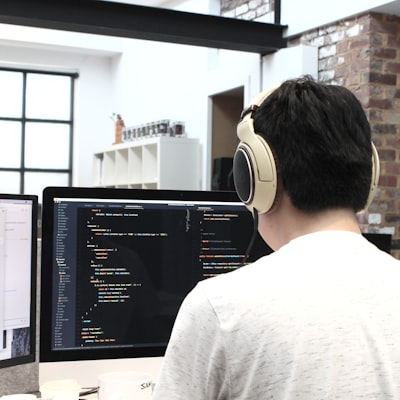
There is a paradox that many developers and technical teams are experiencing today: more software is delivered than ever, sprints shorten, features are deployed at an unprecedented pace, and yet, at the end of the day, an uncomfortable feeling persists: 'the code was written by AI... did I really do anything today?' This is not an isolated perception. It is a symptom of a profound shift in the nature of technical work, where the line between human action and automation has blurred.
The arrival of AI agents in the development flow has transformed the traditional metric of productivity. Before, writing lines of code was the tangible proof of work. Now, value lies in decision-making: what to build, how a feature fits, what security risks to consider, and when to stop. This invisibility of cognitive effort creates a void that no traditional productivity tool, such as classic Pomodoro timers, can fill. How do you measure the work that happens in the mind while reviewing a diff generated by a language model?
At Q2BSTUDIO, a company specializing in software development and technology, we observe this tension daily. Our teams work with clients who integrate AI solutions into their processes, and we have seen that the real challenge is not technical, but rather managing effort and attention. When an AI system automatically drafts reports or suggests code, the human professional does not disappear: they become a supervisor, a validator, a decision-maker. This role demands a level of concentration that is not reflected in metrics like 'lines of code' or 'tasks closed.'
The disconnect between actual contribution and perceived productivity has concrete consequences. Workdays are unnecessarily extended, reviews pile up, and the risk of burnout skyrockets. Companies that have trusted custom applications to manage their workflows have told us how the arrival of generative AI changed their dynamics. One product manager confessed: 'Before I knew I had worked because I typed non-stop. Now I spend hours analyzing agent proposals, and at 8 PM I don't know if I've done enough.'
The solution is not to ignore AI, but to redesign how we measure and value work. We need new conceptual tools. For example, instead of counting hours at the keyboard, we can measure informed decisions: how many code reviews were completed with judgment, how many security risks were mitigated, how many cloud integrations were validated. In that sense, cybersecurity is a paradigmatic domain: an agent can detect vulnerabilities, but the decision on how to prioritize and fix them remains human. And that judgment is gold.
There is also a need for a workday design that includes real breaks and clear limits, something that traditional focus tools do not handle well in the context of agents. A timer that only counts keyboard time is no longer useful. At Q2BSTUDIO we have seen that teams adopting automation and cloud AWS/Azure find it easier to establish healthy rhythms when automation frees up time, but only if human supervision has defined moments of disconnection. Otherwise, the constant availability of the agent can lead to hyperconnectivity that erodes quality of life.
From a business perspective, this paradox has strategic implications. Companies investing in BI / Power BI to monitor operational performance should consider metrics that capture the value of AI-assisted work: not how much the machine writes, but how much value the human adds by interpreting and acting on that information. A productivity dashboard that ignores the cognitive dimension is a mirage. At Q2BSTUDIO we help design these custom indicators so that organizations make informed decisions about their teams.
Technology advances, but human nature does not change at the same pace. We need new ways to validate our effort. Perhaps, next time you feel you did nothing, look at the history of decisions you made, the reviews you guided, and the risks you neutralized. That, and not the lines of code, is the real work in the era of AI agents. And remember to close the laptop at a reasonable hour, because the machine has no sense of when to stop, but you do.