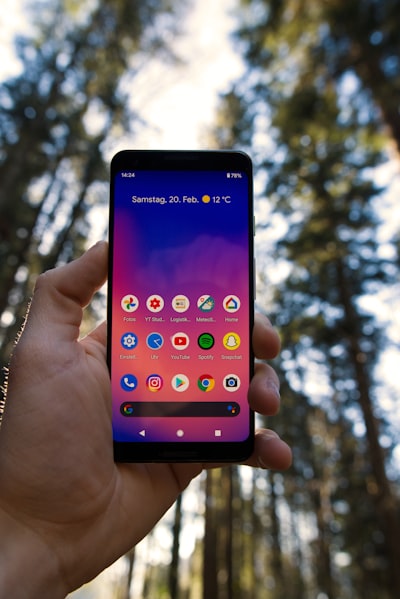
The battle between Samsung and Google in the smartphone market is nothing new, but recent quarters confirm a trend few dispute: Samsung keeps winning where it matters most—sales. While Google's Pixel phones gather dust on shelves—or in technical comparisons—the South Korean giant dominates the Android ecosystem with figures that leave little room for interpretation. However, this fight goes far beyond hardware: it is a struggle for user experience, service integration, and, above all, control over the data and applications that drive the business world.
To understand why Samsung outperforms Google, one must look beyond Tensor processors or Pixel cameras. Samsung has built a vertical ecosystem that spans displays, memory, and its own customization layer, One UI, which offers features Google cannot match out of the box. Moreover, Samsung's distribution network is extensive, with carrier agreements in virtually every market—something Google has yet to replicate. This translates into sales volumes that, according to IDC, quintuple those of the Pixel. But what really matters for businesses is how this dominance affects software development and digital strategy.
From a technical perspective, Samsung offers a much broader set of tools for developers than Google. Its Knox platform, for example, provides a level of security and enterprise management that surpasses standard Android. This is crucial for companies that need custom applications with high data protection requirements. Additionally, Samsung has invested heavily in artificial intelligence with Galaxy AI, integrating assistants and predictive features that boost productivity. In this context, Q2BSTUDIO, as a software development company, helps organizations leverage these capabilities by building solutions that adapt to both the Samsung and Google ecosystems, ensuring interoperability and performance.
Artificial intelligence is precisely one of the fields where both companies compete fiercely. Google has spent years perfecting its language and vision models, but Samsung has managed to package them into useful services for end users, such as real-time translation or document summarization. For businesses, AI is not just a gadget: it is a tool to automate processes, analyze data, and improve decision-making. At Q2BSTUDIO, we work with AI agents that can be integrated into mobile and web applications, enabling everything from advanced chatbots to recommendation systems based on user behavior. Samsung, with its larger market penetration, offers a broader user base to deploy these solutions.
Cybersecurity is another pillar that sets Samsung apart. Its Knox layer not only protects the device but also enables remote fleet management, essential for companies deploying devices to employees. Google has improved with Android Enterprise, but still lags in terms of control and configurability. For a company handling sensitive data, having cybersecurity services that audit both hardware and software is fundamental. Q2BSTUDIO offers security audits and secure development so that enterprise applications meet the most demanding standards, whether on Samsung, Google, or any other platform.
In the cloud arena, Samsung has integrated services like SmartThings Find and Samsung Cloud, though its strength is not in cloud infrastructure but in device synchronization. Google, on the other hand, dominates with Google Cloud, while AWS and Azure remain strong alternatives. For enterprises, the choice of cloud depends on scale and latency requirements. Q2BSTUDIO advises on migration to cloud services on AWS and Azure, ensuring mobile applications benefit from scalable and secure infrastructure. Moreover, the combination of Samsung devices with Google cloud services can be powerful if managed correctly.
Business analytics is another vector where Samsung and Google offer complementary tools. Google Firebase provides real-time usage analytics, while Samsung has its own intelligence center. However, most companies need to integrate this data with BI systems like Power BI to get a unified view. At Q2BSTUDIO, we develop custom dashboards that cross-reference data from multiple sources, helping companies measure the impact of their applications. Samsung's market dominance makes its devices a rich source of user data, which, when properly processed, can become competitive advantages.
Beyond sales numbers, Google's real challenge is that its business model relies on services and advertising, not hardware. Samsung, in contrast, earns margins from each device and the services it sells through its store and subscriptions. This gives it a direct incentive to innovate in the end-user experience. For software development companies, this divergence means they must adapt their strategies: if the goal is to reach the largest number of users, Samsung is the way to go; if integration with the Google ecosystem (Gmail, Drive, Maps) is prioritized, then Pixel may be more attractive. But in any case, the key is to build flexible, cross-platform applications.
Intelligent automated agents are another trend Samsung is pushing with its Bixby assistant and One UI routines. Google, with Assistant and now Gemini, is also betting on automation. For businesses, process automation through AI agents reduces costs and errors. Q2BSTUDIO designs automated workflows that run both on mobile devices and in the cloud, connecting applications with ERP or CRM systems. Samsung, with its massive installed base, offers a direct channel to deploy these automations at scale.
Returning to the title: the Pixel gathers dust not because it is a bad product, but because Google has failed to translate its technical innovations into a winning market strategy. Samsung, with its industrial machinery and consumer insight, has made its devices the ones that truly matter in everyday life. For technology and development companies, this reality is not a threat but an opportunity. Q2BSTUDIO helps companies navigate this dual ecosystem, creating software that works seamlessly on both Samsung and Google, leveraging the best of each world. The smartphone war will not end soon, but those who adapt to the market rules will be the real winners.