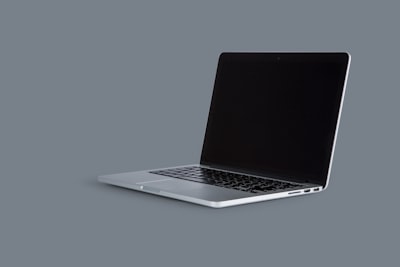
That dusty old laptop sitting in a drawer could be the ideal Plex server you've always wanted, without spending a dime on new hardware. While many believe they need a NAS or a dedicated desktop PC, the truth is that a laptop a few years old can become an efficient, silent, low‑power media hub. The key lies in understanding its capabilities and optimizing it properly. But beyond home entertainment, this philosophy of technological reuse has deep business applications: at Q2BSTUDIO we know this well, because we transform legacy assets into modern solutions through AWS/Azure cloud services and AI agents that automate processes. Let's explore why your dusty laptop is the perfect candidate for a Plex server, and how this concept extends to custom software development.
First, availability: an old laptop is already paid for, takes up virtually no space, and unlike a desktop PC, its battery can act as a UPS during power cuts. Moreover, modern processors (even those from five or seven years ago) include integrated graphics with hardware transcoding support, allowing multiple 1080p streams without breaking a sweat. RAM is usually sufficient for the operating system and Plex software (4 GB is fine, 8 GB ideal). Storage can be expanded using external drives or even replacing the optical drive with a second hard disk. Setup is as simple as installing Ubuntu Server (or Windows if you prefer familiarity) and running the Plex Media Server package. In fifteen minutes you'll have your library accessible from any device.
But here comes the technical‑business angle that sets this article apart from any casual guide. A Plex server is just an application that consumes resources predictably, much like a Power BI business intelligence system monitoring KPIs in real time. Optimizing that laptop —adjusting CPU frequency, disabling unnecessary services, configuring the firewall— is precisely the same work we do at Q2BSTUDIO when migrating legacy applications to the cloud or designing custom applications for clients who need to leverage existing hardware. Cybersecurity is also critical: exposing Plex to the internet requires setting up a VPN, SSL certificates, and secure NAT rules; it's a practical exercise in cybersecurity that every administrator should master. And when it comes to artificial intelligence, AI agents can analyze server logs to predict disk failures or recommend metadata cleanups — a task Q2BSTUDIO implements in cloud environments with AWS/Azure.
The economic factor also deserves attention. Converting a disused laptop into a Plex server saves between 200 and 500 euros compared to buying a NAS or a mini PC. But the real value lies in the experience you gain: managing network services, using containers (Docker for Plex and its add‑ons), load‑balancing streams, and monitoring performance with tools like Grafana or Prometheus. That training is directly transferable to business environments where Q2BSTUDIO helps companies modernize their infrastructure without starting from scratch. For instance, a company wanting to deploy an AI system for computer vision can begin with recycled hardware before scaling to cloud instances, thus validating the business model with minimal investment.
Finally, let's not forget sustainability. Reusing a laptop prevents electronic waste and reduces carbon footprint. In a world where technology advances so fast, initiatives like this prove that obsolete hardware can have a productive second life. At Q2BSTUDIO we promote the same principle with our custom software approach: we adapt existing software to new needs, integrating AWS/Azure cloud, cybersecurity and AI agents so that every client gets the maximum return from their technology assets. So dust off that laptop, install Plex, and once you see how easy it is, ask yourself what more you could achieve with the help of professionals who turn ideas into robust solutions.