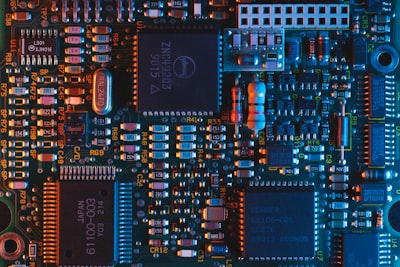
SK Hynix, one of the world's largest semiconductor manufacturers, has issued a warning that resonates across the tech industry: the year 2027 could become the worst period of memory shortage in recent history. The South Korean company, which dominates the DRAM and NAND memory market, points out that the growing demand for artificial intelligence (AI) and the rise of data centers are pushing production capacity to its limits. This forecast is not mere speculation: it reflects decades of boom-and-bust cycles in the sector, but with an unprecedented twist driven by the massive adoption of language models and generative AI applications.
The predicted shortage is not limited to conventional memory. SK Hynix is investing billions in HBM (High Bandwidth Memory) production, a critical component for GPUs used in AI training. However, HBM manufacturing is extremely complex and requires advanced packaging technologies that are not yet fully scaled. Added to this is the geopolitical tension between the United States and China, which restricts access to raw materials and lithography equipment. According to industry analysts, demand for DRAM and NAND could exceed supply by 15-20% by 2027, affecting everything from smartphones to cloud servers.
For companies that depend on modern technological infrastructure, this shortage represents both a challenge and an opportunity. Anticipatory planning and the adoption of efficient software solutions become crucial. In this context, having a technology partner that offers custom software can make a difference. Optimized software that uses less memory or intelligently manages workloads reduces dependence on expensive hardware. Q2BSTUDIO, as a software and technology development company, understands that memory shortage is not just a supply problem but a signal to rethink application architecture.
Artificial intelligence is paradoxically both the main cause of the shortage and the tool to mitigate it. AI models require huge amounts of memory for their parameters, but the same technology can be used to optimize resource usage. For example, AI agents can dynamically monitor and allocate memory in data centers, reducing waste. Q2BSTUDIO integrates AI agents into enterprise systems to predict demand spikes and automatically adjust resource allocation, minimizing the impact of hardware shortages.
Another key strategy is migrating to the cloud, where providers like AWS and Azure negotiate long-term contracts to secure memory capacity. The cloud's flexibility allows on-demand scaling but requires proper financial and technical planning. Q2BSTUDIO's cloud AWS/Azure services help companies design cloud-first architectures that optimize memory and storage usage while benefiting from economies of scale. Additionally, integrating Business Intelligence (BI) tools like Power BI enables real-time visualization of resource consumption, facilitating informed decisions on when and how to expand capacity.
Cybersecurity also plays a role in this landscape. With memory shortages, systems can become more vulnerable to denial-of-service attacks or exploits that take advantage of resource scarcity. Implementing proactive protection measures is essential. Q2BSTUDIO offers cybersecurity solutions including pentesting and infrastructure audits to ensure that, even under shortage conditions, data and systems remain secure.
Looking ahead to 2027, companies cannot afford to wait passively. Memory shortage will be a fact, but how it is addressed will determine competitiveness. Adopting a software-efficient, hybrid-cloud, AI-driven, and data-analytics-based approach not only mitigates risks but creates sustainable advantages. Q2BSTUDIO, with its expertise in custom software development, AI, cloud, and BI, stands as a strategic ally to navigate this storm. The key is to act today: optimize, automate, and protect before the shortage hits with full force.
In summary, SK Hynix's forecast is a wake-up call for the entire tech ecosystem. Memory is becoming as critical a resource as electricity. Organizations that invest in BI/Power BI to monitor consumption, in custom applications to reduce dependencies, and in cloud and cybersecurity, will be better prepared. 2027 does not have to be the worst year if the right decisions are made now.