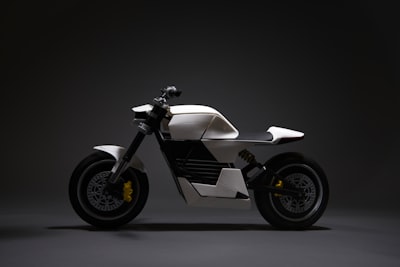
In the fast-paced world of urban mobility, an innovation has captured the attention of enthusiasts and experts alike: a 3D-printed electric motorcycle that fits inside a suitcase. Its creator, an engineer who prefers to remain anonymous, has issued a warning that echoes through the industry: 'It's too fast.' This vehicle, combining additive manufacturing with electric propulsion technology, not only challenges traditional notions of personal transportation but also opens a realm of possibilities for customization and efficiency. Made from recyclable composite materials, the bike weighs less than 12 kilograms and can reach speeds close to 70 km/h, placing it in a hybrid category between a high-performance scooter and a conventional motorcycle. The key to its design lies in a 3D-printed chassis that folds into three parts, occupying a space comparable to a tool case. However, the creator warns that the power of the electric motor, combined with a high-density lithium battery, can be difficult to control for inexperienced users. This warning has sparked debate about the limits of micro-mobility and the need for stricter regulation.
Beyond the initial amazement, the development of this motorcycle represents a milestone in the integration of digital manufacturing technologies and embedded systems. For such a compact vehicle to operate safely and efficiently, sophisticated control software is required to manage power delivery, regenerative braking, and dynamic stability. This is where companies like Q2BSTUDIO, specializing in custom software development, play a crucial role. One of the most critical areas is the implementation of artificial intelligence systems to optimize energy consumption and predict anomalous behavior. For example, integrated AI agents can learn the user's driving patterns and adjust the acceleration curve to prevent skidding or overheating. Additionally, cybersecurity becomes a fundamental aspect, as any internet-connected vehicle is vulnerable to attacks that could compromise the driver's safety. Q2BSTUDIO offers cybersecurity solutions including pentesting and communication encryption, ensuring that the bike is not only fast but also secure against digital threats.
The business model behind this 3D-printed motorcycle also deserves analysis. The creator has chosen to publish the plans under an open license, allowing anyone with an industrial 3D printer to build their own unit. However, he warns that the basic version lacks the electronic assistance systems that make driving safe at high speeds. For those seeking a more controlled experience, it is recommended to purchase a sensor kit and a processing unit that integrates advanced management software. In this context, services such as Q2BSTUDIO's cloud offerings (AWS/Azure) enable storing and analyzing telemetry data from each trip, providing users with detailed reports on performance and component wear. Business intelligence (BI/Power BI) applied to this data helps identify usage patterns and predict when parts will need replacement, reducing maintenance costs. Thus, the motorcycle is not only a marvel of additive manufacturing but also a digital ecosystem where software and hardware converge to create an intelligent mobility experience.
From a technical perspective, the motor used is a brushless permanent magnet synchronous motor, with a nominal power of 1.5 kW and peaks of up to 3 kW during acceleration. The battery, a lithium-ion pack with 18650 cells, offers 36 V and 10 Ah, enough for about 40 kilometers in eco mode. However, when sport mode is activated, range drops drastically to 15 kilometers, but top speed reaches 70 km/h. The creator states that tests with a professional pilot showed the bike can skid in tight corners if proper electronic traction management is not applied. Therefore, he strongly recommends installing a control module that integrates AI algorithms to stabilize the vehicle. This is precisely the kind of development where Q2BSTUDIO excels, offering custom applications ranging from embedded control systems to remote monitoring platforms in the cloud. The possibility of wirelessly updating the motorcycle's firmware via 5G or Wi-Fi opens the door to continuous improvements without hardware replacement.
The potential impact of this invention on the transportation industry is significant. If distributed manufacturing of electric vehicles becomes democratized, we could see a reduction in dependence on large manufacturers and greater customization for the end user. However, regulatory challenges are enormous. Excessive speed and lack of certified safety systems could lead to bans in many countries. The creator insists that his warning is not just a marketing hook but a call to action for the maker community and authorities to collaborate on creating regulations that allow enjoying these innovations without compromising road safety. In this sense, cybersecurity and artificial intelligence are shaping up as enabling tools to achieve a balance between performance and safety. Companies like Q2BSTUDIO are already working on solutions that integrate AI agents capable of detecting dangerous driving behaviors and automatically limiting speed in critical zones, all managed from scalable cloud platforms such as AWS or Azure.
Finally, the case of this 3D-printed electric motorcycle reminds us that technology advances faster than laws and social structures. The creator's warning — 'too fast' — refers not only to physical speed but also to the speed of technological change. For these innovations to be adopted safely and responsibly, synergy is needed between developers, manufacturers, regulators, and software companies. Q2BSTUDIO, with its focus on custom software, AI, cybersecurity, and cloud, is perfectly positioned to provide the tools that allow micro-mobility vehicle creators to launch safe and intelligent products. The motorcycle that fits in a suitcase is just the beginning of a new era in which 3D printing and software define the future of personal transportation. Custom software development and artificial intelligence implementation are the pillars that will sustain this revolution on wheels.