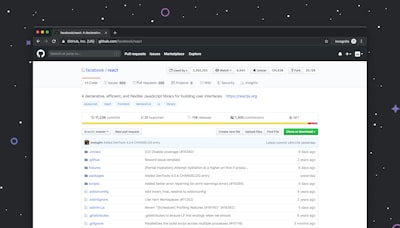
In recent weeks, the cybersecurity community has detected a malicious campaign that uses a fake DNS scanner written in Go to spread malware through more than 200 repositories on GitHub. This attack, combining social engineering and identity spoofing techniques, represents a significant threat to both developers and companies that rely on the open-source ecosystem. In this article, we will deeply analyze how this deception works, its implications for cybersecurity, and how organizations can protect themselves with solutions like those offered by Q2BSTUDIO.
The attack is based on creating repositories that mimic legitimate DNS scanning tools, a common utility for system administrators and network professionals. Malicious actors take advantage of Go's popularity—an efficient, cross-platform language—to develop binaries that, under the guise of a DNS scanner, execute malicious code. Once a developer downloads and runs the supposed scanner, the malware installs on the system, opening backdoors, stealing credentials, or deploying ransomware.
The scale of the problem is alarming: more than 200 repositories, many with stars and forks obtained through automated accounts, have managed to deceive hundreds of victims. GitHub has begun removing these repositories, but the decentralized nature of the platform makes early detection complex. This incident underscores the need for robust cybersecurity strategies that include code audits, dependency analysis, and continuous monitoring.
From a technical standpoint, the fake DNS scanner uses a command-line interface that mimics known tools like 'dnsx' or 'subfinder.' Upon execution, the binary requests network permissions to perform DNS queries, but in the background it downloads a payload from a remote server. This payload can be a persistent backdoor, a keylogger, or a cryptocurrency miner. Researchers have identified that the malware employs advanced obfuscation techniques, such as string encryption and process injection, to evade traditional antivirus detection.
The use of Go is no accident: this language generates static binaries that are difficult to analyze statically and work across multiple operating systems (Windows, Linux, macOS). Moreover, attackers have leveraged the trust the open-source community places in seemingly legitimate repositories. Many developers, eager to automate tasks, download precompiled binaries without reviewing source code or checksums. This practice, known as 'binary planting,' is one of the most exploited attack vectors today.
For companies, such threats pose a direct risk to the integrity of their systems and data. A single employee downloading a fake DNS scanner could compromise an entire corporate network. Therefore, it is essential to implement security policies that include digital signature verification, using sandboxed environments for unknown binaries, and continuous staff training. In this context, services like those provided by Q2BSTUDIO in cybersecurity help organizations identify vulnerabilities, perform penetration tests, and establish proper access controls.
Beyond immediate response, modern cybersecurity requires a proactive approach. Companies should adopt artificial intelligence (AI) solutions to analyze behavioral patterns and detect anomalies in real time. For example, a system of AI agents can monitor network traffic and alert on suspicious connections generated by malware like this fake DNS scanner. Similarly, process automation through custom software reduces the attack surface by eliminating repetitive manual tasks that could be exploited.
Additionally, the cloud plays a crucial role in defending against these threats. Cloud platforms like AWS and Azure offer integrated security tools, such as AWS GuardDuty or Azure Defender, which can identify malicious activity. However, proper configuration requires technical expertise. Therefore, many organizations choose to outsource their cloud infrastructure management to specialized companies. Q2BSTUDIO provides cloud AWS/Azure services that include secure architecture, migration, and continuous monitoring, ensuring cloud resources are protected against attacks like the fake DNS scanner.
Another relevant aspect is the importance of business intelligence (BI) and data analysis for cybersecurity. Tools like Power BI allow visualization of security metrics, such as the number of suspicious connection attempts or the geographic distribution of attacks. Integrating these capabilities with intrusion detection systems improves response capabilities. Q2BSTUDIO develops BI/Power BI solutions that help transform security data into actionable information, facilitating real-time decision-making.
For developers, the most important lesson is not to blindly trust GitHub repositories. It is advisable to review the repository history, contributions, and descriptions. Additionally, whenever possible, compile from source code instead of downloading precompiled binaries. Tools like Vuls or Trivy can analyze dependencies for known vulnerabilities. The open-source community should actively collaborate by reporting suspicious repositories and sharing indicators of compromise (IoCs).
In conclusion, the fake DNS scanner in Go that infected more than 200 GitHub repositories is a reminder that cybersecurity is not a product but a continuous process. Companies seeking effective protection must combine advanced technology, staff training, and professional services. At Q2BSTUDIO, we understand these challenges and offer comprehensive solutions ranging from developing custom software to implementing secure cloud environments and artificial intelligence systems. Your business security is our priority.