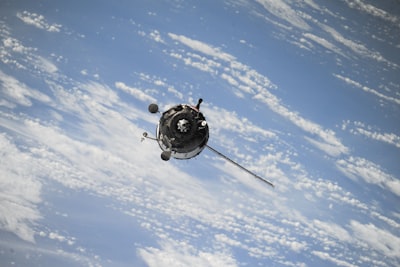
China's Tianwen-2 probe has achieved a historic milestone by reaching Earth's quasi-moon, the asteroid Kamo'oalewa. This object, also known as 2016 HO3, has been studied for its peculiar orbit that keeps it close to our planet. The mission, part of China's ambitious space program, aims not only to capture detailed images but also to land on the asteroid's surface and collect samples to bring back to Earth. This achievement represents a significant advance in the exploration of minor celestial bodies and in understanding the origins of the solar system. From a technical perspective, the Tianwen-2 spacecraft is equipped with state-of-the-art instruments enabling autonomous navigation, 3D mapping, and sample collection. The mission's success heavily relies on complex software systems that manage everything from communication with Earth to real-time data analysis. This is where software engineering becomes a fundamental pillar. In the business and technology realm, missions like this demonstrate the importance of having custom software that can adapt to extremely specific requirements. Companies that develop tailored software, such as Q2BSTUDIO, play a crucial role by offering solutions beyond standard commercial products. For instance, in developing control systems for spacecraft or implementing artificial intelligence algorithms for image and scientific data analysis. The ability to create custom software optimizes processes, reduces latency, and ensures reliability in critical environments. Moreover, managing the vast amounts of data generated by space missions requires robust Business Intelligence (BI) and data analytics platforms. Tools like Power BI enable visualizing and extracting meaningful patterns from complex information, facilitating strategic decision-making. Q2BSTUDIO, with its expertise in BI and Power BI, helps organizations transform raw data into actionable knowledge, whether for space missions or business projects. Cybersecurity is another critical aspect of space exploration missions. Communications between the probe and Earth must be protected against potential threats. Companies need to implement robust security measures, such as those offered by Q2BSTUDIO in its cybersecurity and pentesting services, to safeguard data integrity and control systems. Artificial intelligence and AI agents are revolutionizing how space data is processed and analyzed. From automatic feature detection on asteroids to autonomous trajectory planning, AI algorithms make missions more efficient and autonomous. In this context, Q2BSTUDIO develops customized artificial intelligence solutions that can be applied to space exploration as well as sectors like logistics, healthcare, or manufacturing. Cloud infrastructure also plays a vital role. Space missions generate terabytes of data that need to be stored, processed, and shared among international teams. AWS and Azure cloud services offer the necessary scalability and flexibility. Q2BSTUDIO specializes in migrating and managing cloud environments, ensuring optimal availability and performance. Returning to the Tianwen-2 mission, the next step is landing on Kamo'oalewa's surface. This process will require millimeter precision and advanced navigation systems. Sample collection and subsequent return to Earth will be another technical challenge. But thanks to advances in software and technology, it is becoming increasingly feasible. In summary, space exploration not only drives scientific knowledge but also accelerates technological innovation in fields like software development, artificial intelligence, cybersecurity, and cloud computing. Companies like Q2BSTUDIO are at the forefront of these technologies, offering services ranging from custom applications to BI, AI, and cloud solutions. If your organization aims to enhance its technological capabilities, explore how tailored software can make a difference.

China's Tianwen-2 Probe Reaches Earth's Quasi-Moon
China's Tianwen-2 probe has rendezvoused with Earth's quasi-moon Kamo'oalewa, sending back first images. Next: landing on the surface and collecting samples to
A BREAK?
Play for a moment before you go
OUR SERVICES
How we can help you
Artificial intelligence
AI agents, chatbots, and intelligent assistants that automate tasks and serve your customers 24/7 to improve the efficiency of your business.
More info →Software Development
Web, mobile and desktop applications, intranets, e-commerce, SaaS and management platforms designed for the specific needs of your company, with accessibility and best practices included.
More info →Cloud services
Migration, infrastructure, landing zones, networks, managed databases, scalable hosting and security in Microsoft Azure and Amazon Web Services so that your business grows according to the capacity you need.
More info →Cybersecurity and pentesting
Security audits, penetration testing and protection of applications, data and infrastructure on-premise and cloud. Ethical hacking and support in regulatory compliance (ENS, ISO 27001, GDPR) without promising certification.
More info →Business Intelligence
Operational reporting and predictive analytics with Power BI and Microsoft Fabric: we integrate your sources, design dashboards and KPIs and turn your data into informed decisions.
More info →Process automation
We automate repetitive tasks and connect your applications with n8n (open-source, self-hosted), Power Automate (Microsoft 365), Make or RPA, eliminating manual work. If you need AI agents, you'll find them in our AI hub.
More info →Training for companies
We train your teams in technology with criteria: web development, databases, Git, best practices and security, automation with n8n, artificial intelligence for companies and creation of AI solutions with Microsoft Foundry (formerly Azure AI Foundry).
More info →Code Auditing
We audit the code that you, your team or an AI create: we tell you what is good and what to improve, we secure it and make it ready for production, with evidence for ENS, ISO 27001, GDPR, NIS2 and DORA.
More info →Conversational avatars with AI
We create conversational avatars with AI – digital humans with a face and voice – for B2B cases: internal training, retail, events and customer service. They are not text chatbots or multimedia content; they are visual interlocutors with the knowledge of your company.
More info →Online Marketing and AI
Paid media, technical SEO, GEO/AEO, email marketing, landing/CRO and analytics: we capture useful demand and measure results without promising positions.
More info →AI Governance, Security, and Responsible Operation
We help inventory, control, and professionalize AI applications, automations, and agents without slowing down teams' ability to innovate.
More info →



Do you have a project in mind?
Tell us your vision and we'll turn it into a software solution. Whatever the scope, we make your idea real.