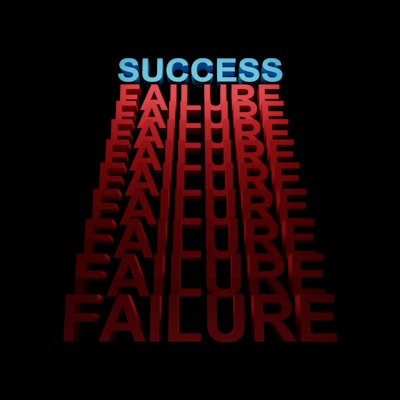
Software engineering is often taught as a discipline of correctness: if you write perfect code, the system will work. But anyone who has maintained a system in production knows that premise is naive. Failures are not exceptions; they are the norm. Accepting this reality is the first step to building applications that truly endure daily operations, late nights, and traffic storms. This episode explores why failure is part of design, not a mistake to be avoided at all costs.
Imagine a hospital. It does not design its protocols assuming there will never be a mass emergency. Quite the opposite: it prepares triage rooms, rapid response teams, and contingency plans to receive dozens of injured patients simultaneously. Doctors do not take offense when a disaster drill is planned; they appreciate it. The same happens in software development. A well-designed system is not one that never fails, but one that, when it fails, does so in a controlled manner, notifies the appropriate teams, and recovers without end users noticing.
This philosophy completely changes how you approach a project. Instead of asking yourself 'how do I make this feature work?', you start asking 'what if the database server goes down? What if the Redis cache stops responding? What if a misconfigured deployment corrupts the configuration?' That chain of questions is what separates a programmer who writes code from an engineer who builds resilient systems. And it is not about fear, but about preparation.
At Q2BSTUDIO we apply this approach every day. When we develop custom software for our clients, we do not just deliver code that meets functional requirements. We design the architecture thinking about failure points: databases, networks, external services, memory limits, CPU spikes. We integrate observability from the first sprint, with structured logs, performance metrics, and real-time dashboards. Because the only way to know if a system survives in production is to observe how it behaves when things go wrong.
The cloud has been a huge ally in this mindset. Providers like AWS and Azure offer geographic redundancy, load balancing, auto-scaling, and managed services that drastically reduce single points of failure. But the cloud is not magic: it is still the team's responsibility to design the right orchestration. That is why at Q2BSTUDIO we offer cloud AWS/Azure services that include not only migration, but also the definition of high availability and disaster recovery strategies. A well-designed cloud system can fail in one availability zone and keep serving requests from another without the user noticing anything.
Another fundamental pillar is intelligent automation. AI agents are transforming how incidents are detected and responded to. Instead of waiting for a human to review logs at 3 AM, a trained agent can identify anomalous patterns, correlate events, and execute predefined corrective actions. This reduces response time from hours to seconds. Furthermore, AI applied to cybersecurity allows detecting intrusions or suspicious behavior before they become breaches. At Q2BSTUDIO we integrate these capabilities into custom solutions, combining AI, cybersecurity, and cloud to create robust ecosystems.
We cannot forget the role of Business Intelligence. Having data about system behavior is one thing; turning it into actionable information is another. With Power BI and other BI tools, we build dashboards that show system health in real time: latencies, error rates, resource usage, external dependencies. These panels are the equivalent of an airplane's instrument panel: they let the team know if everything is fine or if something is starting to drift. And when something drifts, the system not only displays it but can trigger automatic alarms.
Failure engineering is not pessimism; it is realism. Accepting that failures will happen frees us from the pressure of trying to prevent them all and focuses us on what really matters: detect quickly, isolate the problem, recover gracefully, and learn for next time. In upcoming episodes we will explore concrete types of failures —hardware, network, database, human— and the resilience patterns that mitigate them. But the first step, the most important one, is to internalize this mindset. As we say at Q2BSTUDIO, building software is not just writing code; it is designing systems that survive the real world.