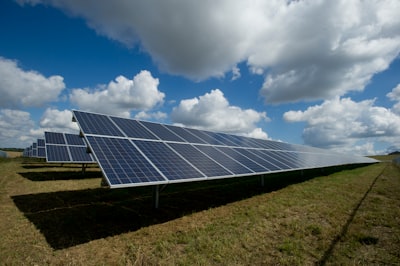
The integration of renewable energy into the electrical grid critically depends on accurately forecasting photovoltaic generation. However, solar output is subject to a complex interplay of meteorological variables, day-night cycles, dynamic operating regimes, and inherent physical constraints of the panels. Until now, statistical and deep learning models have shown limitations in capturing these nonlinear, multimodal dependencies. In this context, PARA-PV emerges as a photovoltaic forecasting framework based on physics-aware retrieval-augmented artificial intelligence, embedding domain knowledge throughout the prediction process. This approach not only improves accuracy but also opens up new opportunities for enterprise AI solutions applied to the energy sector.
PARA-PV is structured in several sequentially acting modules. First, it encodes multivariate observations from the solar plant into patch-level representations. Then, through a physics-aware retrieval-augmented learner, it searches for historical patches and analog trajectories that match in temporal shape, power level, operating state, and intra-day period. This yields a physics-grounded base forecast. Next, a lightweight residual adapter adjusts that forecast using a foundational time-series model (Chronos), so that general temporal regularities adapt to the specific dynamics of solar energy without overriding the physical basis. Subsequently, a distribution shift correction module applies conditional shifts and scaling based on power, weather, and time of day, thus managing regime changes. Finally, a physics-constrained loss function adaptively weights errors according to the operating regime (peak, ramp, night, and regular), preventing the dominant regime from masking learning on critical states.
The relevance of PARA-PV goes beyond the technical. In a world where decarbonization depends on efficient management of distributed generation, tools like this allow energy companies to optimize load dispatch, reduce backup costs, and increase renewable penetration. For a company like Q2BSTUDIO, specialized in cloud services on AWS and Azure, implementing frameworks such as PARA-PV becomes a natural enabler. The cloud provides the scalability needed to process large volumes of meteorological and historical data, while artificial intelligence demands robust and secure infrastructures. Furthermore, cybersecurity is a fundamental pillar when handling critical energy infrastructure data; therefore, Q2BSTUDIO integrates protection measures at every layer of the system, ensuring data integrity and confidentiality.
Another key aspect is customization. Not all solar plants operate under the same geographic or regulatory conditions. This is where the concept of custom software applications comes in, where Q2BSTUDIO designs software solutions tailored to each client's specific needs. Whether integrating PARA-PV with existing SCADA systems or developing interactive Power BI dashboards that visualize predictions and alerts, the differential value lies in flexibility. The combination of artificial intelligence with business intelligence enables operators to make informed decisions in real time, improving plant profitability.
The future of photovoltaic forecasting lies in models that not only learn from data but also respect underlying physical laws. PARA-PV is an example of how AI can merge with domain knowledge to achieve more robust results. At Q2BSTUDIO, we are committed to bringing these advances to business practice, offering both custom software development and the integration of AI agents capable of automating monitoring and parameter adjustment processes. Cybersecurity, cloud, and BI are essential components of this ecosystem, and our expertise in these areas ensures that every implementation is secure, scalable, and aligned with business objectives.
In short, accurate photovoltaic forecasting is no longer a luxury but a necessity for the energy transition. Solutions like PARA-PV, combined with the know-how of technology companies like Q2BSTUDIO, demonstrate that physics-aware retrieval-augmented artificial intelligence is not only viable but represents the path forward for intelligent and sustainable energy management.