Artificial intelligence has democratized audiovisual production in ways nobody imagined just five years ago. Anyone with an idea and access to generative tools can create a visually stunning film, with original soundtracks and special effects that once required a Hollywood budget. Yet this very phenomenon has created a paradox: there is more visually flawless content than ever, but most of these works go unnoticed. They are beautiful and invisible films. The reason is not technical but strategic: distribution has ceased to be a post-editing step and has become the new core of pre-production.
For decades, independent cinema followed a linear model: make the film and then find someone to distribute it. Festivals, sales agents, streaming platforms. The filmmaker’s talent ended in the editing room. But that pipeline has broken. Today, festivals still attract audiences, but they rarely translate into distribution deals for the majority of creators. The prize is no longer a contract, but a quality seal nobody sees. The real barrier to entry is not production, but attention. And attention, in an ecosystem saturated with AI-generated content, has become the scarcest and most expensive resource.
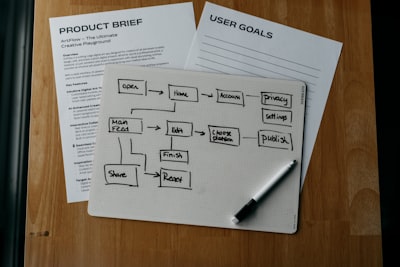
From a technical and business perspective, this shift demands a complete rethinking of an audiovisual project’s workflow. It is no longer enough to have a solid script and a flawless render. You must design the discovery strategy from the moment you write the first line. This means adopting software tools that allow audience segmentation, behavior data analysis, launch campaign automation, and, above all, building a relationship with viewers before the film exists. This is where technology stops being a simple image generator and becomes an attention engineering system.
Companies like Q2BSTUDIO have understood this transformation. Their focus on custom software development enables creators and producers to design proprietary distribution platforms, integrate AI-based recommendation systems, and manage fan communities with the same precision that a traditional studio manages its catalogs. The difference is that now the software orchestrates the entire content lifecycle, from initial audience acquisition to post-release retention.
A critical aspect in this new pre-production is cybersecurity. When a creator builds their own subscriber base or launches a private beta of their film, they handle personal data, viewing preferences, and consumption patterns. Protecting that information is not an optional add-on; it is a legal and trust requirement. The cybersecurity solutions offered by Q2BSTUDIO, such as penetration testing and infrastructure audits, ensure that the distribution platform does not become a weak point that jeopardizes both the work and its community.
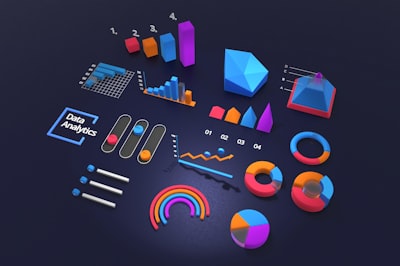
Furthermore, the cloud plays a fundamental role. Cloud AWS/Azure services allow scaling storage and content delivery without investing in physical servers. A filmmaker can upload their film in high resolution, offer different qualities based on the viewer’s bandwidth, and analyze in real time which regions generate the most views. This infrastructure, combined with BI/Power BI dashboards, transforms audience data into strategic decisions: which scene causes the most drop-off? what launch time maximizes engagement? what type of promotional content resonates best with each segment?
AI agents, on the other hand, are changing the rules of automated distribution. It is no longer just about algorithmic recommendations like Netflix. We are talking about systems that can write personalized emails to each subscriber, adjust social media messages based on each post’s performance, and even modify the film’s cover art according to user preferences. These AI agents work 24/7, testing variants, learning from results, and optimizing the conversion funnel without human intervention. For an independent creator, this means having a virtual marketing team that never rests.
However, technology alone does not solve the underlying problem. Distribution as pre-production requires a cultural shift within the industry. The director or producer who once delegated marketing to a third party must now understand metrics, segmentation, and automation. And for that, they need tools that integrate all these capabilities into a single ecosystem, not a set of disconnected applications. Again, custom software development becomes the ideal solution: a platform that combines content management, data analysis, audience communication, and AI agents under one roof.
In practice, this means that the pre-production phase no longer ends with the storyboard, but with the definition of a detailed distribution plan that includes channels, timelines, acquisition budgets, and KPIs. And that plan must be backed by technical infrastructure: a cloud-based contact database, an AI-driven marketing automation system, and a dashboard that monitors the performance of each action in real time. Without that foundation, any film, no matter how beautiful, is doomed to invisibility.
Q2BSTUDIO, with its experience in process automation and enterprise software development, offers precisely such solutions. It is not about selling a generic tool, but about building a system tailored to the specific needs of each project: from a filmmaker launching their first short film to a studio managing multiple simultaneous productions. The key is to understand that distribution is no longer an external department, but an integrated function in the project’s DNA.
The future of independent cinema does not belong to the one who makes the most beautiful film, but to the one who knows how to build and sustain an audience before the first frame exists. Artificial intelligence has made production cheap and accessible; now the challenge is to match that access with the ability to connect with real viewers. And for that, technology is the means, but strategy is the end. Distribution is the new pre-production, and those who do not embrace it will continue to create beautiful and invisible works, waiting for someone to discover them by chance. The algorithm does not wait, and neither does the audience.