The enterprise software ecosystem is undergoing an unprecedented transformation. A recent analysis of over 500 companies in the sector reveals that 24% of them may not survive the disruption caused by artificial intelligence. This data is not an apocalyptic prediction but a wake-up call for executives, CTOs, and technology teams who have not yet integrated AI as the core of their strategy.
The main reason for this vulnerability lies in technological inertia. Many software companies carry decades of technical debt: monolithic applications, outdated databases, and manual processes that can hardly compete with the agility demanded by today's market. AI is not just an additional layer; it is a new paradigm that requires rethinking everything from architecture to user experience. Those who rely on superficial patches or generic third-party solutions face an existential risk.
However, the threat also opens immense opportunities. Organizations that decide to reinvent themselves through custom software will be able to adapt their platforms to the real needs of their clients and to AI-driven workflows. Custom software development allows incorporating machine learning algorithms, automating critical processes, and offering predictive experiences without relying on external tools that limit flexibility.
The cloud is another fundamental pillar. Migrating to environments like AWS or Azure not only provides scalability but also facilitates the deployment of AI models and the storage of large data volumes. Companies that remain tied to on-premise servers or rigid infrastructures lose the ability to iterate quickly. A partner with experience in cloud AWS/Azure can accelerate that transition and ensure security accompanies every step.
And speaking of security, cybersecurity becomes a critical differentiator in the AI era. Intelligent systems process sensitive information and make autonomous decisions; if unprotected, the cost of a failure can be catastrophic. Implementing penetration testing, continuous audits, and zero-trust architectures is no longer optional. Companies that integrate cybersecurity from the design phase will be better prepared to comply with regulations and maintain customer trust.
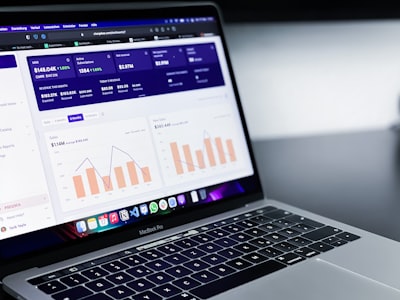
Moreover, business intelligence (BI) is the perfect complement to AI. It is not enough to collect data; it must be transformed into actionable decisions. Tools like Power BI allow visualizing patterns, detecting anomalies, and measuring the impact of AI models in real time. Companies that master data analytics can pivot faster and adjust their products to market demands. A solid approach to BI/Power BI turns information into competitive advantage.
Finally, process automation and the use of intelligent agents are redefining productivity. AI agents not only execute repetitive tasks but also learn and adapt. From customer service to inventory management, these digital assistants can operate 24/7 with human precision. Integrating them requires a strategic, not just technical, approach. Again, custom automation development is key to ensure these agents fit into existing processes without friction.
In this context, having a technology partner that understands the complexity of enterprise software is more than an advantage: it is a necessity. Q2BSTUDIO is a software development and technology company that helps organizations navigate this disruption. From creating multiplatform applications to cloud migration, cybersecurity strategies, and Power BI dashboards, their team combines technical expertise with business vision. It is not about selling tools, but designing solutions that evolve with the market.
The 24% of software companies that do not survive will likely be those that waited too long to act. AI is not a passing trend; it is the engine of the next decade. The decisions made today—investing in custom development, adopting cloud, strengthening cybersecurity, implementing BI, and automating with intelligent agents—will determine who leads and who disappears. The question is not whether AI will change the industry, but whether your company will be ready for that change.