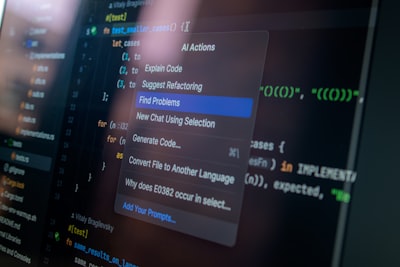
The rise of AI-powered coding agents has transformed how development teams approach software creation. It is no longer just about writing lines of code, but orchestrating a seamless collaboration between the developer and an intelligent entity that suggests, completes, and even debugs automatically. However, the true potential of these agents is unlocked when the interface through which we interact with them is optimized. Finding the optimal interface for coding agents is not a luxury, but a strategic necessity for any organization seeking to scale productivity without sacrificing quality or security.
To understand what makes an interface optimal, we must first recognize that coding agents are not monolithic tools. From assistants integrated into integrated development environments (IDEs) to autonomous systems managing entire pipelines, each modality requires a distinct communication channel. An effective interface must minimize cognitive friction: the developer should not waste time describing what is already implicit in the project context. Therefore, the first pillar of an optimal interface is contextual awareness. The agent must be able to read the entire repository, understand dependencies, coding styles, and business rules without the user having to explain them each time.
The second pillar is multimodality. Purely textual interaction (prompts) is limited. A modern interface should allow voice input, screen capture, visual pointing, and even drag-and-drop of code snippets. This is especially relevant when working with AI solutions that need to interpret architecture diagrams or mockups. Additionally, the agent's output should not be just text: it should be able to generate visualizations, comparison tables, or even interactive prototypes. Q2BSTUDIO, as a company specializing in custom software development and emerging technologies, has observed that multimodal interfaces reduce comprehension time between developer and agent by up to 40%.
Integration with existing infrastructure is another critical factor. An isolated coding agent loses value. The optimal interface must connect natively with version control systems (Git), CI/CD platforms, cloud services like AWS or Azure, and monitoring tools. This is where the need for cloud AWS/Azure services comes into play, providing elasticity and security. For example, a cloud-based agent can access training databases, large language models, and orchestrate deployments without manual intervention. But this also opens the door to cybersecurity risks: a poorly designed interface could expose access tokens or sensitive data. Therefore, any implementation must incorporate security measures such as multi-factor authentication, end-to-end encryption, and continuous auditing.
Adaptability to the team's workflow is an often-overlooked aspect. Not all developers work the same way, nor do all projects have the same lifecycle. An optimal interface must be customizable: allow configuring the agent's autonomy level (passive suggestion vs. autonomous action), adjust response verbosity, and define specific behavior rules for each repository. Q2BSTUDIO has developed frameworks that allow companies to configure coding agent interfaces tailored to their internal processes, combining artificial intelligence with principles of custom software development. This includes integration with Business Intelligence tools such as Power BI to visualize agent performance metrics, such as suggestion acceptance rate, response time, and error detection accuracy.
Speaking of metrics, continuous feedback is the fourth pillar. An interface without the ability to learn from its mistakes is static. The agent must be able to receive implicit signals (e.g., when the developer rejects a suggestion and writes something else) and explicit signals (direct ratings). The interface must facilitate this feedback without interrupting the workflow. Moreover, management teams can benefit from dashboards that consolidate this data, connected to BI systems. Thus, the interface is not only a communication channel but also a productivity sensor that feeds decision-making.
User experience (UX) is the glue that binds all these elements together. A complex but visually clean interface, with keyboard shortcuts, real-time response, and a low learning curve, is what developers will actually adopt. In this sense, the choice of interaction paradigm — chat, side panel, intelligent command line, or embedded autonomous agent — depends on the usage context. For quick tasks, a command line with intelligent autocomplete may suffice; for complex code reviews, a panel with change highlighting and textual explanations is more effective.
From a business perspective, optimizing the coding agent interface is not an isolated IT project. It is part of a broader digital transformation strategy that includes cloud adoption, cybersecurity, and data analytics. Companies that have already migrated their infrastructures to AWS or Azure find that integration with AI agents is smoother, provided the interface respects security and governance protocols. For example, a coding agent accessing internal repositories must go through API gateways and encryption policies, something Q2BSTUDIO implements in its cybersecurity projects. Likewise, the ability to generate automatic reports on agent activity is an added value that can be exploited with Power BI, allowing technical leaders to evaluate team efficiency.
A practical case: suppose a development team uses a large language model-based agent. The optimal interface for them would include a plugin for Visual Studio Code that shows real-time suggestions, a side chat for complex queries, and a 'review' mode where the agent analyzes the diff before a merge. Additionally, the agent would be connected to an internal knowledge base (company documentation, coding standards) hosted on AWS S3 with access controls. All this requires the interface to handle authentication transparently and maintain an interaction log for audits. Q2BSTUDIO has helped several companies design and implement such solutions, combining custom applications with AI APIs.
In conclusion, there is no universal optimal interface for coding agents. Optimization depends on factors such as team size, project complexity, technological infrastructure, and cybersecurity policies. However, the principles of contextualization, multimodality, integration, adaptability, and continuous feedback are universal. Organizations that invest in designing tailored interfaces, relying on technology partners like Q2BSTUDIO, will not only improve their developers' immediate productivity but also lay the groundwork for a more mature and secure human-AI collaboration. The boundary between tool and coding companion blurs, and the interface is the bridge that defines that relationship.