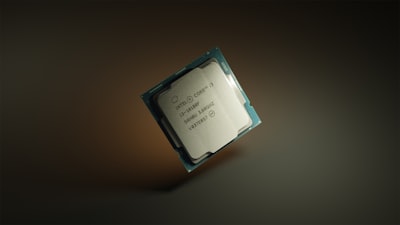
Intel has taken a significant step in the workstation market with the announcement of its new Nova Lake-S CPU, a 28-core processor designed specifically for the Dunlow platform. This launch not only marks a milestone in monolithic computing power but also redefines expectations for professionals handling intensive workloads such as 3D rendering, scientific simulations, and massive data analysis. The Nova Lake-S architecture combines high-performance cores with energy efficiency, offering a balance that promises to double multi-threaded performance compared to previous generations. With 28 physical cores and support for up to 56 threads via Hyper-Threading, this CPU is optimized for applications demanding extreme parallelization, such as artificial intelligence, machine learning, and image processing.
The Dunlow platform, which accompanies this processor, introduces a new chipset with support for latest-generation DDR5 memory, PCIe 5.0, and Thunderbolt 4 connectivity. This allows users to build workstations capable of handling enormous datasets without bottlenecks. From a business perspective, the arrival of Nova Lake-S represents an opportunity for companies to upgrade their computing infrastructures, especially those dedicated to research, software development, and technology consulting. However, to fully leverage this potential, optimized applications that exploit the multi-core architecture are necessary. This is where companies like Q2BSTUDIO play a crucial role, offering custom software development services tailored to the specific needs of each business.
The integration of artificial intelligence into workstation workflows is gaining ground. The new Nova Lake-S processors facilitate the implementation of AI agents capable of automating complex tasks, from code review to generating predictive reports. Q2BSTUDIO is at the forefront of this field, developing AI solutions that run natively on high-performance hardware, minimizing latency and maximizing efficiency. Additionally, cybersecurity becomes a priority when handling sensitive data on workstations. With the Dunlow platform, Intel has included silicon-level security features, but a robust software approach is also required. Companies can benefit from cybersecurity services offered by Q2BSTUDIO, including audits, pentesting, and perimeter protection adapted to high-demand environments.
Another key aspect is cloud integration. Many organizations combine local workstations with cloud services like AWS or Azure to scale resources on demand. Nova Lake-S, with its advanced virtualization support, allows seamless synchronization with hybrid environments. Q2BSTUDIO offers cloud computing services that facilitate migration and management of infrastructures on AWS and Azure, ensuring work teams can access additional computing power without compromising security. Similarly, Business Intelligence (BI) analysis greatly benefits from multi-core processors. Tools like Power BI can process large volumes of data in less time if the underlying hardware is optimized. Q2BSTUDIO develops custom dashboards and BI systems that fully leverage Nova Lake-S's capacity, providing real-time insights for strategic decision-making.
The trend toward process automation is also driven by this new generation of CPUs. AI agents combined with automated workflows can drastically reduce production times in industries such as manufacturing, logistics, and software development. Q2BSTUDIO creates automation solutions integrating artificial intelligence, robotic process automation, and predictive analytics, all running on cutting-edge hardware like Nova Lake-S. The company positions itself as a complete technology partner, capable of offering everything from custom software development to cybersecurity and cloud implementations.
In terms of competition, Intel is directly targeting the workstation segment that has so far been dominated by AMD with its Threadripper processors. The Dunlow platform, with its ecosystem of chipsets and memory, aims to offer a more integrated alternative with better support for enterprise applications. Preliminary benchmarks suggest that Nova Lake-S outperforms its predecessor by 40% in rendering tasks while maintaining controlled power consumption. This is crucial for companies looking to reduce their carbon footprint without sacrificing performance.
For software developers, the arrival of 28 cores presents both a challenge and an opportunity. Algorithms need to be rewritten or adapted to leverage massive parallelism. Q2BSTUDIO offers consulting in code optimization and migration of legacy applications to multi-core architectures, using parallel programming techniques and libraries like Intel oneAPI. Additionally, the company integrates artificial intelligence solutions that directly benefit from this capability, such as recommendation systems, natural language processing, and computer vision, all running on Nova Lake-S workstations.
In the cybersecurity domain, AI-based threat detection systems can analyze millions of events per second thanks to the power of 28 cores. Q2BSTUDIO develops specialized security AI agents that monitor networks and endpoints in real time, offering proactive defense against attacks. The combination of Intel hardware and Q2BSTUDIO customized software creates a robust ecosystem for companies handling critical data.
Finally, cloud computing remains an indispensable complement. Although local workstations offer low latency, the cloud allows scaling resources for specific projects. Q2BSTUDIO helps companies design hybrid architectures that synchronize Dunlow workstations with AWS or Azure instances, using orchestration tools and containers. This is especially useful for data science teams that need to train machine learning models in parallel, combining Nova Lake-S's local capacity with cloud elasticity.
In conclusion, Intel's launch of Nova Lake-S and the Dunlow platform represents a significant advancement for workstations. However, the true value materializes when hardware is combined with specialized software. Companies like Q2BSTUDIO, with expertise in custom software development, artificial intelligence, cybersecurity, cloud, and BI, are prepared to help organizations make the most of these innovations. Whether creating AI agents, implementing BI systems, or securing infrastructure, the collaboration between cutting-edge hardware and customized software defines the future of professional computing.