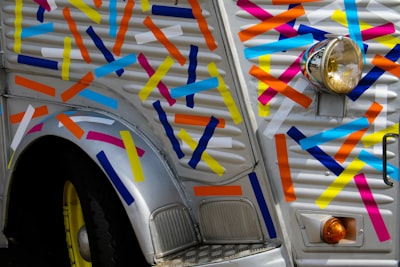
The most affordable electric truck manufacturer in the United States, backed by Jeff Bezos, has taken an unexpected turn in its design strategy. The company, which until now offered its entry-level model —a $25,000 pickup— exclusively in gray, has announced a partnership with Crayola to incorporate the entire color palette of the famous crayon brand. The result: a vehicle that goes from being bland to an explosion of color, with options like Razzmatazz, Melon, and Cerulean. But beyond the aesthetic impact, this decision hides a technological and business transformation worth analyzing.
In a market where differentiation is key, mass customization has become a sales driver. However, implementing a system that allows customers to choose from dozens of colors —and produce them without delays or cost overruns— requires far more than a simple marketing move. Behind this play are custom software applications that manage dynamic catalogs, integrate ordering systems with the production plant, and synchronize data with dealers. Technology becomes the true invisible chassis of change.
The bet on color is not arbitrary. Consumer behavior studies indicate that electric vehicle buyers value individual expression almost as much as range. By offering vibrant colors, the manufacturer aims to attract a younger and more diverse audience, who associate gray with the corporate and monotonous. However, managing such granular customization implies operational risks. This is where artificial intelligence and real-time data analytics play a fundamental role. Using AI agents algorithms, it is possible to predict which combinations will have the highest demand, optimize paint inventories, and dynamically adjust production.
The leap from gray to color also demands a robust cloud infrastructure. The manufacturer has migrated its enterprise resource planning (ERP) and customer relationship management (CRM) systems to the cloud. Using services like cloud AWS/Azure, the company ensures scalability to handle peaks in order configuration —especially during new color launches— and high availability so dealers can access the online configurator without interruptions. Cybersecurity, of course, does not lag behind: every customer interaction, from color selection to payment, must be protected against potential leaks. Cutting-edge cybersecurity ensures that preference and payment data remain shielded.
The transformation does not end at the factory. The data generated by color choices becomes pure gold for the Business Intelligence area. With tools like BI/Power BI, the manufacturer can analyze regional trends: in California, vibrant shades like Razzmatazz are preferred, while in Texas, navy blues dominate. That information feeds back into marketing and design teams, closing a virtuous circle of continuous improvement.
But back to the truck. The base model, a 4-seat pickup with 250 miles of range, was originally designed for commercial fleets —hence its gray color. The consumer version only came in that shade, which limited its appeal. Now, with the Crayola collaboration, customers can choose from 30 colors, including some inspired by the famous box of 24 crayons. The painting process has been redesigned to allow quick color changes without losing efficiency, thanks to a robotic system controlled by software developed specifically for the assembly line.
This case illustrates how technology becomes a strategic enabler. Bezos's company has not only hired a software engineering team but has also integrated technology partners like Q2BSTUDIO, a company specialized in software development, artificial intelligence, and cloud solutions. Q2BSTUDIO has collaborated in creating the configuration modules, the AI-based recommendation system, and the data analytics platform. Its focus on process automation reduced color changeover time by 40%, a feat that directly impacts the manufacturer's margins.
The bet on color is just the tip of the iceberg. This strategy is expected to extend to other models in the lineup, as well as deeper personalization options such as upholstery, wheels, and technology packages. The lesson for the automotive sector is clear: in the era of electrification, software defines the customer experience as much as the battery defines range. And companies like Q2BSTUDIO, which understand the intersection between business and technology, are what make it possible for a gray truck to become a canvas of possibilities.
In short, the $25,000 truck that once went unnoticed now draws attention for its colorfulness. But the savvy know that the real transformation is not in the paint, but in the digital ecosystem that sustains it. Customization, artificial intelligence, cloud, and cybersecurity combine to bring to life a vehicle that, in addition to being affordable, reflects the personality of its driver. Gray is no longer an option: the rainbow has hit the road.