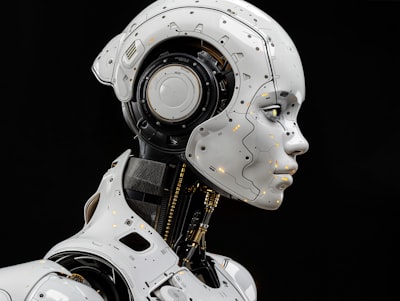
The fascination with creating machines that imitate human form is not a recent phenomenon; it dates back to the dawn of civilization. However, the true leap toward functional humanoid robots endowed with artificial intelligence has been driven by the convergence of mechanical engineering, electronics, and software. In this article we will explore that evolution from a technical and business perspective, understanding how each milestone has laid the groundwork for the robotic assistants that are beginning to integrate into our lives.
The earliest traces of humanoid automatons appear in ancient mythologies: from Hephaestus' mechanical servants in Greece to the speaking statues of pharaonic Egypt. Those stories not only reflected the desire to emulate life but already raised philosophical questions about control and ethics of artificial creations. In practice, the first real mechanisms emerged in the Hellenistic era and in the Islamic Middle Ages, with engineers like Al-Jazari who documented designs of programmable automatons in his 'Book of Knowledge of Ingenious Mechanical Devices'.
The Renaissance brought Leonardo da Vinci's sketches for a mechanical knight, and the 18th century witnessed the astonishing automatons of Jacques de Vaucanson and Pierre Jaquet-Droz. These Swiss watchmakers achieved dolls that could write, draw, and play music, establishing the principles of programmed automation. Meanwhile, in Japan, karakuri ningyo reached extraordinary precision during the Edo period, with dolls serving tea and shooting arrows. This Japanese tradition laid the cultural and technical foundation for Japan's leadership in humanoid robotics decades later.
The real turning point came with the Industrial Revolution and electrification. In the late 19th century, Nikola Tesla demonstrated remote control with his teleautomaton, and in 1921 Karel Čapek coined the term 'robot'. But the first functional real humanoid was Elektro, presented by Westinghouse at the 1939 New York World's Fair. Elektro could walk, speak via a phonograph, and smoke, anticipating robotic entertainment. However, industrial robotics took its first steps in 1961 with Unimate, the robotic arm installed at General Motors, which automated repetitive and dangerous tasks in manufacturing.
From the 1970s onward, the focus shifted toward bipedal locomotion and social interaction. Universities like Waseda in Japan developed WABOT-1, a humanoid capable of walking, grasping objects, and holding basic conversations. Honda began its bipedal robot project in the 1980s, culminating in the iconic ASIMO in 2000. ASIMO not only walked and ran but recognized faces and voices and responded to complex commands. Meanwhile, Boston Dynamics started exploring dynamic movement with robots like BigDog and later Atlas, capable of performing jumps and acrobatics.
Today, humanoid robotics is undergoing an accelerated transition thanks to advances in artificial intelligence, machine learning, and natural language processing. Companies like Engineered Arts with its Ameca robot, UCLA with Artemis, Unitree with G1, and 1X with Neo Beta are pushing facial expressiveness, fine manipulation, and autonomy to unprecedented levels. These robots can hold conversations, read emotions, and perform household tasks like making coffee or loading the dishwasher. The integration of cloud and edge computing allows them to process large volumes of data in real time, improving their adaptability.
In this context, the evolution of humanoid robots would not be possible without robust software development, cloud platforms, and cybersecurity strategies. This is where companies like Q2BSTUDIO play a fundamental role. They offer custom application development, implementation of AI agents, data analysis with Business Intelligence (Power BI), and migrations to AWS and Azure clouds. Cybersecurity becomes critical to protect the communications and sensitive data these robots handle, especially when interacting in domestic or healthcare environments. Q2BSTUDIO also performs penetration testing and audits to ensure the integrity of robotic systems.
From a technical perspective, the challenges remain enormous: replicating human biomechanics, achieving stable bipedal locomotion on uneven terrain, and endowing robots with real contextual understanding. The balance between autonomy and human supervision is an active research area. Moreover, ethical and legal dilemmas multiply: who is responsible if a robot causes an accident? How is the privacy of users interacting with robotic assistants protected? Questions like these are driving the creation of regulatory frameworks in the European Union and other countries.
The future of humanoid robots points to their expansion in sectors such as elderly care, logistics, space exploration, and disaster rescue. Costs are expected to decrease, and social acceptance will increase as robots demonstrate their usefulness and safety. The combination of advanced sensors, AI algorithms, and scalable cloud platforms will allow humanoids to become everyday companions, not just tools.
In conclusion, the history of humanoid robots is a reflection of our own ambition to push boundaries. From Greek legends to today's expressive androids, each step has been possible thanks to collaboration among engineers, scientists, and technology companies like Q2BSTUDIO, which provide know-how in custom software, cloud computing, and cybersecurity. The evolution continues, and we are only at the threshold of a new era where humans and machines will share spaces and tasks in an increasingly natural way.