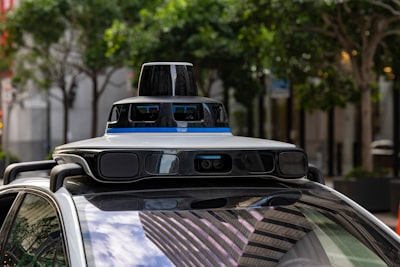
The transportation sector is undergoing a silent but unstoppable transformation. Waymo, the company that began as an experiment inside Google, has turned autonomous driving into a tangible commercial reality. But beyond the headlines, what really matters is understanding how its technology works, what challenges it faces, and how this paradigm shift is redefining urban mobility. In this article we explore Waymo Driver's architecture, its business implications, and how companies like Q2BSTUDIO integrate similar solutions —custom software, artificial intelligence, cybersecurity, cloud and BI— to build the future of software.
Waymo is not a car manufacturer. It is a technology company that has developed an autonomous driving system called Waymo Driver, a set of hardware and software capable of perceiving, analyzing, and deciding in real time. Its approach is not limited to a single vehicle: it is a platform that can be integrated into different models, as long as they have the appropriate sensors. This modular philosophy resembles the software development approach we apply at Q2BSTUDIO, where each project is tackled with custom software tailored to the specific needs of the client, whether in mobility, logistics, or industry.
The heart of Waymo Driver is its sensors: lidar, radar, and high-resolution cameras. Lidar generates a three-dimensional map of the environment with millimeter precision, radar measures speed and direction even in bad weather, and cameras capture details such as signs or pedestrians up to 500 meters away. All that information is fused in real time using artificial intelligence algorithms. The parallel with software development is evident: AI is not a luxury but a necessity to process massive data. At Q2BSTUDIO we work with AI agents that automate complex processes, from anomaly detection in industrial systems to logistics route optimization.
But Waymo's artificial intelligence is not trained only on the road. The company uses virtual simulations where it recreates millions of scenarios —some impossible in real life— so the system learns to react to extreme situations. This combined training approach (real + simulated) is similar to what we apply when developing cloud computing solutions. For example, when migrating applications to AWS or Azure, we perform tests in simulated environments before real deployment, ensuring the system is robust against any eventuality. The cloud provides the scalability needed to process immense volumes of data, just as Waymo needs to store and analyze every kilometer driven.
Safety is another fundamental pillar. Waymo publishes detailed incident reports and conducts exhaustive tests before operating in new cities. Its system follows a three-step logic: detect, resolve, advance. Every decision prioritizes the integrity of passengers and pedestrians. This level of rigor is also key in cybersecurity. At Q2BSTUDIO we offer cybersecurity services that include audits, pentesting, and continuous monitoring. An autonomous vehicle is a connected system vulnerable to attacks; therefore security must be integrated from the design, not as an afterthought.
The user experience in Waymo's robotaxis is designed to build trust. Passengers can see on a screen what the vehicle “sees”, with the planned maneuvers. This transparency is a key factor in acceptance. In the business world, data transparency is equally important. Business Intelligence (BI) tools like Power BI allow real-time metric visualization, helping organizations make informed decisions. At Q2BSTUDIO we develop BI and Power BI solutions that transform raw data into interactive dashboards, very similar to the interface Waymo offers its users.
Currently, Waymo operates commercial services in San Francisco and Phoenix, and plans to expand to more cities. Each deployment requires detailed urban mapping and adaptation to local regulations. This process reminds us of cloud system implementations: it is not enough to have the technology; it must be integrated with existing infrastructure. Companies migrating to AWS or Azure need an adoption plan that considers security, costs, and scalability. At Q2BSTUDIO we accompany our clients in that transition, offering customized cloud services.
The environmental impact is also at the center of Waymo's strategy. Its vehicles are electric and AI-optimized driving reduces energy consumption. By decongesting traffic and promoting shared use, the carbon footprint is reduced. This sustainable approach is increasingly demanded by companies. Process automation, which we offer at Q2BSTUDIO with automation solutions, helps reduce resource waste and improve operational efficiency.
Regulatory challenges remain a barrier to mass adoption. Waymo collaborates with local governments to establish legal frameworks that allow safe circulation of autonomous vehicles. A similar situation occurs in the software world: cybersecurity and data protection are subject to regulations such as GDPR or Data Protection Acts. Companies must ensure their applications comply with legal requirements, and specialized consulting is essential here.
Another interesting aspect is the business model. Waymo does not sell cars; it sells rides (robotaxi) and licenses its system to manufacturers or fleets. It is a platform model reminiscent of the SaaS solutions we develop at Q2BSTUDIO: software as a service, scalable, with continuous updates and result-oriented. Artificial intelligence, autonomous agents, and the cloud are the enablers of this new economy.
In short, Waymo represents a case study on how technology can transform an entire industry. Its success depends not only on algorithms but on the integration of multiple disciplines: hardware, software, security, data, regulation. Companies that want to be at the forefront need technology partners who understand that complexity. At Q2BSTUDIO, as a software and technology development company, we help organizations build custom solutions incorporating AI, cloud, cybersecurity, and BI, exactly the same pillars that sustain Waymo. The future of mobility is already here, and software is its engine.