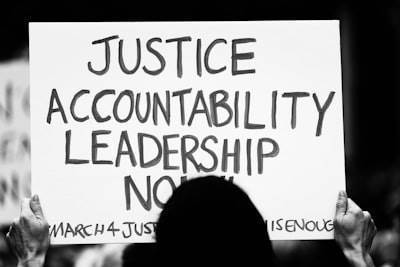
Artificial intelligence is no longer a futuristic promise; it has become an everyday tool that influences business decisions, medical diagnoses, recruitment processes, and even road safety. However, as AI systems gain operational—not moral—autonomy, an inevitable question arises: should AI be held responsible for its actions? The temptation to anthropomorphize algorithms is understandable. When a self-driving car causes an accident or a hiring system systematically rejects qualified candidates, headlines often speak of an 'AI error.' But that attribution of blame is misleading. A machine lacks consciousness, intention, and the capacity to feel. Responsibility, in an ethical and legal sense, falls on the people and organizations that design, deploy, and oversee these systems.
From a technical perspective, machine learning models do not act of their own free will. They process large volumes of data, identify patterns, and generate predictions based on probabilities. If that data contains historical biases—as happened with facial recognition systems that discriminated against dark-skinned individuals—the algorithm simply reproduces those inequalities. The fault lies not with the machine, but with the human decisions that fed the model partial information or failed to validate it properly. Therefore, talking about 'AI responsibility' is a conceptual detour that can exonerate the real actors: developers, companies, and regulators.
In the business world, implementing artificial intelligence requires a solid ethical and technical approach. At Q2BSTUDIO, as a software and technology development company, we understand that every solution must be designed with transparency and human control. For example, when developing custom software for sectors such as logistics or healthcare, we integrate audit mechanisms that allow tracing the model's decisions back to their origins. The goal is not to create black boxes, but explainable systems where every outcome can be verified by an expert.
The current complexity of AI means that responsibility is distributed. A recommendation system on a streaming platform can influence consumption habits, but its behavior emerges from the interaction of thousands of parameters and user feedback. Who is responsible if that system promotes harmful content? The engineers who trained the model, the company that deployed it, or the user who clicked? The answer is not straightforward, and that is why the legal framework is still under construction. The European Union, with its AI Act, proposes classifying applications according to their risk level: high-risk applications (such as those used in justice or healthcare) must meet strict requirements for transparency, human oversight, and technical robustness.
In this context, the notion of 'AI rights' remains speculative. Granting rights to a machine would only make sense if it possessed consciousness or the capacity to suffer, something no current system demonstrates. However, there is an urgent need for algorithmic accountability. Companies adopting AI must implement data governance, bias testing, and accountability mechanisms. At Q2BSTUDIO we help our clients integrate cloud services on AWS or Azure that allow secure scaling of AI models, with activity logs and alerts for anomalous behavior. In addition, we offer cybersecurity solutions to protect the sensitive data that feeds these systems, preventing external vulnerabilities from compromising model decisions.
Another key aspect is business visibility. Many organizations deploy AI to optimize processes, but without a clear dashboard. This is where Business Intelligence with Power BI comes in, allowing visualization of algorithm performance and detection of deviations. If a credit risk model starts rejecting applications from a specific profile, the BI dashboard will flag it, enabling analysts to intervene before harm materializes. This layer of oversight is essential to keep responsibility in human hands.
Automation through AI agents also raises ethical dilemmas. A virtual assistant handling customer complaints may escalate an issue incorrectly. Is it the agent's fault or the rules that defined its behavior? At Q2BSTUDIO we design these agents with human validation loops: every critical decision requires operator confirmation. Thus, the machine acts as support, not as final authority.
Returning to the initial question: AI should not—and cannot—be held responsible for its actions because it lacks intentionality. Responsibility is a human construct that requires the ability to reason about consequences and modify behavior accordingly. An algorithm does not reflect, does not learn from its mistakes in a moral sense; it only adjusts its statistical weights. Therefore, demanding responsibility from it is as absurd as blaming a hammer for a bruised thumb. Responsibility lies with those who designed, programmed, trained, and deployed it without proper safeguards.
The real danger is not that machines will demand rights, but that humans will shirk their obligations by hiding behind the algorithm. 'The system decided it' can become a shield to avoid legal or reputational consequences. To prevent this, companies must adopt digital ethics frameworks, periodic audits, and a culture of transparency. At Q2BSTUDIO we offer AI governance consulting, helping define usage policies, review protocols, and contingency plans. Because artificial intelligence, well managed, is a powerful tool; poorly managed, a source of risks no one wants to assume.
Ultimately, the question of whether AI should be responsible for its actions brings us back to the mirror of our own responsibility. As long as systems remain tools—no matter how sophisticated—the obligation to answer for their consequences remains ours. Technology advances, but ethics must keep pace. Building responsible artificial intelligence is not a technical problem; it is a human commitment.